
All Bacteria articles – Page 89
-
 News
NewsResearchers take step towards creating Salmonella vaccine
A study of a new method to deliver a Salmonella vaccine found that when tested with real-world strains of Salmonella, the vaccine created antibodies against this microbe in the mice – which equips the animals with a defense mechanism against the pathogen.
-
 News
NewsNew study uncovers key differences in allosteric regulation of cAMP receptor proteins in bacteria
A new study provides key insights into how bacterial cAMP receptor proteins (CRPs) respond differently to the ubiquitous signaling molecule, cyclic AMP (cAMP), challenging the assumption that structural similarity predicts functional behavior in allosteric proteins.
-
 News
NewsScientists reveal how liver graft preservation method impacts fecal microbiota following transplant
A new study assesses the impact of two liver graft preservation methods on fecal microbiota and changes in fecal and breath organic acids following liver transplantation.
-
 News
NewsRelief could be on the way for UTI sufferers dealing with debilitating pain
A new study shows that UTIs cause the nerves in the bladder to become hypersensitive, resulting in the extremely painful and frequent urge to urinate, pelvic pain, and burning pain while urinating.
-
 News
NewsMouth bacteria may hold insight into your future brain function
A study revealed that the types of bacteria in our mouths may have direct impacts to brain health, which would link mental illness, such as Alzheimer’s disease or dementia.
-
 News
NewsJumbo phages deploying secret handshakes could usher in new antibiotics
Jumbo phages create a restricted space inside bacteria where they can copy their DNA while surrounded by a protective shield. A new study reveals that the shield works via a set of ’secret handshakes’, allowing only a specific set of useful proteins to pass through.
-
 News
NewsResearchers discover new way to customize living materials for tissue engineering, drug delivery and 3D printing
Researchers have revealed novel sequence-structure-property relationships for customizing engineered living materials (ELMs), enabling more precise control over their structure and how they respond to deformation forces like stretching or compression.
-
 News
NewsEfforts to find alien life could be boosted by simple test that triggers microbes
Scientists explored microbial movement as a possible biosignature to detect life on Mars and beyond, cheaper and faster than ever before.
-
 News
NewsClean air policies inadvertently boost wetland methane emissions by up to 34m tonnes
A new study suggests that the decline of global sulphur emissions as the result of clean air policies, coupled with the warming and fertilization effects of carbon dioxide emissions lifts a lid on wetland methane production, resulting in increased emissions.
-
 News
NewsPersister act: Why antibiotics can fail even against non-resistant bacteria
A new study challenges the concept that persisters are the cause of antibiotic ineffectiveness, demonstrating that standard laboratory tests of antimicrobial clearance produce misleading results, giving a false impression of a small group of particularly resilient persisters.
-
 News
NewsLancaster University spinout secures funding to advance healthcare diagnostics
Lancaster University spin out CCI Photonics has secured significant funding to develop its diagnostic technology, which aims to improve healthcare outcomes by using AI to detect infectious diseases and determine patients’ antibiotic susceptibilities in under 15 minutes.
-
 News
NewsUsing sugars from peas speeds up sour beer brewing
Researchers have brewed new sour beers in less time using field peas. The experimental beers had fruity flavors and other attributes comparable to a commercial Belgian-style sour, but with shorter, simpler brewing steps.
-
 News
NewsNew phage platform pinpoints viruses that can deliver a knockout blow for killer bacteria
An international group of microbial experts has launched a powerful and flexible free online genomic toolkit for more rapid development of phage therapy. They say it is capable of assessing if a phage is suitable for a targeted therapy in under 10 minutes.
-
 News
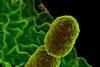
NewsRising threat of carbapenem-resistant Enterobacteriales (CRE) spurs urgent healthcare alert
The deteriorating epidemiological situation of carbapenem-resistant Enterobacteriales (CRE) has spurred ECDC to alert EU/EAA countries to the importance of controlling the spread of CRE infections to safeguard their healthcare systems.
-
 News
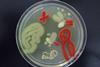
NewsWe know what you ate: Detailed protein maps assess intestinal health
A new method has been designed to map the near-exact molecular details of the human and bacterial protein regulations within the host-gut microbiome interactions. These proteins could be used for medical and dietary intervention to maintain intestinal health.
-
 News
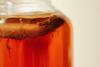
NewsBioink for personalized tissue repair developed using kombucha SCOBY nanocellulose
Researchers have developed a bioink using nanocellulose derived from Kombucha SCOBY (Symbiotic Culture of Bacteria and Yeast) as the scaffold material.
-
 Careers
Summer studentship: Ojewale finds novel Actinomycetes offer rare antimicrobial metabolites
Ojewale Ifeoluwa Florence reports back on her AMI-sponsored summer studentship which focused on the investigation of Actinobacteria found in local freshwater environments in Ogun State, Nigeria, under supervisor Dr. Amina Badmos.
-
 News
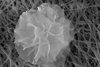
NewsDelicate nanoflower is deadly to bacteria
A carnation-like nanostructure could someday be used in bandages to promote wound healing. Researchers report that laboratory tests of their nanoflower-coated dressings demonstrate antibiotic, anti-inflammatory and biocompatible properties.
-
 News
NewsInfant gut bacteria and food allergies: the good, the bad, and the ugly
A research study delves into the associations between neonatal gut microbiota compositions and food allergies, in order to find a way to improve infants’ immunities.
-
 News
NewsHealthy gut bacteria that feed on sugar analyzed for the first time
A microbe found in the lower part of the gut that is associated with good health has been comprehensively analysed and found to have a focused diet breaking down sugars locked away in mucus.