
All Bacteria articles – Page 94
-
 News
Monitoring approach could help snuff out Legionella outbreaks
Routine, relatively low-cost monitoring of several factors influencing water safety could ward off Legionnaires’ disease outbreaks in hospitals, nursing homes and other health care settings, a new study suggests.
-
 News
Using population-level characteristics for the surveillance of antimicrobial-resistant gonorrhea
As the antimicrobial-resistant (AMR) gonorrhea poses a major threat to public health, there is an urgent need for expanding the surveillance of its prevalance to control the spread of the pathogen, through monitoring its association with the population density and HIV prevalence in cities.
-
 News
The hidden battle in your gut: How one bacterium outsmarts its rivals
Scientists have undertaken a deep dive into the inner workings of the ‘microbial arms race’ in your gut, revealing an elegant strategy that gut microbes use to stay a step ahead of their neighbors.
-
 News
Ventilation fans can significantly lower the risk of inhaling bacteria particles after toilet flushing
New research finds that unhealthy concentrations of bacteria are released into the air by toilet flushing - but active ventilation with an exhaust fan reduce the risk by 10 times.
-
 News
Open water swimmer contracts Legionnaires’ disease from lake dip
Swimming in some lakes with still water can lead to infection with Legionella, bacteria that can cause pneumonia, and people who engage in open water swimming should be aware of this risk, a new paper warns.
-
 News
Research team identifies carbonate-dissolving microorganisms
Researchers have identified new microscopic players in the global carbon cycle, a discovery that paints a clearer picture of carbon flow through the environment and provides key information for the sustainable development of bioenergy sources.
-
 News
Study reveals how anemonefish avoid stings from their sea anemone hosts - bacteria could be involved
Researchers have made a breakthrough in understanding how anemonefish can live safely among sea anemones without being stung by their venomous tentacles, solving a century-long mystery.
-
 News
Stalled microbiomes: cystic fibrosis disrupts early gut development in infants
A new study highlights key differences in the gut microbiome (communities of bacteria) of infants with cystic fibrosis (CF) compared to that of healthy infants, and how these alterations may adversely affect their health.
-
 News
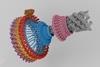
Researchers shed light on the mechanisms of bacterial flagellar motors
Researchers have determined the structure and mechanisms of the key components in the flagellar motor, which bacteria use to turn their flagella and move.
-
 News
Dangerous bacteria lurk in hospital sink drains, despite rigorous cleaning
Even in modern hospitals, drains can serve as reservoirs for known and novel pathogens, according to a new study.
-
 News
Protein shuttling mechanism helps bacteria pump out antibiotics
By a joint-university effort, the mechanism of a bacterial efflux pump complex to remove molecules, including antibiotics, has been determined and the extent of bacterial toxin resistance by the complex has also been evaluated with a cutting-edge device.
-
 News
Bacteria evolved to help neighboring cells after death, new research reveals
A study has shown that a type of E coli bacteria produces an enzyme which breaks the contents of their cells down into nutrients after death. The dead bacteria are therefore offering a banquet of nutrients to the cells that were their neighbours when they were living.
-
 News
Bacterial cellulose promotes plant tissue regeneration
Researchers have successfully uncovered the molecular mechanisms by which bacterial cellulose patches stimulate the regeneration of plant wounds, offering potential applications in grafting, pruning, and ornamental flower cutting for enhanced plant healing.
-
 News
Diabetes can drive the evolution of antibiotic resistance, study reveals
A new study shows that people with diabetes are more likely to develop antibiotic-resistant strains of Staph. The results show how the diabetic microbial environment produces resistant mutations, while hinting at ways antibiotic resistance can be combatted in this patient population.
-
 News
New study sheds light on the causes of fevers of unknown origin in sub-Saharan Africa
By conducting a retrospective observational study, the causes of fevers of unknown origin (FUO) in sub-Saharan Africa were investigated using conventional diagnostic methods, highlighting the appropriate needs of point-of-care testing in the regions.
-
 News
Outokumpu’s bedrock reveals a smelly surprise
In a borehole in Finland, volatile organic compounds (VOC) are detected in the bedrock and groundwater due to the presence of a highly diverse underground microbial community, which reflects the composition of VOC and thus the bedrock characteristics.
-
 News
Long-term yogurt consumption tied to decreased incidence of certain types of colorectal cancer
A new study finds that yogurt consumption over time may protect against colorectal cancer through changes in the gut microbiome. Long-term consumption of two or more servings per week of yogurt was tied to lower rates of proximal colorectal cancer positive for Bifidobacterium.
-
 News
After sexual intercourse, both partners leave traces of their own unique genital microbiome
Researchers have shown that bacterial species are transferred between both individuals during sexual intercourse, and these species can be traced to a sexual partner’s unique genital microbiome, with potential for identifying perpetrators of sexual assault.
-
 News
Cold temperatures promote spread of a bird pink eye pathogen at winter feeders
A pathogen for bird pink eye remains viable on bird feeders in winter conditions much longer than in summer conditions without losing any of its severity, according to a study.
-
 News
Researchers engineer biological reaction crucibles to rapidly produce proteins
Biomedical engineers have demonstrated a new synthetic approach that turbocharges bacteria into producing more of a specific protein, even proteins that would normally destroy them, such as antibiotics.