
All Bacteria articles – Page 90
-
 News
NewsAntibiotics of the future are prone to bacterial resistance
Two studies have found that resistance can develop against new antibiotics even before they are widely used, compromising their effectiveness from the start. The studies focused on five critical bacterial species and examined 18 new antibiotics.
-
 News
NewsGene found in rough Salmonella Infantis variant offers drug target for variety of pathogens
A new study identifies a gene in a rough Salmonella Infantis variant that could offer a target for developing effective vaccines and therapeutic strategies, not only for Salmonella but other Enterobacteriaceae as well.
-
 News
NewsWhy you shouldn’t scratch an itchy rash: New study explains
New research uncovers how scratching aggravates inflammation and swelling in a mouse model of a type of eczema called allergic contact dermatitis.
-
 News
NewsA new process with zero emissions for truly biodegradable plastics
A new approach to producing biodegradable plastics - polyhydroxyalkanoates (PHA) - was discovered as a promising alternative that requires minimal organic materials and is naturally produced by photosynthetic microorganisms.
-
 News
NewsPrecision medicine and inflammatory disease: Power of metabolic modelling to generate personalized probiotics
A research study has recently highlighted the application of large-scale computational modelling of metabolomics in the human gut microbiome to design personalised probiotics for treating gut inflammatory diseases.
-
 News
NewsWeather change linked to increased risk of Salmonella outbreaks
A research study has shown a significant impact on Salmonella outbreaks from weather changes, which can be used as a tool to predict risk of outbreaks and implement preventative measures, under a climate change scenario.
-
 News
NewsPapers outline 4 advances for inactivating infectious viruses and bacteria
Four papers provide insights into novel antiviral compounds and methods to inactivate infectious viral particles and bacteria.
-
 News
NewsA common mouth and gut bacterium may be linked with increased stroke risk
A common bacterium usually found in the mouth and gastrointestinal tract, Streptococcus anginosis, may be abundant in the guts of people with stroke and is associated with a worse prognosis and increased risk of death, according to a preliminary study.
-
 News
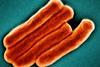
NewsStudy finds three new safe, effective ways to treat drug-resistant tuberculosis
An international clinical trial has found three new safe and effective drug regimens for tuberculosis that is resistant to rifampin, the most effective of the first-line antibiotics used to treat TB.
-
 News
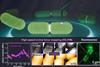
NewsNew microscopy technique reveals dynamic E coli membrane stiffness
Researchers have created a new technique, high-speed in-line force mapping (HS-iFM), to acquire dynamic, mechanical force measurements at the speed and resolution required for living biological samples.
-
 News
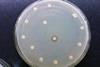
NewsResearchers identify genetic ‘fingerprint’ to predict drug resistance in bacteria
To avoid antibiotic overuse and allow precise bacterial infection treatment, particularly against bacteria with multidrug resistance, a diagnostic tool was developed that identifies the pattern of DNA repair deficiencies acting as the bacterial antibiotic resistance ‘fingerprint’.
-
 News
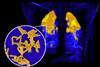
NewsTB or not TB? A new clinician decision support tool for tuberculosis
A risk assessing tool was recently developed to evaluate the likelihood of tuberculosis (TB) infections using previous patient data with or without TB. Such clinical decision support tool would allow safer and more efficient patient deisolation procedures and ensure smoother clinician workflows.
-
 News
NewsCould faecal microbiota transplantation help patients heal after stem cell transplantation?
A study, from a part of an ongoing clinical trial, has reported the safety of oral faecal microbiota transplantation (FMT) to help patients recover from the loss of gut microbiome after allogeneic stem cell transplantation for blood cancers.
-
 News
NewsMicrobial therapy offers new hope for vitiligo patients
A natural compound derived from gut-friendly bacteria significantly slows the progression of vitiligo and may restore pigmentation, reports a new pre-clinical study in mice.
-
 News
NewsOral microbiome may affect cognitive function as we age
The microbial ecosystems within our mouths may affect our cognitive function as we age, according to a study. Interventions such as prebiotics, including dietary nitrate, have potential for delaying cognitive decline.
-
 News
NewsCARB-X funds Rhode Island Hospital to assess feasibility of direct from blood detection of bacterial pneumonia
Combating Antibiotic-Resistant Bacteria Biopharmaceutical Accelerator (CARB-X) will award Rhode Island Hospital at Brown University Health US$1M to demonstrate proof-of-concept of a polymerase chain reaction (PCR) approach informed by RNA sequencing to detect bacterial pneumonia directly from whole blood.
-
 News
NewsNew study uncovers mechanisms of bacterial dormancy involving protein aggregation
Researchers have revealed a mechanism involving protein aggregation that allows bacteria to enter a dormant state, a phenomenon that is associated with the persistence of infections and the challenge of antibiotic resistance.
-
 Opinion
Reproductive biology though the lens of the microbiome
Madangchanok Imchen and Seth R. Bordenstein from the One Health Microbiome Center - winner of AMI’s WH Pierce Prize 2024 - explore the potential of the reproductive microbiome, particularly the fascinating Wolbachia, to counter global disease threats.
-
 News
NewsResearchers develop new weapon against harmful algal blooms
Few studies have looked into how algal biomass, especially cyanobacteria, can be used to create materials that remove phosphate from water. Now, researchers have transformed cyanobacterial biomass, which is typically a hazardous waste, into custom-made adsorbent materials that can pull harmful phosphorus out of water.
-
 News
NewsBacteria found to eat forever chemicals — and even some of their toxic byproducts
A new study shows that a strain taken from contaminated soil breaks apart the strong carbon-fluorine bonds of PFAS, as well as some of the shorter-chain PFAS left behind.