
All Biofilms articles
-
 News
NewsAn IBEC device simulates natural conditions to grow biofilms and test their antibiotic susceptibility more accurately
Researchers have developed XpertBiofilm, a simple and accessible device that allows biofilms to be grown under continuous, controlled liquid flow, similar to what bacteria encounter in the human body — for example, in lung mucus, blood or urine.
-
 News
NewsMicroplastics may act as pollutant shuttles, carrying chemicals, pathogens and antibiotic resistance genes
A new review reveals how microplastics transport multiple pollutants across ecosystems and proposes a framework for identifying when these vector effects become serious ecological threats.
-
 News
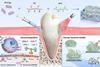
NewsMXene-based hydrogel disrupt bacterial biofilms and reprogram immune cell metabolism to reverse bone resorption in periodontitis
Researchers have developed an injectable MXene-based composite hydrogel (GQM) for the treatment of periodontitis. The hydrogel consists of oxidized gellan gum (OG), quaternized chitosan (QCS), and magnesium-tannic acid modified MXene nanosheets (MTA-Mg).
-
 News
NewsAnti-fouling materials protect against slimy incursions
Researchershave received a $750,000 grant from the U.S. Department of Defense to develop materials that incorporate soft robotics and nontoxic polymers to fight biofouling, or the buildup of aquatic organisms in wet environments.
-
 News
NewsSimple diet changes help microbes produce higher-quality biomaterials
Feeding bacteria a cheap agricultural by-product enables the production of high-value biomaterials with promising biomedical and industrial applications.
-
 News
NewsMXene-based hydrogel disrupts bacterial biofilms and reprograms immune cell metabolism to reverse bone resorption in periodontitis
Periodontitis treatment not only requires effectively disrupting bacterial biofilms but also reshaping the local immune metabolic microenvironment to fundamentally break the vicious cycle of “infection-inflammation-bone resorption.”
-
 News
NewsAntibiotic-resistant seafood bacterium found in Vietnam fish farming waters near popular island destination
A multi-drug resistant bacterium linked to seafood-related illness has been detected in fish-farming waters near Cat Ba Island, Vietnam.
-
 News
NewsStudy detects, for the first time in Brazil, bacteria that cause a serious disease in farmed fish
Columnaris disease pathogens, which were previously only found in Asia and the United States, were identified in samples from São Paulo, Minas Gerais, and Paraná. This finding underscores the need for epidemiological surveillance and new vaccines.
-
 News
NewsBiofilm clue opens route to anti-infection treatments of the future
A multidisciplinary study has uncovered a critical component in the formation of biofilms, the complex structures used by bacteria to colonise surfaces. The research may have implications for future infection treatments, including for people with cystic fibrosis.
-
 News
NewsTire microplastics may accelerate the spread of antibiotic resistance in cities
A new perspective article suggests that tire microplastics could create environmental hotspots that help antibiotic resistance genes persist, move between bacteria, and spread through cities.
-
 News
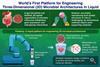
NewsFloating colonies: engineering three-dimensional microbial architectures in liquid cultures
Researchers develop an innovative platform for engineering three-dimensional microbial structures while preserving molecular diffusion, microbial motility, and growth.
-
 News
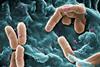
NewsFirst-of-its-kind computer model of bacterial biofilms could support antibiotic resistance research
Faster and more effective ways to treat Pseudomonas aeruginosa could be on the cards thanks to a first-of-its-kind 3D computer model which shows how the bacterium grows and reshapes its protective layer and spreads to new surfaces.
-
 News
NewsPlant-based wound dressing fights infection before it takes hold
A new dressing made from plant-based materials can deliver antibiotics directly to wounds during critical early stages of infection, according to researchers. The study is the first to use this family of sustainable furan-based polymers for infection-fighting wound dressings.
-
 News
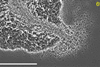
NewsEject! Bacteria discovered with the ability to jettison cells as a survival mechanism
Biologists have found that communities of bacteria are capable of ‘escape pod’ ejection strategies. They documented the biofilm ejection phenomenon for the first time while studying a bacterium known as hay bacillus (Bacillus subtilis).
-
 News
NewsWhat D.C.’s algal bloom reveals about a growing water threat
Environmental engineer Steven Chapra speaks out about cyanobacteria algal blooms in the newly renovated Lincoln Memorial Reflecting Pool, expanding on why harmful algal blooms are a growing concern, and what they may mean for freshwater ecosystems.
-
 News
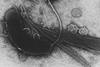
NewsBiologists uncover a molecular mechanism that helps bacteria spread antibiotic resistance genes
A new study reveals the molecular mechanism behind one of the most powerful mechanical actions in all of biology, the reeling in of tiny surface fibers called type IV pili.
-
 News
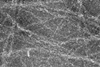
NewsDeep-sea extremophile yields protein that forms super stable biofilm
Scientists have discovered a protein secreted by a deep-sea extremophile — an organism adapted to extreme environmental conditions — that self-assembles into a biofilm and is highly stable, boosting its potential for biomedical applications.
-
 News
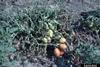
NewsScientists deploy biofilm-targeting approach to improve crop disease resistance
A new study reports a biofilm-targeting approach for improving crop disease resistance. By replacing the native chloroplast transit peptide (CTP) of MOC1 with a secretory signal peptide (SP), the team redirected the enzyme from chloroplasts to the apoplast.
-
 News
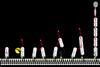
NewsCryo-EM helps identify the mechanisms of dental plaque formation
Researchers used cryo-electron microscopy to provide new insights into how Porphyromonas gingivalis causes plaque formation, revealing the 3D structure of Mfa pili, an arm-like filament which enables the bacteria to stick to host tissues and other microbes.
-
 News
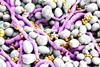
NewsA 'copper economy' helps fungi and bacteria build better biofilms
Scientists have discovered that two common human pathogens can work together by managing copper in their shared environment - a finding that could open new ways to break down stubborn mixed biofilms.