
All Disease Pathology articles
-
 News
How a gut virus hijacks mucus production to slip past the body’s protective barrier
A recent study reveals how astroviruses use goblet cells as an escape route from the small intestines to evade host immunity and enhance spread and transmission, presenting a new path for treating pediatric diarrhea.
-
 News
Marine compound shows promise against deadly brain-eating amoeba
A compound isolated from a marine bacterium may offer a faster way to attack Naegleria fowleri, the amoeba responsible for one of the deadliest known brain infections. In laboratory tests, rutamycin B reached full potency within four hours and was far more toxic to the parasite than to human cells.
-
 News
Common cell-death inhibitor reveals an unexpected pathway in tuberculosis
A widely used cell-death inhibitor may be triggering macrophage death during mycobacterial infection through an unexpected off-target pathway. The findings reveal a caspase-8-independent route to necroptosis and could help explain how damaging necrotic granulomas form during tuberculosis.
-
 News
Oncolytic viruses and CAR cells team up against solid tumors
Oncolytic viruses and CAR-T or CAR-NK cells could be engineered together to overcome some of the biggest barriers in solid tumor treatment. A new review outlines how these therapies may be combined into programmable systems that improve tumor targeting, immune-cell infiltration and sustained antitumor activity.
-
 News
Germany marks first CRISPR therapy success
A 19-year-old with severe beta-thalassemia has become the first patient in Germany to receive an approved CRISPR-based therapy as part of routine medical care. Four months after treatment at Charité, he no longer requires regular blood transfusions, marking a major step in bringing gene editing from the laboratory into everyday clinical practice.
-
 News
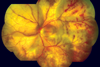
Host immune status is significantly associated with herpesvirus retinitis phenotypes and clinical outcomes
The clinical progression and outcomes of two major herpesvirus retinitis forms are associated with patients’ immune status, reveal scientists. They evaluated the clinical symptoms at presentation, retinal detachment patterns, treatment strategies, and clinical outcomes of acute retinal necrosis and cytomegalovirus retinitis.
-
 News
Viral infections can accelerate the progression of ALS, researchers find
A new study suggests that common viral infections — like influenza or COVID-19 — may accelerate the onset and progression of amyotrophic lateral sclerosis, or ALS. The findings suggest that it is the immune response triggered by these infections that accelerates the onset and progression of ALS.
-
 News
Research advances understanding of tick-borne Powassan virus
Researchers characterized changes in brain microRNAs during Powassan virus infection. MicroRNAs are tiny, natural molecules that help regulate how cells function by controlling protein production. The researchers found that these important regulators were widely disrupted as the infection progressed.
-
 News
Scientists uncover shared biology behind profound fatigue in five major illnesses
New research identifies a shared biological secret that helps explain chronic exhaustion in conditions including long Covid and PTSD.
-
 News
New design strategy expands nanoparticle vaccine approach to influenza viruses
Research scientists have developed a blueprint for stabilizing key influenza proteins and using them to make next-generation vaccine candidates.
-
 News
Propionate from gut bacterium Akkermansia mitigates liver fibrosis
A recent study has identified the gut commensal bacterium Akkermansia muciniphila as a potent modulator of liver fibrosis.
-
 News
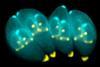
Methylation puts parasites in motion
Researchers identify a molecular mechanism that enables single-celled parasites to switch on the machinery they need to move and invade host cells.
-
 News
Microbiome signaling system could open new paths for treating IBS-related constipation
New research expands scientists’ understanding of how the gut microbiome communicates with the body, and how our gut bacteria work together to control intestinal movement.
-
 News
T cells are a powerful force against Zika virus
Scientists tested two Zika vaccines in a study that brings them one step closer to a “pan-orthoflavivirus vaccine”, which could teach T cells to fight several viruses at once.
-
 News
Dietary tryptophan prevents sepsis
Dietary tryptophan protects against sepsis through gut microbiota-derived metabolites which enhance macrophage bacterial phagocytosis.
-
 News
Immune responses to urinary tract infection linked to birth outcomes
A new study shows that the increased risk of preterm pregnancies associated with urinary tract infection, is linked to the body’s immune response to the infection rather than to the bacteria themselves.
-
 News
For Legionella bacteria, taking over a cell means playing by its rules
New research demonstrates how a protein produced by Legionella mimics the behavior of the host cell’s own proteins.
-
 News
Tuberculosis transmission may hold the key to prevention
Scientists have discovered the specific mechanisms that enable the bacteria responsible for tuberculosis to not only survive drying but also to generate mutations linked to antibiotic resistance.
-
 News
Gut bacteria may communicate differently with the human body in patients with Parkinson’s disease
A new study suggests that gut bacteria may send different biological signals in Parkinson’s disease.
-
 News
New approach cuts sepsis diagnosis from days to hours
A research team has developed a way to condense the days-long sepsis diagnosis timeline to just hours, a method which could help clinical decision-making that avoids worsening antibiotic resistance in the bacterial strains causing infections.