
All Early Career Research articles
-
 News
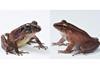
NewsFrog’s coat of bacterial armor helps protect it from fungal disease
The bacteria living on frogs’ skin could serve a vital role in protecting the animal from a deadly fungal disease. A team of researchers found that frogs’ natural skin bacteria can help them fight disease and improve their chances of survival.
-
 News
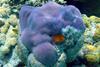
NewsNew insights into coral reproductivity could help protect our reefs
Scientists have uncovered an important missing piece in the puzzle of how some coral reefs can recover from climate events, providing critical information that could help guide future conservation and restoration efforts.
-
 News
NewsCurrents in an Arctic sea accelerate the sinking of carbon-carrying phytoplankton
Documenting the seasonal fate of these tiny marine organisms is a step toward understanding how ecosystems in the world’s fastest-warming region may change as ice recedes.
-
 News
NewsHot spring organism breaks record for heat tolerance of complex life
Scientists describe a new species of amoeba that can eat and reproduce in hot spring water as warm as 63°C (145°F) in California’s Lassen Volcanic National Park. The amoeba can protect itself at temperatures up to 70°C (158°F) by changing shape and forming a protective outer layer.
-
 News
NewsGut microbiome development may help predict type 1 diabetes in children at high risk
A new prospective study found that children at high genetic risk of type 1 diabetes whose gut microbiome development plateaued early had about three times the risk of developing the disease compared with children whose microbiomes continued to mature.
-
 News
NewsNovel database reveals hidden diversity and potential of deep-sea microbes
Scientists have spearheaded Global Ocean Reference Genomes Dark (GORG-Dark), the first global atlas of single-cell microbes living in the aphotic ocean. It contains more than 9,600 genomes from individual microbial cells collected across a broad range of depths and locations, including the Mariana Trench and the Antarctic.
-
 News
NewsDeleting yeast DNA to save lives
People with weakened immune systems and some other conditions can experience an overgrowth of Candida yeasts, leading to a type of infection known as candidiasis. It might be possible to save these patients by using CRISPR to delete the very genes that let infectious Candida resist treatment - but which genes are responsible?
-
 News
NewsGut microbiome features predict devastating disease affecting preemies
In a discovery that challenges long-standing assumptions about necrotizing enterocolitis, researchers have identified previously unknown predictors for the disease. They found that bacteria-infecting viruses and bacterial antibiotic resistance genes in the gut microbiomes of babies are additional harbingers of necrotizing enterocolitis.
-
 News
NewsFirst-of-its-kind preventative phage therapy provides promising results
The mammalian gut microbiome is teeming with a delicate balance of bacteria and the phages that keep them in check. What if the phages in the gut could prepare for an orally ingested pathogen and strike it down as it enters the gut, negating the need for a battle?
-
 News
NewsHedgehog coronaviruses may threaten cats more than humans, new study finds
Researchers have discovered how a group of coronaviruses circulating in hedgehogs invades host cells, a key to understanding their potential to jump between species and their risk of causing a pandemic in humans.
-
 News
NewsHow disease-causing E. coli quickly finds a new way to grip human cells—revealing a possible target for future treatments
A new study shows how a type of disease-causing E. coli can quickly adapt when it loses one of its main ways of attaching to the intestine. The bacteria either change shape or make small changes to a protein that strengthens their grip on human cells.
-
 Careers
How a sceptic was won over: Charlotte Wilson on her internship with AMI
Fourth year PhD student Charlotte Wilson admits she was sceptical before she embarked on her PIPS internship with Applied Microbiology International’s Communications and Marketing Team - but here’s how it turned out.
-
 News
NewsDangerous strings of bacteria use flow to spread colonies
Researchers have identified how certain dangerous bacteria are spread. They studied chain-like adherence pattern (CLAP) varieties of Shiga toxin-producing E. coli (STEC), finding that single bacteria attach to a surface and elongate before dividing, producing chains without ever separating.
-
 News
NewsFertilizers and extreme heat are damaging coral reefs in the Gulf of Mexico
Scientists analyzing nitrogen isotopes in the calcareous skeletons of corals have discovered that the high levels of nitrogen in the northern Gulf originate from the Mississippi River and are attributable to the use of fertilizers.
-
 News
NewsWhen antiviral defense and autoimmunity collide: New insights into lupus genetics
Researchers have found that a common lupus-associated genetic variant may strengthen antiviral immune responses while increasing the risk of autoimmunity.
-
 News
NewsThese bacteria can change their diet to survive inside the body
The team have found that Staphylococcus aureus can adjust its diet depending on what sources remain available. The bacterium can adjust its inner workings in response to any one of a number of different sulfur-containing compounds — like cysteine, glutathione or thiosulfate.
-
 News
NewsC. diff coordinates threat response to survive in gut
Researchers have discovered a unique system C. diff uses to simultaneously sense and respond to two different threats: host-mediated nutrient deprivation and a microbiota-produced antibiotic compound, suggesting new therapeutic options for preventing and treating C. diff infections.
-
 News
NewsNew study details the finding of the first known live kissing bug in Europe
Students taking a Medical Entomology class donned their detective hats and helped investigate what appears to be the first documented live kissing bug in Europe.
-
 News
NewsSuper-resolution imaging reveals details inside living cells
A new fluorescence microscopy technique that generates super-resolution images from a single camera exposure could help researchers study rapid movements within cells that are difficult to capture with existing methods.
-
 News
NewsInternational Society of Microbiota, Nature Awards and Yakult join forces to connect global funding with Japanese microbiome research
A new collaboration at ISM–RIKEN Targeting Microbiota 2026 will bring the Global Grants for Gut Health programme to Tokyo, alongside a dedicated funding discussion and three Best Abstract Prizes.