
A group of researchers supported by FAPESP has confirmed the identity of the first lichens to inhabit Earth, Spongiophyton, around 410 million years ago, in great detail for the first time. Lichens are a symbiosis of fungi and algae that are now quite common on tree trunks and roofs. They are believed to be partly responsible for structuring terrestrial ecosystems because they dissolve rocks and may have helped form the first soils.
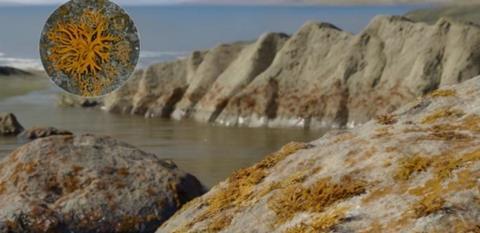
The study was published in the journal Science Advances as a cover story by researchers from 19 institutions, including two Brazilian ones: the University of São Paulo (USP) and the Brazilian Center for Research in Energy and Materials (CNPEM).
“This organism is quite present in the fossil record, and there has always been controversy as to whether it’s a fungus, a plant, or lichen. Thanks to some light beams from Sirius [the CNPEM’s state-of-the-art synchrotron light source], combined with other techniques, we were able to visualize structures that allow us to state with considerable certainty that this is the first known lichen to inhabit the Earth,” says Bruno Becker-Kerber, lead author of the study. He conducted the study during his postdoctoral research at USP’s Institute of Geosciences (IGc) and the CNPEM with a scholarship from FAPESP.
3D images
The various light sources employed in the study enabled the acquisition of images at micrometric and nanometric scales, including three-dimensional images. One nanometer is equivalent to one millimeter divided by one million. In the study, a resolution of 170 nanometers was achieved. This resolution allowed the researchers to visualize possible reproductive structures, networks of hyphae (the filaments that make up the body of multicellular fungi), and algae cells. These features are strong indicators for characterizing a lichen.
READ MORE: Lichens and drones reveal dinosaur bones
READ MORE: Perfect protection - melanins are particularly important for lichens
The analyses also detected calcium, nitrogen compounds, and lipids, which ruled out the possibility that the specimen was a plant. “The most resistant material in non-vascular plants is cellulose. Lichens, on the other hand, are composed of chitin, the same material that forms the shells of insects. Chitin is loaded with nitrogen. When we analyzed Spongiophyton, we detected a very strong signal of nitrogen never seen before. Rarely is there evidence as robust as this,” says Jochen Brocks, co-author of the study and a professor at the Australian National University, in a press release.
Sun protection
Calcium microparticles compatible with minerals produced by modern lichens as a form of sun protection were also identified in the ancient fossils, which is an unprecedented finding.
Another co-author, Nathaly Archilha, a researcher at the Brazilian Synchrotron Light Laboratory (LNLS) of the CNPEM, says the work shows the importance of combining traditional methods with cutting-edge techniques.
“The measurements guided us to key regions of the fossils, and we were able to obtain images on a nanometric scale that revealed the complex networks of fungi and algae that define Spongiophyton as a true lichen,” she explains.
Father and son
Becker-Kerber found the fossil in 2021 at a quarry in Rio Verde de Mato Grosso, Mato Grosso do Sul, his home state. While pursuing his master’s degree at IGc-USP, the researcher would go into the field with his father, Gilmar Kerber. An enthusiastic paleontologist, Gilmar is now retired from the Brazilian Institute of the Environment and Renewable Natural Resources (IBAMA) and is a doctoral student in animal biology at the Federal University of Mato Grosso do Sul (UFMS).
“Each fossil is a window into the past. This one, in particular, showed a new perspective on how life conquered the terrestrial environment,” says Gilmar Kerber.
“Quarries are great sources of material for paleontologists. My father hammered a rock, and when it opened, I realized it contained something unprecedented for that region,” says Becker-Kerber, currently pursuing postdoctoral studies at Harvard University in the United States.
Protecting the sample
He says he immediately wrapped the material in sterile aluminum foil to reduce the chances of contamination from environmental materials and microorganisms. This procedure enables researchers to conduct sensitive analyses, such as identifying molecular biomarkers.
The study suggests that the first lichens appeared in cold regions of the ancient supercontinent Gondwana, which now corresponds to South America and Africa. The results also indicate that lichens were not marginal organisms that lived only in very specific conditions, as has been suggested. Rather, they were pioneers in the transformation of the planet’s surface and played a role in the transition of life from water to land.
“Even today we observe how lichens altered rocky substrates, dissolving rocks, in addition to producing biomass used by plants and animals. This role would have been even greater in that period, enabling the emergence of the complex ecosystems we have today, such as forests and fields,” concludes Becker-Kerber.
Topics
- Algae
- Australian National University
- Brazilian Center for Research in Energy and Materials
- Bruno Becker-Kerber
- Early Career Research
- Ecology & Evolution
- FAPESP
- Fungi
- Gilmar Kerber
- Healthy Land
- Jochen Brocks
- Nathaly Archilha
- paleontology
- Research News
- Soil & Plant Science
- Spongiophyton
- The Americas
- University of São Paulo





No comments yet