Gas vesicles are among the largest known protein nanostructures produced and assembled inside microbial cells. These hollow, air-filled cylindrical nanostructures found in certain aquatic microbes have drawn increasing interest from scientists due to their potential for practical applications, including as part of novel diagnostic and therapeutic tools. However, producing gas vesicles is a hard ask for cells in the lab, hindering the development of applications.

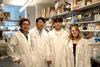
Low-Res_News group photo

In a recent study published in Nature Communications, a team of researchers led by Rice University bioengineer George Lu reports the development of a new genetic regulatory system to improve cell viability during the production of gas vesicles.

READ MORE: Study identifies protein responsible for gas vesicle clustering in bacteria

“In the past few years, studies have shown that gas vesicles’ ability to reflect sound makes them useful as unique and versatile acoustic reporter systems for biomedical research and clinical applications,” said Lu, an assistant professor in the Department of Bioengineering at Rice’s George R. Brown School of Engineering and Computing.

“However, scientists have had limited success putting them to practical use. Producing the 10 genes required to form the shell of these structures in nonnative bacterial hosts like Escherichia coli causes significant stress for the cells and can even lead to cell death. We developed a new genetic regulatory system that ensures host cells remain healthy while still producing functional nanostructures.”

Cellular stress

In complex systems like gas vesicles, cellular stress often arises when multiple proteins are produced and assembled at the same time. To address this challenge, Lu and his team designed a two-stage, dual-inducer system that allows precise control over when and how much of each protein is produced. 

“Notably, we found that initiating the expression of assembly factors before producing the primary shell protein prevents the toxicity typically associated with making them simultaneously,” said Zongru Li, a postdoctoral fellow in the Lu lab who conducted most of the work for this project during his time as a graduate student under Lu’s supervision.

“Giving the assembly factors a two- to three-hour head start before inducing the shell protein ensures that the cellular machinery required to build the structure is already in place before the bulk structural proteins are introduced.” 

Constructing a skyscraper

This process is like constructing a skyscraper. If all the raw materials — steel and glass — are delivered at the same time the construction crew arrives, the site becomes overcrowded and chaotic, and work stalls. But if the crew first sets up cranes and lays the foundation before the materials are delivered to the site, it allows the project to move forward smoothly without overwhelming the site’s infrastructure.

“By shifting from simultaneous to sequential production, this genetic regulatory system transforms a chaotic assembly process into a well-regulated production pipeline. The result is a healthier host organism and higher yields of gas vesicles,” Lu said. “This approach provides a robust, reliable method to produce gas vesicles for clinical and research applications and can also be adapted to produce other multicomponent protein complexes.”

Study background

Other authors involved in this study and their institutional affiliations can be found here. Lu specifically acknowledged the contributions of former Rice undergraduate researcher Sumin Jeong, who graduated with a bachelor’s degree in bioengineering last year. Jeong helped initiate the project and played an instrumental role in its early phase.

This work was supported by grants from the Cancer Prevention and Research Institute of Texas, the National Institutes of Health, the Welch Foundation, G. Harold and Leila Y. Mathers Foundation, the John S. Dunn Foundation and the Open Collective Foundation.