
All Editorial articles – Page 158
-
 News
NewsScientists trace the evolution of the H5N1 virus
Researchers have discovered that the currently circulating 2.3.4.4b clade of H5N1 has specific mutations in its genome that increase its human adaptive potential.
-
 News
NewsCommon food thickeners – long thought to pass right through us – are actually digested
It turns out cellulose-based thickening agents can be digested. Researchers have shown that our gut bacteria can feed on these large molecules – thought to not be possible – thanks to enzymes that normally help us break down dietary fibre.
-
 News
NewsStudy: Long COVID remains a substantial financial and medical burden
Individuals with long COVID-19 experienced worse financial and employment outcomes – lasting up to three years after their initial infection. Notably, vaccination against COVID-19 was associated with strikingly improved work and financial outcomes.
-
 News
NewsReciprocal links likely between certain groups of gut bacteria and insomnia risk
Certain types of bacteria seem to boost or lower the risk of insomnia while the sleep disorder itself seems to alter the abundance of certain types of bacteria, suggests a Mendelian randomisation study.
-
 News
NewsWhat exactly is Long COVID? It depends who you ask
New research finds that the definition of Long COVID varies so widely across published studies that the percentage of people identified as having the condition can differ dramatically, making it harder to treat patients and advance research.
-
 News
NewsCommon food bacterium could help make vitamins cheaper and greener
A new study reveals how Lactococcus lactis, a common food bacterium, regulates the production of a key precursor in vitamin K₂ (menaquinone) biosynthesis. The bacteria produce enough of this precursor to support their growth while preventing toxic buildup.
-
 News
NewsMultidrug-resistant bacteria spread from war-zone hospitals to other countries
After Russia’s full-scale invasion, thousands of patients were transferred from Ukraine to other European countries. Researchers in Helsinki found that 8% of Ukrainian refugees had been hospitalised due to war injuries. Almost 80% of them carried multidrug resistant bacteria.
-
 News
NewsResearchers identify a potential biomarker for long COVID
Researchers have identified a potential biomarker for long COVID. The study results detail the detection of SARS-CoV-2 protein fragments within extracellular vesicles (EVs) — tiny, naturally occurring packages that help cells share proteins, metabolites, and other materials.
-
 News
NewsAI uncovers new antibiotics in ancient microbes
Researchers used artificial intelligence to identify previously unknown compounds in Archaea that could fuel the development of next-generation antibiotics.
-
 News
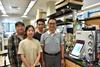
NewsReady for market: Yeast process boosts clean, cost-efficient chemical production of succinic acid
A re-engineered yeast strain that efficiently produces succinic acid has been developed, which allows this valuable chemical to be produced at a lower cost.
-
 News
NewsGlobal Virus Network reaffirms support for mRNA vaccines and collaborative vaccine research
The Global Virus Network (GVN) has announced that it is unequivocally committed to the continued development and deployment of mRNA vaccines and the global scientific collaboration that makes such innovation possible.
-
 News
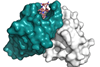
NewsMalaria vaccine mimics natural immunity with high precision
A detailed analysis reveals one of the reasons why the R21/Matrix-M malaria vaccine works so well: the antibodies generated following vaccination are indistinguishable from those found in people who have been infected by the parasites.
-
 News
NewsLab-made sugar-coated particle blocks Covid-19 infection — Possible new treatment on the horizon
Groundbreaking research has revealed a synthetic glycosystem — a sugar-coated polymer nanoparticle — that can block Covid-19 from infecting human cells, reducing infection rates by nearly 99%.
-
 News
NewsGeorgia and Ukraine launch national Reproducibility Networks with support from the TIER2 project
Two new national Reproducibility Networks have been launched in Georgia and Ukraine with support from the TIER2 project – a step towards strengthening open, transparent, and high-quality research practices in Horizon Europe Widening participation countries.
-
 News
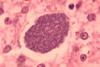
NewsChemical trick could turn losing malaria drug into a winner
A new generation of malaria drugs failed clinical trials, in part because they were hard to swallow. Chemists have remodeled their structures to make them more soluble, while maintaining their effectiveness against drug-resistant parasites.
-
 News
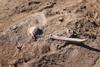
News4,000-year-old sheep reveals that livestock played a role in prehistoric plague infections
An ancient Yersinia pestis genome recovered from sheep sheds new light on a mysterious infectious disease that plagued prehistoric Eurasia for over 2000 years.
-
 News
NewsNatural shield: Licorice extract keeps ready-to-eat chicken safer and longer
Scientists who combined microbiological assays with mathematical growth models revealed that licorice extract demonstrates strong antimicrobial properties against one of the most resilient spoilage organisms in meat.
-
 News
NewsStudy finds fungus metabolites may help ghost shrimp survive
Researchers have found that chemical byproducts produced by the amphibian-killing fungus Batrachochytrium dendrobatidis—commonly known as Bd—may actually help ghost shrimp survive.
-
 News
NewsFrom east to west: How microbes orchestrate sausage flavor
A new review compares the microbial communities and fermentation strategies in Eastern and Western sausage styles, revealing how microbial succession—from lactic acid bacteria to yeasts and molds—plays a pivotal role in shaping characteristic flavors and textures.
-
 News
NewsNew hydrogel-based treatment accelerates infected wound healing and balances skin microbiota
A novel ε-poly-L-lysine-loaded sodium-alginate/gelatin hydrogel (PSG15) has shown exceptional promise in accelerating the healing of infected wounds. The injectable hydrogel delivers antibacterial properties while regulating macrophage polarization and stabilizing the skin microbiota.