
All Editorial articles – Page 290
-
 News
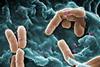
NewsScientists map how deadly bacteria evolved to become epidemic
Pseudomonas aeruginosa evolved rapidly and then spread globally over the last 200 years, probably driven by changes in human behaviour, a new study has found.
-
 News
NewsUncovering ‘Blockbuster T cells’ in the gut wins major prize
Kazuki Nagashima developed a method with which to zero in on individual gut bacterium’s impacts on T cells. His work showed that – contrary to what has been thought – some T cells in the gut can interact with multiple bacteria.
-
 News
NewsWHO updates laboratory biosecurity guidance
WHO recently issued updated guidance for national authorities and biomedical laboratories to manage biological risks, including strengthening of cybersecurity measures and reducing risks from new technologies.
-
 News
NewsRetreating glaciers: fungi enhance carbon storage in young Arctic soils
Melting Arctic glaciers are in rapid recession, and microscopic pioneers colonize the new exposed landscapes. A new study has revealed that yeasts play an important role in soil formation in the Arctic.
-
 News
NewsResearchers develop predictive model for cross-border COVID spread
A study on the spread of infections across Nordic borders from spring until the end of 2020 sheds light on the efficacy of cross-border travel restrictions, helping to better understand which measures actually make a difference.
-
 News
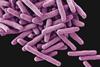
NewsResearchers reveals why recombinant BCG induces a stronger and longer-lasting response
Researchers are working on a more potent version of the BCG vaccine that protects against TB. While the conventional immunizer reduced infection by 90% in experiments with mice, the recombinant BCG increased protection rates to 99%.
-
 Careers
Connecting with microbiologists and presenting research: Oluwole Owoyemi reports back from ASM 2024
Medical microbiologist Oluwole Owoyemi of Achievers University Owo and Federal University of Technology, Akure, reports back from ASM MICROBE 2024 after being awarded a Scientific Event Travel Grant by Applied Microbiology International.
-
 News
NewsInnovative test diagnoses chagas disease in newborns
The LAMP molecular diagnostic test, coupled with a modified 3D printer to extract DNA, has a sensitivity comparable to PCR, and can be used in laboratories with limited resources.
-
 News
NewsCancer drug could be repurposed to fight Covid-19
Twelve years ago, cancer researchers identified a molecule that helps cancer cells survive by shuttling damaging inflammatory cells into tumor tissue. In new research, they show that the same molecule does the same thing in lung tissue infected with COVID-19.
-
 News
NewsFrom ‘hit to vial’: Discovery and optimization of a promising vaccine adjuvant
Scientists identified a new and promising adjuvant, dubbed PVP-037 - in principle, this compound can be added to any vaccine to enhance its action.
-
 News
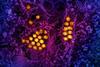
NewsDengue linked to heightened short- and long-term risk of depression in Taiwan
Analysis of the medical records of nearly 50,000 people who experienced dengue fever in Taiwan suggests that this disease is associated with elevated short- and long-term risk of depression.
-
 News
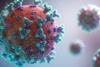
NewsScientists unravel life-saving effect of dexamethasone in COVID-19
Researchers have discovered how the cortisone compound dexamethasone influences the impaired inflammatory response to Covid-19 and which patients benefit from it.
-
 News
NewsMobile phone data helps track pathogen spread and evolution of superbugs
Combining genomic data and human travel patterns over a 14-year period in South Africa reveals key insights into the spread, evolution and resistance patterns of a major bacterium behind pneumonia and meningitis globally.
-
 News
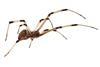
NewsInvasive brown widow spiders host novel bacteria related to chlamydia
Invasive brown widow spiders across three continents were highly infected with a single strain of Rhabdochlamydia, a bacterium that is related to major pathogens of humans and animals, including chlamydia.
-
 News
NewsPasteurization inactivates highly infectious avian flu in milk
Researchers tested nearly 300 milk products from 132 processors in the US and found no infectious H5N1 virus in the samples.
-
 News
NewsScientists explore bird breeding behaviour and microbiomes in the radioactive Chornobyl Exclusion Zone
New research finds surprising differences in the diets and gut microbiomes of songbirds living in the radiation contaminated areas of the Chornobyl Exclusion Zone, Ukraine.
-
 News
NewsPublic fails to appreciate risk of consuming raw milk, survey finds
Fewer than half of U.S. adults know that drinking raw milk is less safe than drinking pasteurized milk and many Americans do not understand the risks of consuming raw milk, according to a new health survey.
-
 News
NewsGiant clams - and their algae - may hold the answers to making solar energy more efficient
Researchers present an analytical model for determining the maximum efficiency of photosynthetic systems based on the geometry, movement, and light-scattering characteristics of giant clams.
-
 News
NewsRegular vaccine boosts may help people who are immunocompromised fight Covid-19
New research finds booster doses of bivalent vaccines given every three to six months helps maintain a person’s ability to neutralize multiple SARS-CoV-2 strains, including XBB.1.5.
-
 News
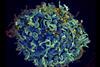
NewsNew lab test to detect persistent HIV strains in Africa may aid search for cure
A multinational team has developed a test that will help measure the persistence of HIV in people affected by viral strains found predominantly in Africa—a vital tool in the search for an HIV cure that will benefit patients around the world.