
All HIV articles – Page 5
-
 News
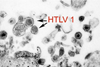
NewsScientists discover how leukemia virus stays hidden in the body
A research team has discovered how the human T-cell leukemia virus type 1 (HTLV-1) silently persists in the body. Their findings identify a previously unknown genetic “silencer” element that keeps the virus in a dormant, undetectable state.
-
 News
NewsGene therapy may block HIV transmission during breastfeeding, study shows
Delivering broadly neutralizing antibodies against HIV-1 to newborns via gene therapy provided them with multi-year protection from HIV/AIDS infection, according to an animal study.
-
 News
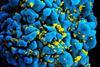
News‘One and done’: A single shot at birth may shield children from HIV for years, study finds
A new study shows that delivering a single injection of gene therapy at birth may offer years-long protection against HIV, tapping into a critical window in early life that could reshape the fight against pediatric infections in high-risk regions.
-
 News
NewsStudy suggests some maternal HIV infections may be missed during pregnancy
Newborns exposed to HIV during pregnancy or birth should receive antiretroviral medication immediately after delivery - but a study finds more than half of infants diagnosed with HIV in their first year of life had not received this essential postnatal treatment.
-
 News
NewsTiny chip speeds up antibody mapping for faster vaccine design
By analyzing just a drop of blood, this microchip gives researchers quicker-than-ever insight into how a person’s antibodies are interacting with a virus or other pathogen.
-
 News
NewsSupercharged HIV vaccine could offer strong protection with just one dose
Researchers have shown that they can generate a strong immune response to HIV with just one vaccine dose, by adding two powerful adjuvants — materials that help stimulate the immune system.
-
 News
NewsScientists discover key protein that enables ‘shock & kill’ strategy for HIV latent virus clearance
Researchers have identified a specific gene transcription factor, BRD9, as a potential key to unlocking the mechanisms behind HIV-1 latency.
-
 News
NewsScientists decipher HIV-1 transcription initiation and elongation from single-molecule imaging data
Scientists have developed a dual-driven framework based on single-molecule imaging data and stochastic dynamic modeling to infer HIV-1 transcription dynamics.
-
 News
NewsAntibiotics taken during pregnancy may reduce preterm births
A study of almost 1000 pregnant women in Zimbabwe found that a daily dose of a commonly used, safe and inexpensive antibiotic may have led to fewer babies being born early.
-
 News
NewsMultiple testing for infectious diseases among migrants key to cutting onward transmission
Routine testing for multiple infectious diseases among migrants will benefit healthcare systems by identifying key infections earlier, a new study finds.
-
 News
NewsHIV discovery could open door to long-sought cure
Scientists have uncovered a key reason why HIV remains so difficult to cure: Their research shows that small changes in the virus affect how quickly or slowly it replicates, and how easily or stubbornly it can reawaken from hiding.
-
 News
NewsNew diagnostic tool uses bioluminescence to detect viruses
Researchers are shining a powerful new light into the viral darkness with the development of Luminescence CAscade-based Sensor (LUCAS), a rapid, portable, highly-sensitive diagnostic tool for processing complex biological samples.
-
 News
NewsPortable HIV monitoring device shows promise for remote settings
A newly developed microfluidic biosensor promises to reshape how CD4+ T cells — key indicators of immune function in Human Immunodeficiency Virus (HIV) patients — are detected.
-
 News
NewsThe Global Fund to fight AIDS, Tuberculosis and Malaria ‘should step up efforts’
The international community must protect global responses to HIV, tuberculosis (TB), and malaria to serve humanity’s collective interests, according to a new opinion article.
-
 News
NewsTwo HIV vaccine trials show proof of concept for pathway to broadly neutralizing antibodies
A new study combining data from two separate phase 1 clinical trials shows that a targeted vaccine strategy can successfully activate early immune responses relevant to HIV, and, in one trial, further advance them.
-
 News
NewsProof of concept for HIV vaccination that deploys germline-targeting
For a preventative HIV-vaccine to work it should induce broadly neutralising antibodies against all the diverse strains of the virus. The first in-human assessment of germline-targeting strategy with a trimer displays positive results.
-
 News
News‘Loop’hole: HIV-1 hijacks human immune cells using circular RNAs
In a groundbreaking discovery, researchers have identified a never-before-seen mechanism that enables the human immunodeficiency type 1 virus (HIV-1) to evade the body’s natural defenses and use it to support its survival and replication.
-
 News
NewsScientists win award for bringing breakthrough HIV treatment lenacapavir into play
Three people have been awarded the AAAS Mani L. Bhaumik Breakthrough of the Year Award for their work on the first HIV drug to offer long-lasting protection from infection — eliminating the need for people to take a daily pill.
-
 News
NewsNew CDC nPEP Guidelines should become ‘part of general medical practice’
Health experts say the updated CDC HIV Non-Occupational Post Exposure Prophylaxis (nPEP) Guidelines should be part of general medical practice, as incorporating them will reduce new HIV infections and improve public health.
-
 News
NewsAntibodies that recognize lipids: A new path for HIV vaccines and autoimmune disease treatments
Scientists have used computer modeling to illustrate how a specific class of antibodies actually use lipids to recognize the HIV virus. The work highlights antibody features that could help people design better vaccines for HIV and autoimmune diseases.