
All HIV articles – Page 2
-
 News
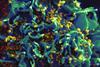
NewsScientists discover how HIV hijacks a cellular ‘gateway’ to infect resting immune cells
New research reveals that when HIV spreads directly between T-cells it triggers a molecular signalling chain that temporarily ‘unlocks’ the nuclear pore complex, allowing the HIV virus and capsid to enter and integrate into the host’s DNA.
-
 News
NewsGut microbes actively support immunity in people living with HIV
A new study shows that gut microbes help bolster immunity in people living with HIV – and that, one day, these microbes may be harnessed to protect this population from infections driven by immune deficiency.
-
 News
NewsVaccine strategy induces broadly neutralising HIV antibodies
Researchers have developed a new vaccine strategy that has generated antibodies capable of neutralising highly divergent HIV variants. The study provides new insights into how the immune system can be guided towards a particularly protected part of the virus.
-
 News
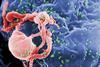
NewsWHO certifies the Bahamas for eliminating mother-to-child transmission of HIV
In a landmark achievement for Caribbean public health, the World Health Organization (WHO) congratulates The Bahamas for becoming the latest Caribbean nation to be certified as having eliminated the mother-to-child transmission of HIV.
-
 News
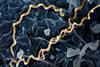
NewsHas life-saving HIV therapy contributed to increased rates of a sexually transmitted disease?
A study has uncovered an unintended consequence of a major medical breakthrough: while the availability of HIV treatments in the late 1990s dramatically improved survival, they also contributed to a resurgence in syphilis, a sexually transmitted infection.
-
 News
NewsScientists map how HIV hijacks human cells—and how cells can fight back
Scientists have opened a new door to understanding HIV by creating the first comprehensive genetic roadmap of how the virus interacts with real human cells. They identified a multitude of hidden players in HIV infection, human proteins that either help the virus thrive or work to stop it.
-
 News
NewsStudying two very different viruses helps to develop new strategies
When the SARS-CoV-2 pandemic began, virologist Theodora Hatziioannou, in conjunction with Paul Bieniasz brought her HIV-honed skills and tools to this new global threat, which made it easier and faster for researchers to gain insights into the virus and test antibodies for potential therapeutic candidates in real time.
-
 News
NewsHIV treatment reduces accelerated biological ageing by nearly four years, landmark study shows
A major study presented at ESCMID Global 2026 has found that antiretroviral therapy (ART) reduces accelerated biological ageing in people with HIV (PWH) by nearly four years, a finding that could transform how clinicians monitor HIV treatment and long-term health outcomes.
-
 News
NewsSibling stem cell transplant linked to long-term HIV remission
Long-term HIV remission has been achieved in a patient following a stem cell transplant from a sibling carrying a certain genetic mutation, according to new research.
-
 News
NewsAstragalus polysaccharide-linked exosomes “wake up” latent HIV-1 by flipping a key cellular switch
“Shock-and-kill” strategies aim to reactivate latent virus so infected cells become visible to immune clearance or additional therapies. In a new study, researchers investigated whether exosomes could mediate HIV latency reversal after exposure to Astragalus polysaccharide (APS).
-
 News
NewsHIV infections would increase by 10% average if CDC funding for HIV testing ends, study predicts
Researchers used a computer model to quantify the effect of funding cuts for HIV testing. They estimate that HIV infections could increase an average of 10% in 18 U.S. states if this funding is interrupted or ended.
-
 News
NewsSpecific patterns of CD39 expression on T-cells of HIV/HCV coinfected patients receiving antiretroviral therapy
Researchers demonstrated that CD4+ T-cells act as the main regulators of purinergic signals in HIV/HCV coinfected and healthy individuals. At the same time, the proportion of CD4+ T-cells involved in the control of purinergic signaling was increased in HIV/HCV coinfected patients compared with healthy subjects.
-
 News
NewsNew research suggests HIV can be kept in check – without medication
An international study shows that a combination of two parts of the immune system – antibodies and T cells – can suppress HIV without lifelong medication.
-
 News
NewsWhy some people naturally control HIV even after stopping therapy — and how we can leverage that to treat others
New research offers a path toward life without daily HIV pills, suggesting a common diabetes pill could help achieve long-term remission.
-
 News
News How viruses mess with our brains
What impact does a viral infection have on our memory, attention, and concentration? A new review has identified several biological markers associated with cognitive decline in the context of infection. It also provides a solid foundation for future research.
-
 News
NewsNew tool reveals the secrets of HIV-infected cells
Scientists have developed a novel tool—named HIV-seq—for profiling the features of rare HIV-infected cells from people with HIV. Using the new tool, they’ve found key differences in people’s HIV-infected cells before versus after starting antiretroviral therapy.
-
 News
NewsSingle daily pill shows promise as replacement for complex, multi-tablet HIV treatment regimens
A phase 3 clinical trial has shown that a new, daily oral tablet that combines two current HIV treatment medications – bictegravir and lenacapavir (BIC/LEN) – may simplify treatment significantly for people with HIV who currently take very complex treatments.
-
 News
NewsNew strategies aim at HIV’s last strongholds
A new study has overcome a long-standing challenge—how to isolate and study elusive HIV-infected cells called authentic reservoir clones (ARCs) that evade the immune system, making the disease difficult to cure.
-
 News
NewsExposing a hidden anchor for HIV replication
Scientists investigating HIV have revealed a previously unknown role for the viral protein integrase, which helps HIV insert itself into human DNA. A new study provides the first direct evidence that integrase plays a critical structural role earlier on in HIV’s life cycle — when the virus matures into an infectious force.
-
 News
NewsHIV antibody opens up new approaches for vaccine development and combination therapies
An international research team has identified a novel HIV antibody that targets the virus at a particularly vulnerable site and overcomes previous limitations of known antibodies. The study opens up new perspectives for the development of vaccines and therapeutics against HIV-1.