
All Immunology articles – Page 20
-
 News
NewsResearchers solve mystery behind rare clotting after adenoviral vaccines or natural adenovirus infection
Scientists have uncovered why a small number of people developed dangerous blood clots after either receiving certain COVID‑19 vaccines or experiencing a natural adenovirus infection - the answer lies in an unexpected case of misdirected targeting by the immune system.
-
 News
NewsVirus-based therapy boosts anti-cancer immune responses to brain cancer
A study has shown that a single injection of an oncolytic virus—a genetically modified virus that selectively infects and destroys cancer cells—can recruit immune cells to penetrate and persist deep within brain tumors.
-
 News
NewsHow food shortages reprogram the immune system’s response to infection
When food is scarce, stress hormones direct the immune system to operate in “low power” mode to preserve immune function while conserving energy. This reconfiguration is crucial to combating infections amid food insecurity.
-
 News
NewsUS study finds declining perception of safety of COVID-19, flu, and MMR vaccines
A sizable majority of Americans think the three vaccines that combat potentially deadly illnesses flu, Covid-19 and measles are safe to take, although perceptions of the safety of all three vaccines showed a statistically significant drop over the past three years.
-
 News
NewsStudy reveals how chills develop and support the body’s defense against infection
Researchers in Japan have identified the neural mechanism behind chills and the instinct to increase body temperature during infection.
-
 News
NewsLong COVID linked to Alzheimer’s disease mechanisms
The increased size of, and lesser blood supply to, a key brain structure in patients with Long COVID tracks with known blood markers of Alzheimer’s disease and greater levels of dementia, a new study finds.
-
 News
NewsNew gut-brain discovery offers hope for treating ALS and dementia
Scientists have identified a link between gut bacteria and the deterioration of the brain in Amyotrophic Lateral Sclerosis (ALS) and Frontotemporal Dementia (FTD). The researchers discovered that certain bacterial sugars cause immune responses that kill cells—and how to prevent it.
-
 News
News Engineered moths could replace mice in research into “one of the biggest threats to human health”
Scientists have created the world’s first genetically engineered wax moths – a development which could both accelerate the fight against antimicrobial resistance (AMR) and significantly reduce the need for mice and rats in infection research.
-
 News
NewsWhat drives food allergies? New study pinpoints early-life factors that raise risk - including microbiome
A new study involving 2.8 million children around the world has revealed the most important early-life factors that influence whether a child becomes allergic to food. Genetics alone cannot fully explain food allergy trends, pointing to interactions between genes, skin health, the microbiome, and environmental exposures.
-
 News
NewsEthris and German Center for Infection Research (DZIF) announce strategic collaboration to develop mRNA-based vaccines
Ethris GmbH, a clinical-stage biotechnology company pioneering next-generation RNA therapeutics and vaccines, and the German Center for Infection Research (DZIF), have announced a strategic research collaboration to develop mRNA-based vaccines for the prevention and treatment of infectious diseases.
-
 News
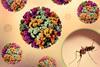
NewsResearchers on the cusp of a vaccine for a global health threat
Researchers are on the cusp of a new vaccine to prevent chikungunya, a global health threat which attacks human joint tissue. The team tested whether they could engineer E. coli to assemble biopolymer particles which displayed chikungunya antigens and performed as a vaccine.
-
 News
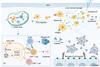
NewsConstruction of a localized immune niche via supramolecular hydrogel vaccine to elicit durable and enhanced immunity against infectious diseases
A new article discusses the construction of a localized immune niche via supramolecular hydrogel vaccine to elicit durable and enhanced immunity against infectious diseases.
-
 News
NewsDiscovery of SARS-CoV-2 PLpro inhibitors and RIPK1 inhibitors with synergistic antiviral efficacy in a mouse COVID-19 model
A new article publication discusses the discovery of SARS-CoV-2 PLpro inhibitors and RIPK1 inhibitors with synergistic antiviral efficacy in a mouse COVID-19 model.
-
 News
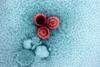
NewsNew study: Immune cells linked to Epstein-Barr virus may play a role in MS
Researchers have found that certain types of CD8+ “killer” T cells — immune cells that destroy damaged or infected cells — are more abundant in people with MS. Some of these killer T cells target EBV, which suggests that the virus may trigger the damaging immune response seen in MS.
-
 News
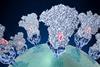
NewsStudy reveals dual forces driving SARS-CoV-2 evolution: Immune pressure and viral fitness
New research clarifies the complex role of neutralizing antibodies in shaping disease outcomes and the evolution of SARS-CoV-2.
-
 News
NewsA rapid evolutionary process provides Sudanese Copts with resistance to malaria
An international study investigating the genomic diversity of the Sudanese population reveals that the Copts originating in Egypt –who settled in the country between the seventh and eleventh centuries– have acquired a genetic variant that protects them from contracting malaria.
-
 News
NewsA mint idea becomes a game changer for medical devices
Researchers have developed a high‑performance coating made from peppermint essential oil that can be applied to the surfaces of many commonly used medical devices, offering a safer way to protect patients from infection and inflammation.
-
 News
NewsYeast cells can be used for rapid testing of cancer immunotherapy
An international research team has developed a new yeast-based biotechnological platform that makes it possible to test and understand advanced cancer treatments much faster and cheaper than before. It can reduce development time for new types of cancer immunotherapy from months to days or weeks.
-
 News
NewsBlood test may give insights into a person’s infection history
Which infections have you already come into contact with? In the future, a simple blood test may be all you need to answer that question. Researchers intend to investigate the sensors the immune system uses to identify pathogens.
-
 News
NewsSugar molecules point to a new weapon against drug-resistant bacteria
Researchers have developed a powerful new way to target deadly, drug-resistant bacteria by designing antibodies that recognise a sugar found only on bacterial cells – an advance that could underpin a new generation of immunotherapies for multidrug resistant hospital-acquired infections.