
All Japan articles – Page 3
-
 News
NewsNew research uncovers mechanics behind the skillful movement of shelled amoeba
Researchers have characterized the unique mechanics that enable Arcella, a shelled, single-celled amoeba, to move skillfully across different surfaces. Their findings have shed light on how this tiny microorganism maintains mechanical balance during movement.
-
 News
NewsA single gene underlies begomovirus resistance in eggplant
Researchers identified a gene in eggplant (Solanum melongena) that provides resistance to begomovirus infection. The work reveals a previously unknown defense mechanism and highlights clear biological differences between virus-resistant and virus-susceptible plants.
-
 News
NewsUshikuvirus: A newly discovered giant virus may offer clues to the origin of life
Researchers have reported the discovery of a giant DNA virus that infects amoeba. Named ushikuvirus after Lake Ushiku in the Ibaraki Prefecture of Japan, where it was isolated. This discovery offers further support for the nuclear virus origin hypothesis.
-
 News
NewsRibosomal engineering creates ‘super-probiotic’ bacteria
Using ribosome engineering (RE), researchers introduced mutations affecting the protein synthesis mechanism of probiotic Lacticaseibacillus rhamnosus GG (LGG). These mutant LGGs exhibit altered surface protein expression, including increased presentation of so-called “moonlighting proteins.”
-
 News
NewsStudy identifies a molecular switch that controls transitions between single-celled and multicellular forms
How did multicellular life evolve from single cells? Researchers have identified genes in marine yeast that may help answer this fundamental question.
-
 News
NewsNew evidence reveals Streptococcus anginosus drives gastric cancer development
A recent study has revealed a novel cancer-promoting mechanism of Streptococcus anginosus. The research shows that methionine metabolites produced by this bacterium can significantly contribute to the development of gastric cancer.
-
 News
NewsResearchers develop novel composite copper oxides with strong and stable antiviral activity
Composite copper–lanthanum and copper–yttrium oxides developed by researchers from Japan demonstrate exceptionally high antiviral activity against non-enveloped virus. These oxides are highly stable and achieve over 99.999% viral inactivation in laboratory tests.
-
 News
NewsOral bacterium tied to disability severity in multiple sclerosis
A research team has conducted a study with findings that suggest a potential association between the relative abundance of Fusobacterium nucleatum (F. nucleatum), a bacterium found in the mouth, and disease severity in multiple sclerosis (MS) patients.
-
 News
NewsSilent dengue infections may hold clues to future vaccine design, study finds
Researchers report the first single-cell immune atlas of asymptomatic dengue, offering a rare look at how the immune system can defeat the virus without triggering illness. The work could help guide the design of safer and more effective dengue vaccines.
-
 News
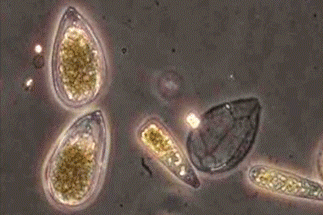
NewsScientists discover fungus that kills toxic algae threatening human health
A team of researchers have discovered a previously unknown species of marine fungus that can kill harmful, bloom-forming algae. The new species, Algophthora mediterranea, is a form of microscopic chytrid fungus that can occupy a broad range of hosts.
-
 News
NewsCan certain bacteria regulate aging of the immune system and its related alterations?
Researchers have discovered a strain of Lentilactobacillus capable of preventing and even reversing aging-related immune alterations. Feeding aged mice with heat-inactivated YRC2606 resulted in lowered levels of inflammatory cytokines and signaling proteins.
-
 News
NewsGut bacteria from amphibians and reptiles achieve complete tumor elimination
Researchers have discovered that the bacterium Ewingella americana, isolated from the intestines of Japanese tree frogs (Dryophytes japonicus), possesses remarkably potent anticancer activity.
-
 News
NewsGlobal Virus Network announces appointment of new board members
The Global Virus Network (GVN), a worldwide coalition of leading human and animal virologists, has announced the appointment of eight distinguished leaders to its Board of Directors.
-
 News
NewsInstitutions team up to advance first AI-designed mRNA vaccine against deadly tick-borne disease
Scientists are developing what could become the world’s first mRNA vaccine against severe fever with thrombocytopenia syndrome (SFTS)—a tick-borne viral disease associated with this condition.
-
 News
NewsResearchers watch live as influenza viruses enter human cells
Using a microscopy technique that they developed themselves, scientists can zoom in on the surface of human cells in a Petri dish, observing live and in high resolution how influenza viruses enter a living cell. They found the cells are not passive, but actively attempt to capture the virus.
-
 News
NewsFamily dogs boost adolescent mental health through the microbiome
It’s no surprise that dogs benefit people’s mental health. Researchers point to a reason as to why: dogs prompt changes in the collection of microbes that live in and on our bodies, resulting in an increase in mental health.
-
 News
NewsLight-sensitive microbial protein may herald new cancer therapies
Researchers used a mouse cancer model to show that tumors expressing Archaerhodopsin 3 shrink after exposure to green light.
-
 News
NewsProbiotics and prebiotics offer safer alternatives to antibiotics in animal agriculture
A new study shows how probiotics, prebiotics, and synbiotics can safely enhance growth and immunity in livestock, and balance the growth of intestinal microbes, offering practical alternatives to antibiotics.
-
 News
NewsNew flu strain underscores urgent need for vigilance, vaccination, and investment in virus science
Virologists have issued a statement on the emergence of a new influenza A (H3N2) variant known as H3N2 subclade K that is spreading rapidly and may contribute to a more intense flu season worldwide. Public health agencies have reported sharp week-over-week increases in cases driven by this subclade.
-
 News
NewsNatural, non-engineered bacterium selectively targets colorectal cancer
Scientists have demonstrated that the marine bacterium Photobacterium angustum exhibits potent antitumor effects against colorectal cancer. The natural bacterium requires no genetic modification yet selectively accumulates in tumor tissues with minimal impact on healthy organs.