
All Japan articles – Page 4
-
 News
NewsThe leading causes of mass mortality events in sea urchins are pathogens, storms, and extreme temperatures
Researchers have identified the primary drivers of sea urchin mass mortality events over recent decades: pathogens, storms, and extreme temperatures. The team have developed an innovative method for genetic sampling in marine environments - using a swab similar to a COVID-19 test, to enable rapid and non-invasive monitoring of marine animals and underwater disease outbreaks.
-
 News
NewsStudy finds high rates of antibiotic-resistant bacteria in raw milk
Raw cow and sheep milk is frequently contaminated with antibiotic-resistant bacteria that could pose a threat to human and animal health, reports a new study.
-
 News
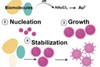
NewsScientists harness algae for a greener way to create functional gold nanoparticles
Researchers have pioneered a novel, sustainable method for synthesizing functionalized gold nanoparticles (AuNPs) using microalgae. This approach not only avoids the harsh chemicals used in conventional methods but also produces AuNPs that are more stable and less toxic to healthy cells.
-
 News
NewsHow are metabolism and cell growth connected? — A mystery over 180 years old
A research team has identified a novel principle in biology that mathematically explains why the growth of organisms slows as nutrients become more abundant—a phenomenon known as “the law of diminishing returns.”
-
 News
NewsGut microbiota: implications in pathogenesis and potential therapeutic target in primary biliary cholangitis
A new review synthesizes current evidence on gut microbiota dysbiosis in PBC, elucidates its pathogenic mechanisms, and explores its potential as both a diagnostic biomarker and a novel therapeutic target.
-
 News
NewsFirst detection of zoonotic Rickettsia species in dog ticks from Malawi reveals potential public health risk
An international research team has reported the first molecular detection of Rickettsia bacteria in ticks collected from domestic dogs in Malawi, addressing a significant knowledge gap in understanding tick-borne disease risks in southeastern Africa.
-
 News
NewsUnderweight and unbalanced: Gut microbial diversity in underweight Japanese women
A study of underweight Japanese women reveals they showed reduced gut microbiota diversity and enrichment of taxa associated with inflammatory tendencies. The findings suggest that gut health is as important as caloric intake when it comes to addressing low body weight.
-
 News
NewsScientists develop an efficient method of producing proteins from E. coli
Proteins sourced from microorganisms are attracting attention for their potential in biomanufacturing a variety of products, including pharmaceuticals, industrial enzymes, and diagnostic antibodies. These proteins can also be used for converting resources into biofuels and bioplastics, which could serve as viable alternatives to petroleum-based fuels and products. Therefore, efficiently producing ...
-
 News
NewsFungi paved the way for life on land hundreds of millions of years earlier than previously thought
After reviewing the evolutionary timeline of fungi, scientists have determined that their origin dates back to between 900 million and 1.4 billion years ago. This means that fungi had already been living on Earth hundreds of millions of years before plants took root on our planet.
-
 News
NewsUnderwater thermal vents may have given rise to the first molecular precursors of life
A new study shows that, without the presence of enzymes, natural gradients of pH, redox potential, and temperature present in underwater hydrothermal vents could have promoted the reduction of carbon dioxide to formic acid and the subsequent formation of acetic acid.
-
 News
NewsNew antivirals could help prevent cold sores by changing cell structures
A class of antivirals called Pin1 inhibitors could reduce or stop outbreaks of herpes simplex virus 1 (HSV-1), the common infection behind oral herpes, according to new research.
-
 News
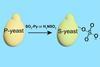
NewsSulfated yeast could help recover rare earth metals from waste liquids
Electronics, optical fibers, and superconducting materials heavily rely on rare earth metals, but innovative recycling solutions are lacking. Now researchers in Japan have successfully achieved selective recovery of metals with S-yeast, a sulfated yeast.
-
 News
NewsStinkbug leg organ contains symbiotic fungi to shield eggs from parasitic wasps
What looked like a hearing organ on a tiny stinkbug’s leg turned out to be something far stranger: a fungal nursery that mother bugs use to coat their newly laid eggs in protective symbiotic hyphae, shielding their offspring from parasitic wasps.
-
 News
NewsCould cardamom seeds be a potential source of antiviral treatment?
Researchers have found that cardamom seed extract, as well as its main bioactive ingredient, 1,8-cineole, can have potent antiviral effects through its ability to enhance the production of antiviral molecules known as type I interferons via nucleic acid ‘sensors’ inside cells.
-
 News
NewsWHO upgrades its public health intelligence system to boost global health security
The World Health Organization (WHO) has launched version 2.0 of the Epidemic Intelligence from Open Sources (EIOS) system, used globally for the early detection of public health threats.
-
 News
NewsEarth’s oxygen boom: a fresh perspective for a billion-year-old problem
A new study examines nickel and urea in early microbial habitats, showing how ancient cyanobacteria adapted to their chemical surroundings. By recreating Archean conditions in the lab, researchers uncovered clues about the delicate balances that shaped early cyanobacterial life.
-
 News
NewsSlime mold metabolites are a promising, eco-friendly repellent of root-knot nematodes
A team of researchers has discovered 14 compounds secreted by slime molds that repel root-knot nematodes (RKNs) - worm-like parasites of the genus Meloidogyne - and could be the source of new, non-toxic anti-RKN pesticides.
-
 News
NewsDeadwood-decomposing fungi feed germinating orchids
Deadwood-decomposing fungi feed germinating orchids, providing the carbon their tiny seeds don’t have. The finding not only closes a gap in our understanding of wild orchid ecology but also uncovers an important carbon flux in the ecosystem.
-
 News
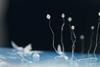
NewsCould slime mold microbes be a source of potent antimicrobials?
The cellular slime mold Dictyostelium discoideum is a soil microbe that produces diverse natural products with potential antibiotic activity. In this study, researchers optimized lab culture conditions of Dictyostelium cells to boost the levels of low-abundance chlorinated compounds and to characterize their antimicrobial properties.
-
 News
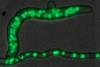
NewsIncrease in cell volume and nuclear number of the Koji fungus enhances enzyme production capacity
This study revealed cellular traits of the koji fungus Aspergillus oryzae linked to enzyme production through cell biological analysis. The authors found that, over time in culture, hyphae thicken, resulting in a tenfold increase in cell volume. Simultaneously, the number of nuclei per hyphal cell also rises tenfold, exceeding 200.