
All Microbiological Methods articles – Page 10
-
 News
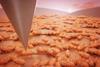
NewsNew imaging approach transforms study of bacterial biofilms
Scientists have reimagined the capabilities of atomic force microscopy, transforming it into a tool that captures large-scale biological architecture. This advance offers an unprecedented view of biofilm organization.
-
 News
NewsOrganized scientific fraud is growing at an alarming rate, study reveals
Although concerns around scientific misconduct typically focus on lone individuals, a study of scientific fraud has uncovered sophisticated global networks of individuals and entities, which systematically work together to undermine the integrity of academic publishing.
-
 News
NewsEvaluating the effect of liquid-handling speed on yeast growth using robots
A new experiment indicated that the fastest pipetting speed on cells can be set without relying on thumb rules or guesswork, which is an important guideline for increasing the efficiency and reproducibility of robot-based experiments.
-
 News
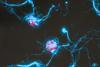
NewsIlluminated sugars show how microbes eat the ocean’s carbon
A team of scientists have designed a molecular probe that lights up when a sugar is consumed. They described how the probe helps to study the microscopic tug-of-war between algae and microbial degraders in the ocean.
-
 News
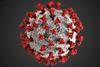
NewsNovel open-source diagnostic tool offers affordable, reliable pathogen detection for resource-limited settings
Researchers have developed an open-source reverse transcription loop-mediated isothermal amplification (RT-LAMP) assay that is lyophilized for heat stability and uses non-proprietary components, making it an affordable tool for pathogen detection in diverse settings.
-
 News
NewsTiny chip speeds up antibody mapping for faster vaccine design
By analyzing just a drop of blood, this microchip gives researchers quicker-than-ever insight into how a person’s antibodies are interacting with a virus or other pathogen.
-
 News
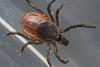
NewsStructure of tick-borne virus revealed at atomic resolution for the first time
One emerging tick-borne virus in North America is the Powassan virus (POWV), which can cause encephalitis, seizures, paralysis and coma. Rates of POWV infections have increased in recent years and currently, there are no treatments available.
-
 News
NewsResearchers develop superstrong, eco-friendly materials from bacteria
Scientists have developed a scalable approach to engineer bacterial cellulose into high-strength, multifunctional materials. Their biosynthesis technique aligns bacterial cellulose fibers in real-time, resulting in robust biopolymer sheets with exceptional mechanical properties.
-
 News
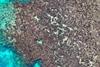
NewsDrones reveal extreme coral mortality after bleaching
New research has revealed alarming coral mortality rates of 92 per cent after last year’s bleaching event at Lizard Island on Queensland’s Great Barrier Reef, marking one of the highest coral mortality rates ever documented globally.
-
 News
NewsAI revives classic microscopy for on-farm soil health testing
The classic microscope is getting a modern twist - US researchers are developing an AI-powered microscope system that could make soil health testing faster, cheaper, and more accessible to farmers and land managers around the world.
-
 News
NewsAntibiotics are failing in many countries in Africa, new study reveals
The largest retrospective study on resistance to antibiotics in Africa highlights the need for major investments to enhance laboratory capabilities and healthcare access.
-
 News
NewsAlign announces new collaboration with ATCC to bring AI-ready microbial datasets to life
The Align Foundation has announced a collaboration with ATCC to create the world’s largest public, AI-ready microbial phenotyping dataset.
-
 News
NewsResearchers establish link between form and function of gut bacterium
New insights into the functional differences between the various morphotypes of Bacteroides thetaiotaomicron could open up new possibilities for medicine. A better understanding of their diversity could lay the foundation for novel microbiome-based therapies.
-
 News
NewsPaper-based devices diagnose malaria in asymptomatic people
Devices made with cheap strips of paper have outperformed two other testing methods in detecting malaria infection in asymptomatic people in Ghana – a diagnostic advance that could accelerate efforts to eliminate the disease, researchers say.
-
 News
NewsScientists decipher HIV-1 transcription initiation and elongation from single-molecule imaging data
Scientists have developed a dual-driven framework based on single-molecule imaging data and stochastic dynamic modeling to infer HIV-1 transcription dynamics.
-
 News
News Ribosome profiling identifies thousands of new viral protein-coding sequences
With the help of a technique called Massively Parallel Ribosome Profiling (MPRP), scientists have identified more than 4000 open reading frames (ORFs) across 679 human-associated viral genomes.
-
 News
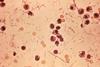
NewsCultured mini-organs reveal the weapons of aggressive Shigella bacteria
Thanks to lab-grown miniature intestines, researchers have successfully mapped how aggressive Shigella bacteria infect the human gut. The study opens the door to using cultured human mini-organs to investigate a wide range of other serious infections.
-
 News
NewsScholars take a new look at controversial Stateville prison malaria research 75 years ago
Medical ethicists are shining a light on a buried part of the malaria research conducted on inmates at Illinois’ Stateville Penitentiary 75 years ago.
-
 News
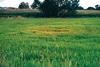
NewsDrone-based tech deployed to detect subtle signs of rice blast disease
Scientists have developed a novel vegetation index—the Rice Blast Index (RBI)—using drone-based hyperspectral remote sensing technology, to rapidly and non-invasively detect subtle signs of rice blast disease and achieve precise field management.
-
 News
NewsLight-controlled bacteria can tackle antibiotic resistance or become ‘bacterial robots’
A groundbreaking technique uses light-sensitive materials to control bacteria, allowing them to sense light and convert light energy into electrical signals across their membranes without the need for any genetic modification.