
More News – Page 27
-
 News
NewsFlawed but correctable research hindered progress in infection-triggered chronic conditions
Researchers contend that studies of infection-associated chronic illnesses such as Lyme disease and COVID-19 suffer recurring problems such as the failure to prove participants have the relevant pathogen.
-
 News
NewsWine’s leftovers could help wean chicken farms off antibiotics
Every year, millions of gallons of wine are pressed, leaving behind a mountain of pulpy residue that wineries struggle to dispose of. Now, researchers say this overlooked byproduct could serve as a replacement for the antibiotics routinely added to chicken feed.
-
 News
NewsStudy provides detailed assessment of shifts in toxin producing phytoplankton abundance
Researchers in the UK have shown how the distributions of two phytoplankton groups – known to produce natural toxins that can halt shellfish harvesting – have changed in the North East Atlantic over the last six decades.
-
 News
NewsThe liver’s immune cells might be the key to curing hepatitis B
Researchers investigated why some people with chronic hepatitis B infections went off their medications, only for the virus to start to come back — and then some of the patients were cured. It appears a certain type of T cell, some of which coordinate immune responses, spots the infection in the liver and mobilizes an attack.
-
 News
NewsResearchers develop realistic ‘mock’ samples to speed cervical cancer test development
A team of bioengineers has developed a new way to create highly realistic “mock” patient samples that could help accelerate the development of faster, more accessible cervical cancer screening tests for low-resource settings.
-
 News
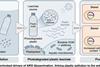
NewsSunlight and PVC pipes create a hidden driver of antibiotic resistance
New research shows that chemicals leaching from everyday PVC—especially after exposure to sunlight—can dramatically speed up the spread of resistance genes between bacteria. The effect was strongest at low to moderate concentrations, where the leachate triggered bacterial stress responses without killing the microbes.
-
 News
NewsFungus-powered farming: Bigger harvests, better taste
Researchers have identified a natural, eco-friendly way to significantly increase agricultural yields while also improving the quality and taste of produce. The study focuses on an extract derived from the yeast-like fungus Pseudozyma aphidis.
-
 News
NewsEurope advances genomic surveillance of CCRE with landmark multi-country study
New survey results provide the most comprehensive genomic picture to date of carbapenem- and/or colistin-resistant Enterobacterales (CCRE) across hospitals in Europe.
-
 News
NewsBronchiectasis and NTM Care Center Network expands to 62 centers
The Bronchiectasis and NTM Association has accepted one new Care Center and three new Clinical Associate Center sites into the Bronchiectasis and NTM Care Center Network (CCN). The CCN includes 62 centers across the United States.
-
 News
NewsThe hunt for red: Chromatin-mediated upregulation of Monascus pigments in Talaromyces purpurogenus OUCMDZ-019 via disruption of Ash2
The industrial application of Monascus pigments has been hindered by three key bottlenecks: unstable yield, poor environmental stability, and the risk of contamination by citrinin. Researchers adopted an epigenetic derepression strategy to unlock the hidden biosynthetic potential of MPs in Talaromyces purpurogenus OUCMDZ-019.
-
 News
NewsPenn researchers create AI tool to speed antibiotic discovery
Researchers have developed a novel, AI-powered method for turning promising but imperfect antibiotic candidates into more potent ones. ApexGO starts with a small number of imperfect candidates and improves them step by step, using a predictive algorithm to evaluate each modification and guide the next.
-
 News
NewsFlu signals in wastewater offer an early warning for community outbreaks
A research team has demonstrated that measuring influenza viral RNA in wastewater can be used to estimate community influenza incidence. The approach may help identify outbreak trends about one week earlier than publicly available patient report data.
-
 News
NewsBiodegradable sensors attached to plants detect pesticides in three minutes
Researchershave created biodegradable, “wearable” sensors for plants to monitor their health, made from carbon ink and screen-printed onto transparent cellulose acetate bioplastics. They can monitor temperature, humidity, dehydration, biomarkers, diseases, nutrient levels, and the presence of pesticides.
-
 News
NewsTiny molecules unlock big gains in soil health
By adding lignin- and humus-based small molecules (LSMs and HSMs) to straw-amended soils, researchers observed remarkable gains in the formation of stable mineral- and particulate-associated carbon, driven by shifts in microbial communities and enhanced cross-trophic interactions.
-
 News
NewsLAMECS 2026 set to bring the next generation of microbiologists to Manchester
The future of applied microbiology takes centre stage in Manchester next month as the Letters in Applied Microbiology Early Career Scientist Research Symposium (LAMECS) returns for its fifteenth year.
-
 News
NewsThe fog is alive - with tiny helpers
What if fog isn’t just misty air, but a living ecosystem? This question hung over cloud researcher Thi Thuong Thuong Cao. As a PhD student at Arizona State University, her curiosity led her from knocking on the doors of microbiologists and chemists, to sampling fog before sunrise in Pennsylvania, to ...
-
 News
NewsBody weight affects your gut microbiota
A new study demonstrates that there is a correlation between gut microbiota and body weight. Researchers also observed that having a high BMI is detrimental to gut microbiota.
-
 News
NewsNew health security operations center will monitor infectious disease risks during this summer’s World Cup gatherings
With millions of soccer fans set to descend on North America for the 2026 FIFA World Cup, experts from Georgetown University and MedStar Health have launched a pioneering Health Security Operations Center (HSOC) to monitor infectious disease transmission and mitigate global health risks.
-
 News
NewsResearchers develop AI tool to predict E. coli contamination in waterways
A new artificial intelligence framework will alert water managers to E. coli contamination risk before anyone falls sick. The AI-powered predictive modeling framework uses environmental and hydrometeorological data to provide early warnings of contamination in recreational waterways.
-
 News
NewsNo-till, new rules: Soil microbes thrive in conservation farming
Long-term conservation tillage (CT) is transforming the way soil microbes responsible for nitrogen fixation behave and interact. Compared to conventional tillage, CT fosters a less competitive yet more robust microbial ecosystem, with soil depth and nitrogen levels playing pivotal roles.