
More UK & Europe News – Page 97
-
 News
NewsSingle hepatitis E mutation renders sofosbuvir therapy ineffective
A single mutation of the hepatitis E virus has been shown to cause treatment with the hepatitis C drug sofosbuvir to become much less effective, according to a study that provides new insights for future drug development.
-
 News
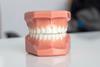
NewsStudy reveals your false teeth could give you pneumonia
Dental swabs reveal a much higher number of potentially pneumonia-causing bacteria on dentures in people with pneumonia, compared to people without, according to new research.
-
 News
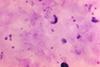
NewsDrugs targeting malaria in Mozambique are still effective
The drugs used to treat and prevent malaria in Mozambique are still effective, according to a genomic analysis of drug resistance markers in Plasmodium falciparum, carried out by the Barcelona Institute for Global Health (ISGlobal) and the Manhiça Health Research Center (CISM). Source: CDC/ Dr. Mae Mellvin Photomicrograph ...
-
 News
News‘Poo transplant’ trial offers hope for liver disease patients
The UK is to launch a clinical trial of a ‘poo transplant’ that researchers believe could treat advanced liver disease and fight antimicrobial resistance.
-
 News
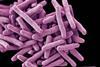
NewsDevice holds promise for diagnosing TB’s missing millions
Investigators collaborating on new chip-based technology using dielectrophoresis to selectively isolate <i>Mycobacterium tuberculosis</i> from sputum from suspected TB patients in underserved areas report promising results
-
 News
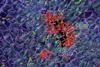
NewsHospital infection shows dual colonisation strategy
Researchers have uncovered why one of the most dangerous nosocomial pathogens, Pseudomonas aeruginosa, is so difficult to combat - it follows a dual strategy, with some bacteria colonizing the tissue surface while others spread in the body.
-
 News
NewsNewer Covid strains are less capable of surviving in the air
Scientists investigating why airborne viruses lose their infectivity have revealed how cleaner air kills the virus significantly quicker and why opening a window may be more important than originally thought.
-
 News
NewsPredatory bacteria offer vision of chlorine-free drinking water
Researchers investigating what would happen if chlorine was omitted from drinking water have found that a harmless predatory bacteria grew in numbers and devoured most of the other bacteria.
-
 News
NewsItaly echovirus 11 case genetically related to strains found in French neonates
After reports of severe enterovirus infections among newly born twins in France since summer 2022, Italian clinicians now describe a case of severe hepatitis also caused by echovirus 11 in a pair of male twins.
-
 News
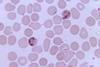
NewsMolecule can block invasion of blood cells by malaria parasite
For the first time ever, a molecule able to prevent the invasion of blood cells by parasites of the genus Plasmodium, responsible for malaria, has been identified and described by scientists.
-
 News
NewsFish farm poo can generate biogas
Digesting fish waste can allow circular fish and vegetable farms (aquaponics) to produce biogas that can be fed back into the energy system of these farms.
-
 News
NewsNew research centre to calculate gas impact of microbes on atmosphere
One of the first research centres in the world to specialise in how much gas is released by plants, soil, fungi and bacteria has opened at the University of Copenhagen.
-
 News
NewsBioactive glass doped with silver delivers longer-lasting antimicrobial wound protection
Researchers at the University of Birmingham have demonstrated that silver retains antimicrobial activity for longer when it is impregnated into ‘bioactive glass’, and shown for the first time how this promising combination delivers more long-lasting antimicrobial wound protection than conventional alternatives.
-
 News
NewsDisabling sensor halts malaria parasite in its tracks
UNIGE scientists have identified a new type of molecular sensor that enables the malaria parasite to infect human cells or mosquitoes at just the right moment
-
 News
NewsEarly warning sensor changes colour when wound becomes infected
A team at Queen’s University Belfast have developed a non-invasive sensor that changes colour when a wound becomes infected, alerting healthcare staff hours before symptoms become visible to the eye.
-
 News
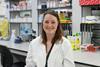
NewsVirologist receives British Empire Medal for pandemic communications
Virologist Dr Naomi Forrester-Soto from Keele University has received a British Empire Medal (BEM) in the inaugural King’s Birthday Honours list for services to public communication during the Covid-19 pandemic.
-
 News
NewsTreatment with enzyme inhibitor can help combat antimicrobial resistance
Researchers have shown that intravenous treatment with MK-3402, a metallo-beta-lactamase inhibitor, can be an effective strategy in fighting antimicrobial resistance.
-
 News
NewsMapping evolution of E. coli virulence factor offers refined drug target
Researchers have presented evidence that targeting the K1 capsule can be used as the basis of treatment, paving the way to prevent serious E. coli infections.
-
 News
NewsProbiotic supplementation can help adults with Major Depressive Disorder
A study shows improvements in depression and anxiety scores among individuals supplementing with probiotics alongside standard antidepressant medication.
-
 News
NewsAI plus microbes could unlock higher biogas production for UK
Researchers are using artificial intelligence to develop better microorganism-led processes that efficiently devour products such as food waste, wastewater and animal manure to help boost the UK’s burgeoning green industry.