
More USA & Canada News
-
 News
NewsStudy uncovers new drug target for huge class of viruses
A study reveals how enteroviruses—including pathogens that cause polio, encephalitis, myocarditis, and the common cold—initiate replication by hijacking host-cell machinery.
-
 News
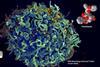
NewsResearchers see dramatic drop in HIV-infected immune cells in patient after cancer treatment received
Researchers report they may have taken an early step toward a more practical HIV cure. They focused on a patient undergoing cancer treatment and also living with HIV, who after receiving chemotherapy, had a significant reduction in the number of CD4+ T immune cells that contained an HIV provirus.
-
 News
NewsCOVID-19 vaccination significantly reduces risk to pregnant women and baby
Pregnant women who received a COVID-19 vaccine were far less likely to experience severe illness or deliver their babies prematurely, according to a major new study.
-
 News
NewsStrategic advancement of second-generation fungal vaccine VXV-01 through Phase 1 trials
The Lundquist Institute (TLI) and its start-up company Vitalex Biosciences (Vitalex) have announced that the second-generation fungal vaccine candidate known as VXV‑01 is poised to move forward in development up to and including Phase 1 clinical evaluation.
-
 News
NewsModulating key interaction prevents virus from entering cells
Researchers have found a way to modulate a common virus protein to prevent viruses from entering cells where it can cause illness. They were able to find and block an important interaction at the molecular level that allows the herpes virus to enter cells.
-
 News
NewsSmarter tools for peering into the microscopic world
In a pair of new studies, researchers introduce powerful tools that make it easier, more accurate and more scalable to figure out how microbes are related. One tool improves how scientists build microbial family trees. The other provides a software foundation used worldwide to analyze biological data.
-
 News
NewsNovel kirkovirus may be associated with colitis in horses
In a pilot study, researchers have found a novel kirkovirus that may be associated with colitis – and potentially small colon impactions – in horses. The study could offer a route to new therapies for horses with colitis symptoms from unknown causes.
-
 News
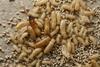
NewsFecal tests reveal active termite attacks
Termite pellets can linger long after the insects that dropped them have disappeared. By testing for microbes in the excrement, researchers can distinguish old droppings from fresh, and whether a colony is actively chewing its way through a home.
-
 News
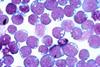
NewsCould hidden infections be fueling long COVID?
For millions suffering from long COVID, their persistent breathlessness, brain fog and fatigue remain a maddening mystery, but microbiologists think they may have cracked the case. The review argues that co-infections acquired before or during COVID could cause symptoms to persist indefinitely for many people.
-
 News
NewsUnique bond identified as key to viral infection speed
Viruses are typically described as tiny, perfectly geometric shells that pack genetic material with mathematical precision, but new research reveals a deliberate imbalance in their shape that helps them infect their hosts.
-
 News
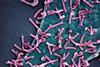
NewsResearchers discover how Ebola and Marburg disrupt the gastrointestinal tract
A new study sheds light on the mechanisms behind the damage caused by Ebola (EBOV) and Marburg virus (MARV) to the gastrointenstinal tract. TIt found that both viruses are capable of infecting and replicating within human gut epithelial cells and that the viruses interfere with the cells’ ability to regulate fluid secretion, mirroring the severe symptoms observed in patients.
-
 News
NewsStudy shows why mRNA-based COVID-19 vaccines can cause myocarditis
Investigators have unearthed the biological process by which mRNA-based vaccines for COVID-19 can cause heart damage in some young men and adolescents — and they’ve shown a possible route to reducing its likelihood.
-
 News
NewsIn pneumonia’s tug-of-war, lung microbiome could tip the balance
Scientists have found the lungs’ own microbial community, or microbiome, appears to influence how pneumonia evolves, who responds well to treatment and whether a patient will recover successfully or continue to deteriorate.
-
 News
NewsOlder age, chronic kidney disease and cerebrovascular disease linked with increased risk for paralysis and death after West Nile virus infection
Older people with a history of chronic kidney disease or conditions affecting blood flow to the brain such as stroke face about double the risk for developing neuroinvasive disease that can lead to paralysis and death following infection with West Nile virus, new research finds.
-
 News
NewsNew 15-minute hepatitis C test paves the way for same-day treatment
Scientists have developed the fastest test yet for diagnosing hepatitis C virus (HCV). The highly accurate diagnostic delivers results to patients in just 15 minutes - crucial for kickstarting patients’ treatment before they leave their appointment.
-
 News
NewsOpioid use linked to higher risk of C. difficile infection
New research from the University of Georgia suggests that opioid use could make patients more vulnerable to infections. The meta-analysis examined four studies of almost 120,000 patients. The researchers found that about 31% of patients who were prescribed and taking opioids caught C. diff, compared to 17% of patients who weren’t using them.
-
 News
NewsStudy reveals promising gut-targeted therapy for C. difficile infections
Researchers have uncovered how the body’s bile acids bind to block C. diff’s most dangerous toxin. The research has informed the development of a new compound that can protect against C. diff in preclinical models, offering hope for safer, more effective treatments.
-
 News
NewsHuman ‘mini-noses’ help understand why RSV infections are more severe in children than in adults
Why does RSV affect babies more severely? To better understand the cellular reasons behind this age-related difference, researchers compared infant and adult human nose organoids, also called mini-noses, regarding their susceptibility and response to infection.
-
 News
NewsReceptors in mammary glands make livestock and humans inviting hosts for avian flu
A new study shows that the mammary glands of several other production animals besides cows – including pigs, sheep, goats, beef cattle and alpacas – are biologically suitable to harbor avian influenza, due to high levels of sialic acids.
-
 News
NewsInstitutions team up to advance first AI-designed mRNA vaccine against deadly tick-borne disease
Scientists are developing what could become the world’s first mRNA vaccine against severe fever with thrombocytopenia syndrome (SFTS)—a tick-borne viral disease associated with this condition.