
Stanford Medicine investigators have unearthed the biological process by which mRNA-based vaccines for COVID-19 can cause heart damage in some young men and adolescents — and they’ve shown a possible route to reducing its likelihood.
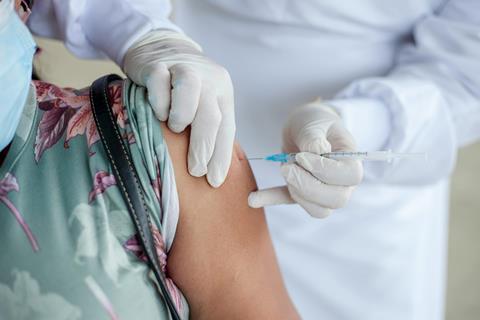
Using advanced but now common lab technologies, along with published data from vaccinated individuals, the researchers identified a two-step sequence in which these vaccines activate a certain type of immune cell, in turn riling up another type of immune cell. The resulting inflammatory activity directly injures heart muscle cells, while triggering further inflammatory damage.
The mRNA vaccines for COVID-19, which have now been administered several billion times, have been heavily scrutinized for safety and have been shown to be extremely safe, said Joseph Wu, MD, PhD, the director of the Stanford Cardiovascular Institute.
“The mRNA vaccines have done a tremendous job mitigating the COVID pandemic,” said Wu, the Simon H. Stertzer, MD, Professor and a professor of medicine and of radiology. “Without these vaccines, more people would have gotten sick, more people would have had severe effects and more people would have died.”
Breakthrough vaccines
mRNA vaccines are viewed as a breakthrough because they can be produced quickly enough to keep up with sudden microbial strain changes and they can be rapidly adapted to fight widely divergent types of pathogens. But, as with all vaccines, not everyone who gets the shot experiences a purely benign reaction.
One rare but real risk of the mRNA-based COVID-19 vaccines is myocarditis, or inflammation of heart tissue. Symptoms — chest pain, shortness of breath, fever and palpitations — appear in the absence of any viral infection. And they happen quickly: within one to three days after a shot. Most of those affected have high blood levels of a substance called cardiac troponin, a well-established clinical indicator of heart-muscle injury. (Cardiac troponin is normally found exclusively in the heart muscle. When found circulating in blood, it indicates damage to heart muscle cells.)
Vaccine-associated myocarditis occurs in about one in every 140,000 vaccinees after a first dose and rises to one in 32,000 after a second dose. For reasons that aren’t clear, incidence peaks among male vaccinees age 30 or below, at one in 16,750 vaccinees.
Fortunately, most of these cases end well, Wu said, with full heart function retained or restored. Recovery is typically swift.
Not a heart attack
“It’s not a heart attack in the traditional sense,” he said. “There’s no blockage of blood vessels as found in most common heart attacks. When symptoms are mild and the inflammation hasn’t caused structural damage to the heart, we just observe these patients to make sure they recover.”
However, Wu noted, if the inflammation is severe the resulting heart injury can be quite debilitating, leading to hospitalizations; ICU admissions for critically ill patients; and deaths, albeit rarely.
“But COVID’s worse,” he added. A case of COVID-19 is about 10 times as likely to induce myocarditis as an mRNA-based COVID-19 vaccination, Wu said. That’s in addition to all the other trouble it causes.
Wu shares senior authorship of a study describing his team’s findings, to be published Dec. 10 in Science Translational Medicine, with former Stanford Medicine postdoctoral scholar Masataka Nishiga, MD, PhD, now an assistant professor at The Ohio State University. The study’s lead author is current postdoctoral scholar Xu Cao, PhD.
“Medical scientists are quite aware that COVID itself can cause myocarditis,” Wu said. “To a lesser extent, so can the mRNA vaccines. The question is, why?”
Suspects identified
To find out, he and his colleagues first analyzed data from blood draws of individuals vaccinated for COVID-19, some of whom developed myocarditis. Comparing those who did with those who didn’t, they noticed high levels of a couple of proteins in the blood of vaccinees who wound up with myocarditis.
“Two proteins, named CXCL10 and IFN-gamma, popped up. We think these two are the major drivers of myocarditis,” Wu said. They operate like a tag team.
CXCL10 and IFN-gamma both belong to a class of proteins called cytokines: signaling substances that immune cells secrete to carry on chemical conversations with one another.
Macrophages in a dish
Hoping to listen in on these communications, the scientists generated human immune cells called macrophages — fierce first-responder cells of the immune system — in a dish and incubated them with mRNA vaccines.
The macrophages responded by pumping out various cytokines but, most notably, pronounced amounts of CXCL10. They also otherwise generally mimicked the vaccine responses of macrophages reported in humans, as shown by comparison with published data from vaccinated individuals.
When the scientists further supplied the dish with an additional kind of immune cell — T cells, roving sentinels that can recognize and mount immune attacks on specific pathogens but can also incite general arousal of the immune system — or even when they merely steeped T cells in the solution in which vaccine-administered macrophages had bathed, they saw a marked uptick in the T cells’ output of IFN-gamma. But T cells incubated with mRNA vaccine in the absence of macrophages or their bathwater produced only standard amounts of IFN-gamma. These results showed that macrophages are the chief source of CXCL10 and that T cells are the chief source of IFN-gamma in response to mRNA vaccination.
Friendly fire
But did the two cytokines, together, contribute directly to cardiac injury? The researchers vaccinated young male mice, then found heightened levels of cardiac troponin, the widely used clinical marker of heart muscle damage.
The investigators also noticed infiltration of macrophages and another frontline take-no-prisoners immune-cell type, neutrophils — short-lived first responders that live to die in glorious battle (typically with bacterial or fungal pathogens) and are the main component of pus — into the mice’s cardiac tissue. This also occurs in post-vaccination myocarditis patients.
This macrophage and neutrophil infiltration into the heart — which comes at a cost, as these shoot-first-and-ask-questions-later warrior immune cells often unload friendly fire, causing collateral damage to healthy tissue, including heart muscle — could be minimized by blocking CXCL10 and IFN-gamma activity.
Cell surface molecules
Also seen in the mice’s hearts were increased populations of cell-surface molecules that snag macrophages, neutrophils and other white-blood-cell types, causing them to adhere to endothelial cells, which line all blood vessels including those in the heart.
So, yes, CXCL10 and IFN-gamma did contribute directly to cardiac injury in these mice. And blocking them largely preserved the immune response to the vaccination while lowering levels of cardiac troponin induced by vaccination.
Wu’s lab excels at a technology involving the transformation of human skin cells or blood cells into blank cells that can then be guided to differentiate into cardiomyocytes, macrophages and endothelial cells and to coalesce into spherical structures that mimic the heart’s rhythmic contractions.
Cardiac spheroids
The researchers treated these “cardiac spheroids” with CXCL10- and IFN-gamma-enriched bathwater from vaccine-stimulated macrophages and T cells, respectively. They witnessed a significant increase in markers of cardiac stress, rescued by inhibitors of the two cytokines.
The cardiac spheroids’ squeezing capacity, beating rate and other measures of healthy heart function were all impaired but, again, partially restored by the cytokine inhibitors.
Wu had a hunch that a common dietary supplement could help prevent such damage. Given higher myocarditis rates among males and estrogen’s known anti-inflammatory properties, he revisited a compound he’d studied a few years earlier.
Saved by a soybean
In a 2022 paper published in Cell, Wu’s team had identified genistein, a mild estrogen-like substance derived from soybeans, as having anti-inflammatory activity and the ability to counter marijuana-induced damage to blood vessels and heart tissue.
“Genistein is only weakly absorbed when taken orally,” Wu said. “Nobody ever overdosed on tofu.”
Wu and his colleagues conducted a series of experiments closely paralleling those described above, pre-treating cells, cardiac spheres and mice (the latter by oral administration of large quantities) with genistein. Doing this prevented much of the deleterious effects of mRNA vaccines or the CXCL10/IFN-gamma combo to heart cells and tissue.
The genistein Wu and his associates used was purer and more concentrated than the dietary supplement found in health food stores.
“It’s reasonable to believe that the mRNA-vaccine-induced inflammatory response may extend to other organs,” Wu said. “We and others have seen some evidence of this in lung, liver and kidney. It’s possible that genistein may also reverse these changes.”
Cytokine signalling
Elevated inflammatory cytokine signaling could be a class effect of mRNA vaccines. Notably, IFN-gamma signaling is a fundamental defense mechanism against foreign DNA and RNA molecules, including viral nucleic acids, Wu said.
“Your body needs these cytokines to ward off viruses. It’s essential to immune response but can become toxic in large amounts,” he said. IFN-gamma secreted in large amounts, however lofty its purpose, can trigger myocarditis-like symptoms and degradation of structural heart muscle proteins.
That risk probably extends beyond mRNA-based COVID-19 vaccines.
“Other vaccines can cause myocarditis and inflammatory problems, but the symptoms tend to be more diffuse,” Wu said. “Plus, mRNA-based COVID-19 vaccines’ risks have received intense public scrutiny and media coverage. If you get chest pains from a COVID vaccine you go to the hospital to get checked out, and if the serum troponin is positive, then you get diagnosed with myocarditis. If you get achy muscles or joints from a flu vaccine, you just blow it off.”
The study was funded by the National Institutes of Health (grants R01 HL113006, R01 HL141371, R01 HL141851, R01 HL163680 and R01 HL176822) and the Gootter-Jensen Foundation.

No comments yet