
More USA & Canada News – Page 7
-
 News
NewsPhages with fully-synthetic DNA can be edited gene by gene
Scientists have developed a method to construct bacteriophages with entirely synthetic genetic material, allowing researchers to add and subtract genes at will.
-
 News
NewsNo-needle test can tell if flu/COVID vaccines are effective
A team of researchers has developed a skin patch that can detect antibodies associated with COVID and flu infections. It’s orders of magnitude more sensitive than existing tests, uses just a half volt of electricity, and can return results in 10 minutes.
-
 News
NewsSecrets of microbial motion: How bacteria swash, glide and shift gears to survive
Two new studies reveal surprising ways microbes move, with implications for human health and disease. The first shows that salmonella and E. coli can ’swash’ across moist surfaces even when their flagella are disabled, while the second probes the T9SS gearbox in flavobacteria.
-
 News
NewsCOVID-19 vaccination lowers long COVID risk in adolescents
Adolescents who were vaccinated against COVID-19 were less likely to develop long COVID after their first SARS-CoV-2 infection than unvaccinated peers, finds a new study.
-
 News
NewsEvolving antibiotic resistance under pressure may lead to personalized treatment
A new study demonstrates the use of an experimental evolution approach to map genetic mutations in Acinetobacter baumannii treated with one of two uncommon antibiotics.
-
 News
NewsLow-dose cannabis compound reduces side effects of HIV treatment
Long-term, low doses of THC mitigate many harmful side effects and inflammation caused by HIV and antiretroviral therapy (ART). Benefits included increased production of serotonin, while inflammation, cholesterol and harmful secondary bile acids were all reduced.
-
 News
NewsERC Synergy Grant awarded to physicist Michael Lässig and virologist Florian Klein
Researchers have been awarded a Synergy Grant by the European Research Council (ERC) for the project CoEvolve, which investigates the co-evolution of viruses and the immune system.
-
 News
News Sea stars show surprising resilience after disease outbreak
A decade after sea star wasting disease devastated ochre sea star populations along the U.S. West Coast, new research suggests that the epidemic shifted populations from a stable, adult-dominated state to one marked by fluctuations in sea star sizes and ages.
-
 News
NewsBiochemists search for cellular vulnerabilities in killer ‘superbugs’
Helen Zgurskaya and Valentin Rybenkov are leading a five-year, $5.3 million project funded by the National Institute of Allergy and Infectious Diseases to find new ways to deliver lifesaving drugs directly into resistant pathogens.
-
 News
NewsResearchers discover novel phage DNA modifications that offer new hope against antibiotic-resistant superbugs
A groundbreaking discovery reveals a unique way phages modify their DNA with arabinose sugars to protect themselves from bacterial defence systems. Natural DNA phage modifications occur at a higher rate than previously predicted, the study revealed.
-
 News
NewsThe fart factor: researchers get wind of hydrogen’s role in the gut
Scientists have revealed how hydrogen is made and used in the human gut. Though infamous for making farts ignite, hydrogen also has a positive role supporting gut health.
-
 News
NewsCOVID-19 vaccination linked to reduced infections in children with eczema
Children with atopic dermatitis (AD), commonly known as eczema, may experience fewer infections and allergic complications if they receive the COVID-19 vaccine, according to new research.
-
 News
NewsUrban fungi are showing signs of thermal adaptation
A new study finds that common fungal species may be adapting to higher temperatures in warmer sites within cities compared to cooler sites in the same city. The findings could signify that urban fungi could one day evolve into disease-causing pathogens.
-
 News
NewsNew research demonstrates ’living metal’ could bridge the gap between biological and electronic systems
Researchers are pioneering ‘living metal’ composites embedded with bacterial endospores, paving the way for dynamic communication and integration between electronic and biological systems.
-
 News
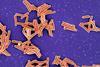
NewsScientists uncover tuberculosis bacterium’s ’heartbeat’, opening door to new treatments
Scientists have identified a molecular system inside Mycobacterium tuberculosis that functions like the organism’s heart or lungs, keeping it alive. The system, known as PrrAB, helps the bacterium generate energy and breathe. When researchers used a gene-silencing tool, the bacterium died.
-
 News
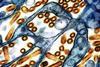
NewsEarly-stage clinical trial demonstrates promise of intranasal influenza vaccine in generating broad immunity
Researchers report encouraging results from an early phase clinical trial that found an experimental intranasal vaccine triggered a broad immune response against multiple strains of H5N1 ’bird flu’, highlighting the potential of mucosal immunization strategies.
-
 News
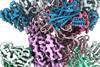
NewsAI can speed antibody design to thwart novel viruses: study
Artificial intelligence (AI) and “protein language” models can speed the design of monoclonal antibodies that prevent or reduce the severity of potentially life-threatening viral infections, according to a multi-institutional study
-
 News
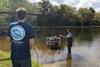
NewsCAROSEL offers new ‘spin’ on monitoring water quality in real time - and tracking harmful algal blooms
Researchers can continuously track the exchanges of different forms of nitrogen between bottom sediments and the overlying water. Their novel approach enables measuring how much ammonium (NH₄⁺) is released from sediments in real time, multiple times a day, over an extended period.
-
 News
NewsNew study finds targets for a new tuberculosis vaccine
A large-scale screen of tuberculosis proteins has revealed several possible antigens that could be developed as a new vaccine for TB, the world’s deadliest infectious disease.
-
 News
NewsFoxtail barley serves as a host for fungal pathogens attacking barley
Researchers report that foxtail barley (Hordeum jubatum), a wild relative of the cultivated crop, can harbor several fungal pathogens and may play a role in the disease epidemiology of barley, potentially serving as reservoirs of inoculum to initiate some diseases.