
What a year it’s been for Applied Microbiology International. We’ve grown, reached further across the globe and played a bigger part in showing how applied microbiology can make a real difference to the world.
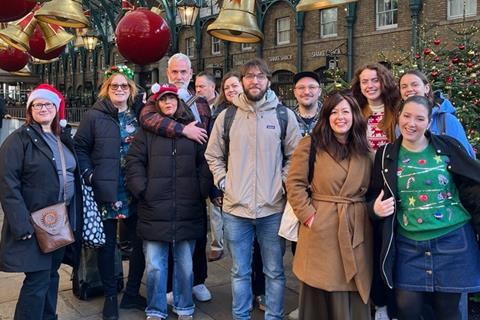
Our Chief Executive, Dr Lucy Harper, summed it up perfectly: “This year we kept building our voice on policy, grew our publishing, put on some truly standout events and celebrated the brilliant work happening across applied microbiology. At the same time we deepened partnerships around the world and pushed towards our UN SDG-inspired goals. We’ve also kept investing in our people and our community. None of this happens without you.”
Here’s a look back at some of the highlights of 2025, grouped around the values that guide everything we do.
Scientific rigour
One of the moments we’re proudest of this year was helping bring together the new IUCN Microbial Conservation Specialist Group, the very first IUCN Species Survival Commission group dedicated entirely to microbes. It’s a landmark step in getting microbial biodiversity properly recognised in global conservation.
In publishing, Sustainable Microbiology continued to champion work that uses microbiology to build a more sustainable future. Targeted at scientists, policymakers and practitioners, we launched the new SMI Policy Spotlight Webinar Series. The first event, Phages for a Sustainable Future, drew over 190 people in autumn 2025.
Promoting inclusivity
We’re determined to make applied microbiology a field that truly reflects and welcomes everyone it serves, no matter their career stage, discipline or country. This year we awarded 122 grants and awards, totalling around £250,000, to support everything from early-career research and training to travel and professional development. It’s about giving people the opportunities they need to thrive and empowering microbiologists across our global community.
Inclusion was front and centre at our events too. We proudly supported the first Minoritised Life Scientists Future Forum (MLSFF) in Birmingham—the first event of its kind in Europe. Nearly 500 people gathered for this inspiring step toward equity and inclusion in the life sciences. We also backed the 14th LAM Early Career Scientists Research Symposium, which offered a thriving platform for collaboration, presentation skills and professional visibility. The 15th is already booked for 18 June 2026 at Manchester Metropolitan University.
In addition, our Applied Microbiology International Horizon Awards 2025 celebrated exceptional contributions, recognising individuals, teams and innovations shaping the future of our science.
In our journals, Letters in Applied Microbiology kept its focus on nurturing the next generation. In September the first cohort of Junior Editors finished their training. The feedback was outstanding—one participant, Dr Rahul Jain, called it “a truly rewarding experience, offering invaluable insight into the full editorial workflow.”
Meaningful collaboration
At AMI, bringing people together across disciplines, sectors and borders is in our DNA. In 2025 that spirit was stronger than ever. We teamed up with international partners including the American Society for Microbiology (ASM), the International Society for Microbial Ecology (ISME), the Federation of European Microbiological Societies (FEMS) and others to launch the first Global Climate Change Strategy for microbiology. It’s an exciting step towards making sure applied microbiology plays its full part in tackling the climate crisis.
More than 250 members got involved in our policy work, the highest number ever. They responded to 29 different consultations in the UK, EU and beyond. Topics ranged from soil health (including our work with the excellent Soil Stars initiative) and antimicrobial resistance to advocating for bacteriophages. This also included contributions to the Microbes and Social Equity working group.
Our six Advisory Groups kept shaping our direction through roundtables on soil sustainability, a new marine microbiome policy brief, support for WHO and IWA sanitation work, and valuable content for our journals and The Microbiologist. As the 2025 recruitment campaign draws to a close, we’re excited to welcome new members for 2026.
Events brought people together too. The Microbes and Social Equity Virtual Summit 2025: Pathways to Microbiome Stewardship explored what it means to practise microbiome stewardship across scientific, social and environmental contexts over four inspiring days. In November we hosted Microbial Solutions for a Changing World at Monash University in Melbourne (with Professor Chris Greening leading), drawing researchers from across Asia-Pacific to share ideas on climate action, public health and ecosystem restoration. And in December the 31st Molecular Microbial Ecology Group meeting at the University of Birmingham, hosted by AMI Horizon Award winner Professor James MacDonald, once again proved why it’s a flagship event for the field.
Pushing forward
Behind the scenes we kept evolving as an organisation. At the July AGM we welcomed new Trustees Dr Helen Onyeaka and Mr Otto Balsiger to the Board, thanked those stepping down and approved updated Articles of Association to support our future growth.
Our publishing platforms reached more people than ever. The Microbiologist saw readership jump 37.5% in views compared to 2024 and 34.9% in users. Now 28 countries have over 1,000 regular readers. We published 12 special issues, launched an Early Career Scientists collection and started the new Under the Lens video series, featuring fascinating interviews with leading microbiologists. It kicked off with Raquel Peixoto and Jack Gilbert for a deep dive into coral reefs and microbes, followed by Callum Cooper and Emmanuel Adukwu on all things bacteriophage—from alternatives to antibiotics to social impact and regulation.
Inside the team we continued looking after our own people. Several colleagues trained as Mental Health First Aiders—a testament to the supportive culture we’ve built together. For the second year running we were named in the Sunday Times Best Places to Work list.
Looking ahead
As 2025 comes to a close, we’re very much looking forward to what 2026 will bring: more collaboration, more discovery, more impact.
To keep abreast of all our upcoming events, opportunities and news, sign up to the AMI newsletter.
Topics
- 14th LAM Early Career Scientists Research Symposium
- Applied Microbiology International
- Applied Microbiology International Horizon Awards 2025
- Callum Cooper
- Chris Greening
- Community
- Diversity & Inclusion
- Emmanuel Adukwu
- Helen Onyeaka
- IUCN Microbial Conservation Specialist Group
- Jack Gilbert
- James MacDonald
- Lucy Harper
- Microbes and Social Equity
- Microbial Solutions for a Changing World
- Minoritised Life Scientists Future Forum
- Otto Balsiger
- Policy
- Raquel Peixoto
- Science Communications
- Soil Stars


No comments yet