
Researchers have developed a digital twin tool that can test how people’s gut microbiomes respond to dietary fiber and probiotics, offering the next step towards personalised medicine.
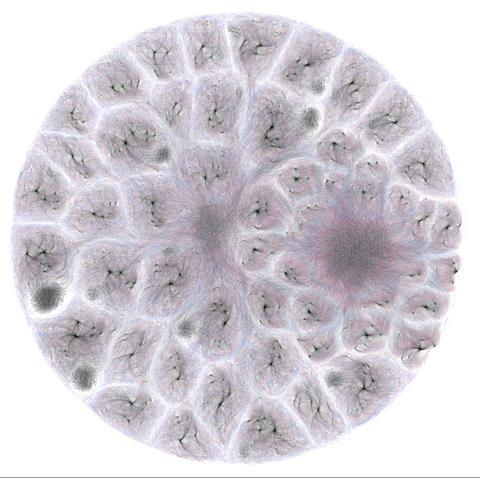
The commentary by researchers in Washington and New York, ‘Maximizing the Health Impact of Dietary Fibers with Microbial Community-Scale Metabolic Modeling’ is published in Sustainable Microbiology, an Applied Microbiology International publication.
The team developed a computational modeling framework (microbial community-scale metabolic model or MCMM) that allowed them to test the addition of microbiome-targeted therapeutics, like probiotics and prebiotics, to the gut microbiome and then assess their effect on metabolic behavior of the gut microbiome.
“Eating dietary fiber is one of the most effective things people can do to improve their health. It can lower the risk of cardiovascular disease, reduce insulin resistance, alleviate systemic inflammation, and reduce the risk of some cancers. However, this is an elusive target, and only ~5% of Americans eat the recommended amount of fiber,” said lead author Dr Nick Quinn-Bohmann.
“Simply advising people to ‘eat more fiber’ is not a solution, due to noted difficulties in adherence. Even in large scale studies with coaching and guidance like the PREDIMED study, there was only 54-58% adherence to the dietary changes advised.
Supplementing the diet
“One solution is supplementing fiber to the diet, in the form of prebiotics. Additionally, prebiotics can be paired with probiotics (live microorganisms with putative benefit to the gut microbiome), which can influence their efficacy. Due to the heterogeneity in our microbiomes, the same prebiotics and probiotics can be more or less effective in different people. We were trying to find out if we could use this computational framework (MCMM) to predict how well these interventions work on an individual level.”
“This work builds on previous studies that rigorously validated MCMMs for predicting microbiome-derived metabolite production, assessing the susceptibility to C. difficile invasion, and estimating the growth of specific probiotic strains introduced into microbial communities.”
The study used MCMMs that combine the metabolic capacity of the bacteria found in an individual stool sample, scaled to how abundant each one is. Each model is like a digital twin of that person’s gut community.
“We can then “feed” the digital twin different diets or prebiotics and see how the outcome of the model changes. Similarly, we can add in probiotics to the original set of bacteria used to build the model, to assess how the addition of new species impacts the outcome,” said Dr Quinn-Bohmann.
Butyrate production
To assess the effects, they used microbial production of butyrate as a readout. Butyrate is a commonly studied microbial metabolite produced by the gut microbiome from the fermentation of dietary fiber, with several beneficial effects on our health. Most of the benefits of eating more fiber listed above are mediated by butyrate production from the microbiome.
To show how the process works, they simulated 30 people switching from their usual diet (about 16 g fiber/day) to a high-fiber vegan diet (45 g/day). Some people produced much more butyrate, but several produced little or none, so were described as non-responders. They then tested combinations of five probiotic species and six prebiotic fibers, giving the same amount of extra fiber as the diet switch. The top-performing personalized combination for each individual beat the high-fiber diet and rescued the non-responders.
“I was pleasantly surprised that the non-response seen in the high-fiber diet switch could be rescued with this approach. Some individuals showed little or no increase in butyrate production on the diet containing 45 grams of fiber per day, but personalized probiotic-prebiotic combinations restored a strong response in them. One-size-fits-all nutrition often leaves non-responders behind, and this approach offers those individuals a real alternative,” said Dr Quinn-Bohmann.
“Instead of asking which fiber works best on average, we can ask which one works best for you. For people whose microbes can’t use a given fiber, we can find another fiber that does work, or add the right probiotic to supply the missing metabolic capacity.”
Avoiding the adherence problem
“If personalized supplements can deliver benefits similar to those from healthy diets like the Mediterranean diet, we could sidestep the adherence problem that chronically limits nutrition advice. This would potentially turn personalized prebiotics and probiotics into a viable nutritional intervention strategy, aimed at improving health through the microbiome.
“The most important next step is validating this approach in a prospective human trial. Earlier work from our group has shown that these models can accurately predict short-chain fatty acid production, probiotic engraftment, and susceptibility to C. difficile invasion, but the personalized recommendations themselves haven’t yet been tested in people.”
This work was led by Nick Quinn-Bohmann and Sean M. Gibbons. The team is affiliated with the Institute for Systems Biology (Seattle), the Department of Biomedical Engineering in the Tandon School of Engineering at NYU, and the University of Washington (Departments of Bioengineering, Genome Sciences, and Environmental and Occupational Health Sciences).
‘Maximizing the Health Impact of Dietary Fibers with Microbial Community-Scale Metabolic Modeling’ is published in Sustainable Microbiology






No comments yet