
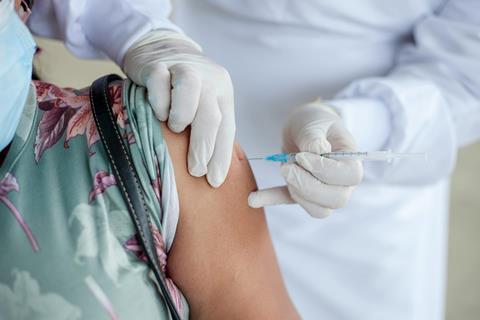
A group of leading UK health experts have today announced that they will be launching the Commission on Access to Vaccines to understand why access levels are falling across the UK and to recommend practical measures to reform vaccine delivery across the health system.
The Commission on Access to Vaccines was developed as part of a collaborative working project between the Royal Society of Public Health and Pfizer Ltd. It is funded by Pfizer who will review associated materials for medical accuracy and to ensure compliance with regulations.
The Commission will be chaired by former health minister Lord (James) Bethell. It will bring together experts from across public health, the NHS, and Government to look at barriers to vaccine access across UK National Immunisation Programmes (NIP).
In addition, former Chief Executive of the UK Health Security Agency, Professor Dame Jenny Harries, and renowned vaccines expert, Professor Sir Jonathan Van-Tam, will also sit on the Commission.
Measles outbreaks
Vaccination for target populations is falling far below the threshold needed for population protection for some diseases. This has been a major contributing factor in the recent measles outbreak in parts of London and the West Midlands which has led to over a hundred confirmed cases and a number of hospitalisations. Coverage of the two doses of the MMR vaccine is at the lowest level since 2009-10 and well below the target set by the World Health Organisation.
Declining coverage of flu vaccines is also partially behind the large spike in hospitalisations during the winter flu season which puts immense annual pressure on the NHS. Last winter only 69% of the population over 65 and 41% of those in clinical risk groups in England received flu vaccination, leaving a considerable number of people more vulnerable to respiratory complications.
The Commission will focus on practical steps to remove barriers that likely prevent people from receiving vaccines. These include practical difficulties such as limited availability of appointments outside of working hours, difficulty accessing appointments, or the affordability of non-NHS vaccinations.
Lessons from Covid-19
While recognising it as an exceptional scenario, the widespread coverage of the Covid-19 vaccine, when 86.8% of the UK population aged 12+ received the initial two vaccine doses, provides important context as the Commission begins to consider what lessons may be relevant for future models of delivery. Commission members attribute the widespread coverage predominantly to the measures taken by the relevant authorities to make the vaccine easily available, together with the important public health information provided.
The Commission will produce two major reports, host stakeholder roundtables, and conduct primary research with the public and frontline staff. The findings of the Commission will set out a case for reform to vaccine commissioners and Government.
The Royal Society for Public Health will lead the day-to-day delivery of the Commission.
World leader
Lord Bethell, Chairman of the Royal Society of Public Health Commission on Access to Vaccines, said:
“For a long time, this country has been a world leader on vaccines. This standing in the world is sadly fading as coverage is waning across the board. Vaccines are important interventions – they may literally save lives, help keep our economy going, and take huge pressure off our health services.
In a world where many essential services are accessible at our fingertips, booking an appointment for those that require a particular vaccination should not be difficult.
We don’t need to reinvent the wheel - recent history shows us that the public will get the vaccine if we make it easy for those who are eligible to get them. This Commission will ensure that we set out a compelling case for vaccine access reform in the UK health system.”
Pivotal moment
Professor Dame Jenny Harries said: “We are at a pivotal moment for our nation’s health. Our priority in the health and care system must be on expanding access to vaccines, particularly for children and the elderly. Failing to do so will mean more winter flu crises in hospitals and more frequent outbreaks of entirely preventable illnesses like measles. We can’t let that happen. We know how to deliver vaccines at scale, we’ve succeeded before and we can do it again.
This Commission will bring in a range of expert voices and public insight to put together a robust evidence base for improving vaccine access.”
Professor Sir Jonathan Van-Tam said:“ UK can’t drop the ball on vaccine access. If we keep falling short on coverage thresholds, we will continue to see the consequences play out in our communities. We have an opportunity and the capability to change course.
The Commission will be laser-focused on what we can do better within the health system to remove unnecessary barriers facing the public when it comes to accessing vaccines.”
Practical barriers to vaccination
Dr Berkeley Phillips, Head of External Strategic Partnerships, Pfizer UK, commented: “Vaccines remain one of the most effective tools we have to prevent illness and reduce avoidable pressure on the health system, yet too many people still face practical barriers that make access harder than it should be. Understanding where and why those barriers exist is essential if we are to strengthen prevention and improve outcomes across the population.
The Vaccines Access Commission provides a timely opportunity to bring together experts in the field to oversee the collection of robust data, frontline experience and public insight to build a shared understanding of the current landscape.”




No comments yet