
An international research team has revealed previously hidden genetic diversity in Toxoplasma gondii, a globally distributed zoonotic parasite, in China.
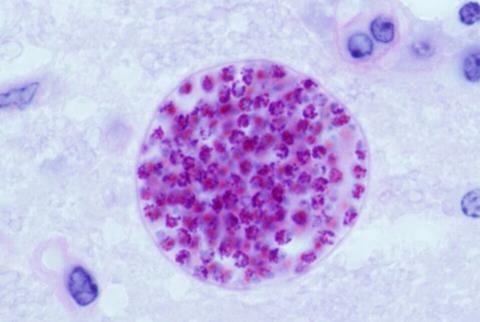
The study, conducted by scientists from Hunan Agricultural University, Shanxi Agricultural University, and Yunnan Agricultural University in China, together with the University of Nottingham in the UK, published in Science in One Health, used high-resolution multilocus sequence typing to examine the population genetic structure of T. gondii across multiple animal hosts and geographic regions.
Toxoplasma gondii is a protozoan parasite capable of infecting humans and a wide range of warm-blooded animals. Although many infections are asymptomatic, toxoplasmosis can cause severe disease in immunocompromised individuals and may lead to serious congenital outcomes when infection occurs during pregnancy.
Breaking through the resolution ceiling
Previous studies of T. gondii in China have largely relied on PCR-restriction fragment length polymorphism, or PCR-RFLP, genotyping. While this method is useful for broad lineage classification, it examines only selected restriction sites and may miss important genetic variation within the same genotype.
To overcome this limitation, the researchers combined conventional RFLP screening with high-resolution Sanger sequencing targeting 16 genetic markers, enabling them to resolve the fine-scale epidemiology of the parasite.
The dominant lineage, ToxoDB#9 (Chinese 1), accounted for 42.7% of samples and was distributed widely across provinces and hosts. Although these isolates showed identical RFLP profiles, direct sequencing uncovered fixed single nucleotide polymorphisms (SNPs) at multiple sites that were invisible to traditional methods. This “cryptic” diversity indicates that ToxoDB#9 represents a micro-evolutionary complex rather than a single uniform clone, helping to explain the long-standing “genotype–phenotype paradox” in which similar genotypes can show different biological behavior.
Rare lineage
Strikingly, high-resolution screening identified the ToxoDB#5 (Haplogroup 12) lineage, most frequently reported in North American wildlife, in a captive caracal (Caracal caracal) from Henan Province, although its public health significance remains uncertain. The researchers caution that its presence could reflect either anthropogenic introduction through animal movement or a rare, historically endemic lineage maintained in sylvatic cycles.
Population genetic analyses revealed high haplotype diversity with a star-like network centered on two dominant haplotypes, and a lack of clear geographic structuring. This pattern is consistent with the broad dispersal of clonal lineages through the movement of hosts and agricultural products.
MICROBIOLOGY ON TAP: Get full access to all The Microbiologist articles from just £2.17 a month
The study employed a “One Health” framework, recognizing the interconnection between human, animal, and environmental health. The authors emphasize that risk assessment and source attribution for toxoplasmosis will benefit from systematic molecular monitoring, ideally complemented by whole-genome sequencing to confirm introduction scenarios, resolve transmission routes, and assess the potential for recombination.
Next steps
This study redefines the phylogeography of T. gondii in China by resolving within-genotype diversity and geographic patterns not captured by conventional typing. The findings provide an updated baseline for future, larger-scale surveillance across humans, livestock, wildlife, and environmental interfaces.
This work was supported by the NSFC-Yunnan Joint Fund (grant number U2202201), the National Key Research and Development Program of China (grant numbers 2021YFC2300800 and 2021YFC2300802), the Science and Technology Innovation Program of Hunan Province (grant number 2025RC1053), and the Special Research Fund of Shanxi Agricultural University for High-level Talents (grant number 2021XG001).






No comments yet