
While awareness of tick biology is relatively high in Northeast China and Inner Mongolia, a new study published in Science in One Health reveals alarming gaps in public knowledge about preventing tick-borne diseases—with rural residents and high-risk groups paradoxically showing the lowest protective awareness.

The research, based on a cross-sectional survey of 4,000 adults conducted in 2019, exposes a critical disconnect between general tick awareness and actionable knowledge that could prevent disease transmission. This knowledge-action gap poses a significant public health challenge in regions where tick-borne diseases are increasingly prevalent.
Tick-borne diseases represent a growing health threat in China, particularly in northern regions where ecological conditions favor tick populations. Public understanding is essential for prevention, as behavioral changes—such as proper bite treatment, preventive measures, and personal protective equipment use—can substantially reduce disease transmission risk.
However, the study reveals that while approximately 70% of survey respondents could identify tick morphology and characteristics, far fewer possessed critical protective knowledge. Only modest percentages correctly identified prevention strategies, appropriate post-bite management, or recognized the health risks associated with common tick-borne pathogens.
Where knowledge fails most
The disparities were stark and geographically pronounced. Rural populations demonstrated significantly lower levels of protective knowledge compared to urban residents, despite often facing greater exposure due to agricultural and outdoor occupational activities.
Similarly, individuals with previous tick bite experiences—who arguably face the highest future risk—showed surprisingly limited knowledge about disease prevention and transmission.
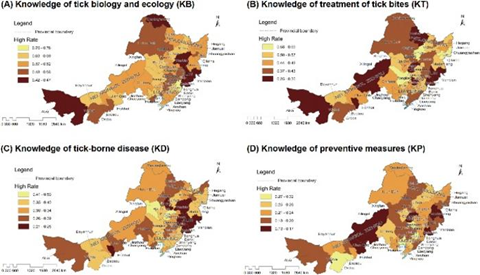
Regional variations were equally striking, with some areas showing vastly superior awareness compared to others, suggesting that local health education efforts and disease surveillance infrastructure substantially influence public knowledge.
Bridging the gap
These findings underscore a critical need for targeted health education interventions tailored to high-risk populations and geographic regions with documented knowledge deficits. Effective prevention strategies must move beyond general awareness campaigns to provide specific, actionable guidance on tick avoidance, bite response, and disease recognition.
The research highlights that closing these knowledge gaps is not merely an academic exercise—it represents a practical pathway to reducing disease burden and enhancing public health resilience in vulnerable communities. As tick-borne disease prevalence continues to increase across Northeast China and Inner Mongolia, equipping at-risk populations with evidence-based protective knowledge becomes increasingly urgent.
By identifying where knowledge deficits are most severe, this study provides a evidence-based foundation for designing public health interventions that address the specific needs of China’s most vulnerable populations.






.jpg)
No comments yet