
Microbiologists and scientists tackling infectious diseases are among Nature’s annual list of ten people at the heart of some of the biggest science stories of 2025.

“This year’s list celebrates the exploration of new frontiers, the promise of groundbreaking medical advances, an unwavering commitment to safeguarding scientific integrity, and those shaping global policies that save lives. It is inspiring to see the work of so many people who are working hard to understand the natural world and, in many cases, to help it. That is why they are a part of this year’s Nature’s 10,” says Brendan Maher, a features editor at Nature.
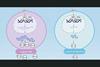
In support of public health, Luciano Moreira, an agricultural researcher at the Oswaldo Cruz Foundation in Belo Horizonte, Brazil, opened the first factory producing mosquitoes infected with the bacterium Wolbachia. By releasing millions of these insects, which have an impaired ability to spread harmful human pathogens, Moreira hopes to combat the spread of dengue, a deadly viral disease.
READ MORE: In the midst of a global dengue epidemic, Wolbachia kept a Brazilian city safe
READ MORE: Climate change responsible for 19% of today’s rising dengue burden - but Wolbachia offers hope
Precious Matsoso, a public-health official at the University of the Witwatersrand who is based in Pretoria, South Africa, brokered the world’s first pandemic-preparedness treaty after years of hard-fought negotiations.

And Susan Monarez, a microbiologist and immunologist who was hired and then quickly fired as head of the embattled US Centers for Disease Control and Prevention, stood up to the Trump administration when she was ordered to fire fellow civil servants and push through vaccine policies that are unsupported by the science.
Scientific discovery
Meanwhile, the opening of the Vera Rubin Observatory in Chile promises the best views yet of distant galaxies. Tony Tyson, a physicist at the University of California, Davis, whose work on digital camera technology was integral to the development of the US$810-million telescope, first dreamt it up more than 30 years ago. “It was high-risk, high-reward. We took the risk,” he says.

Mengran Du, a geoscientist at the Chinese Academy of Sciences’ Institute of Deep-sea Science and Engineering in Sanya, China, faced risks of a different sort when she and her team took a submersible 9,000 metres beneath the surface of the ocean and caught the first glimpses of an ecosystem full of strange creatures.
At a fundamental molecular level, Yifat Merbl, a systems biologist at the Weizmann Institute of Science in Rehovot, Israel, found an entirely new facet of the human immune system by studying the protein-chewing recycling centres of the cell, known as proteasomes. She found that under some circumstances, proteasomes are cutting up proteins to create antimicrobial peptides that help to fight infections.
Biomedical research
Biomedical researchers rallied around two important developments in treating rare disorders. Sarah Tabrizi, a neurologist at University College London, is part of a team that delivered a therapy that slowed development of the deadly genetic condition called Huntington’s disease, for which scientists have been chasing a cure for decades.

Meanwhile, KJ Muldoon, a toddler from the suburbs of Philadelphia, Pennsylvania, flashed a chubby-cheeked smile seen around the world after doctors administered an innovative gene-editing therapy that seems to have cured his ultra-rare disorder, in which his body struggled to process protein.
Year of disruption
2025 was also a year of disruption. Chinese financier Liang Wenfeng shook up the nascent world of artificial intelligence with the release in January of DeepSeek, a large language model that operates on a par with some of the best existing models, but which was built with a fraction of the resources. It has been released as ‘open weight’, meaning that it can be downloaded and built on for free, which has been a boon to scientists.
Achal Agrawal, a data scientist in Raipur, India, dedicated his time to uncovering research-integrity issues in his country. His work contributed to a landmark policy change in how higher-education institutions in India are ranked.
“In a challenging year for science worldwide, it was some comfort to see the amazing discoveries and inspiring work of so many researchers, only a handful of whom ended up on our list,” says Maher.


No comments yet