
The Global Virus Network (GVN), representing eminent human and animal virologists from more than 90 Centers of Excellence and Affiliates in over 40 countries dedicated to advancing research, collaboration, and pandemic preparedness, is monitoring reports of a Nipah virus outbreak in India and emphasizes that such cases, while very concerning and serious, are not unexpected or unprecedented.
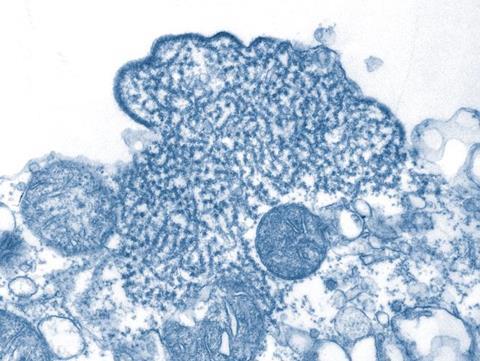
Sporadic Nipah virus infections have occurred almost annually in parts of South Asia, particularly in India and Bangladesh, and do not indicate a new or escalating global threat.
Nipah virus is a zoonotic pathogen carried by fruit bats, with human infections typically linked to localized exposure, such as contact with infected animals or contaminated food. Human-to-human transmission can occur but remains rare and usually requires very close contact during acute illness.
“Overall, the risk of regional or global spread of Nipah virus is very low,” said Professor Linfa Wang, PhD, Director of the GVN Center of Excellence at Duke-NUS Medical School in Singapore. “Similar outbreaks have occurred repeatedly in India and Bangladesh, driven largely by specific cultural and environmental factors rather than sustained human transmission.”
Mitigating the risk
Countries with strong public-health systems and surveillance capacity are well positioned to mitigate the risk posed by Nipah virus through early detection, clinical awareness, and rapid diagnostics.
GVN is monitoring the situation closely through its network of Affiliates and Centers of Excellence, including the Institute of Advanced Virology (IAV) in Kerala, a GVN Affiliate through the Centers of Excellence at University College Dublin and Hokkaido University. Researchers at IAV are engaged in Nipah virus research, surveillance, and development of new diagnostic testing.
READ MORE: Study finds outbreak detection under-resourced in Asia
READ MORE: New study brings vaccine hopes for deadly Nipah virus
While there are currently no approved vaccines or antiviral treatments for Nipah virus, promising candidates have shown effectiveness in animal studies. Professor Wang said, “Progress depends on sustained public-good investment and international cooperation.”
The Global Virus Network underscores that the current outbreak does not represent a global emergency, but it does highlight the ongoing importance of surveillance, diagnostics, and globally connected scientific networks to detect and defend against emerging infectious threats.
Two confirmed cases
Two confirmed cases of Nipah virus disease were reported in West Bengal, India. Based on current information, the risk of infection for people from Europe travelling to or residing in the area is assessed as very low, according to the European Centre for Disease Prevention and Control (ECDC).
According to information reported on 26 January 2026 by Indian authorities, both cases are healthcare workers at the same hospital and had contact with each other while undertaking duties in late December 2025. The limited number of cases and their apparent link to a single healthcare setting suggest there is no community transmission at this stage.
The most likely route for Nipah virus to be introduced into Europe would be through infected travellers. While virus importation cannot be ruled out, it is considered unlikely. As the fruit bats carrying Nipah virus are not present in Europe, the risk of onward transmission following a potential importation is also assessed as very low in the current context.
Ongoing investigations and response measures
Indian authorities have implemented prevention and control measures, and investigations are ongoing to identify the possible source of infection. A total of 196 contacts of the confirmed cases were identified and tested. All traced contacts remain asymptomatic and have tested negative for Nipah virus infection.
Several countries in the region, including Thailand, Nepal and Cambodia, have initiated precautionary measures. These include public information campaigns and the screening of passengers arriving from India at airports..
Nipah virus disease
Nipah virus is a zoonotic virus, meaning it can spread from animals to humans. The virus is carried by fruit bats, also known as flying foxes, of the genus Pteropus. These bats are found in parts of South and South East Asia, the Indian Ocean region, and Oceania.
The virus can infect humans directly from animals, from contaminated food, and through human-to-human contact. Although outbreaks have only been reported in Asia to date, the virus has epidemic and pandemic potential because it can spread between people and through domesticated animals.
Nipah virus disease is a severe illness, with reported case fatality rates typically ranging between 40% and 75%, depending on factors such as the virus strain and access to high-quality healthcare. The virus can cause brain inflammation (encephalitis). Among those who survive encephalitis, around one in five experience long-term neurological complications, including recurrent seizures, extreme fatigue or behavioural changes. In rare cases, relapse or delayed onset of encephalitis can occur weeks, months or even years after recovery and may be fatal. Neither a vaccine for prevention nor a specific antiviral treatment is available for Nipah virus infection in humans.






No comments yet