
A vaccine candidate developed by scientists at the University of Oxford has been recommended to enter a pivotal Phase 2/3 clinical trial in the Democratic Republic of the Congo (DRC), in a significant step towards tackling Bundibugyo virus, a potentially deadly pathogen for which no vaccine is currently approved.
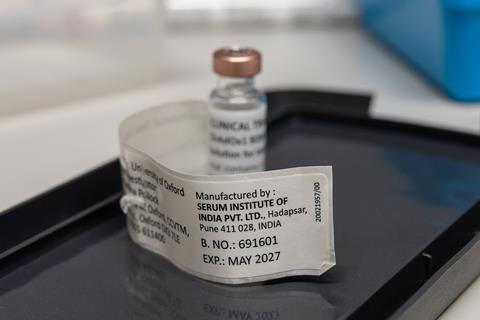
Developed by researchers at the Oxford Vaccine Group and Pandemic Sciences Institute, both at the University of Oxford, and in collaboration with the Serum Institute of India, the ChAdOx1 BDBV vaccine candidate is planned to be evaluated as part of Tumaini, a clinical trial designed to assess whether experimental vaccines can safely and effectively protect people against Bundibugyo virus (BDBV).
The recommendation was made by the World Health Organization’s Technical Advisory Group on Candidate Vaccines Prioritization (WHO TAG-CVP), and follows their review of the preclinical and Phase 1 clinical data. Preparations are underway for the vaccine candidate to enter the trial in the coming weeks, subject to regulatory approval.
Although a vaccine is licensed to prevent disease caused by Ebola virus (previously known as Zaire ebolavirus), no vaccine has yet been approved specifically against Bundibugyo virus. The ChAdOx1 BDBV vaccine is expected to be one of the first Bundibugyo-specific candidates to undergo late-stage clinical evaluation when it enters Tumaini, marking a significant step forward in developing a licensed vaccine against Bundibugyo virus.
Pivotal study
Dr Robert Shaw, Infectious diseases physician and Principal Investigator at the Oxford Vaccine Group, said: “Reaching this stage is a testament to the dedication and expertise of teams working across the world to make this possible. From the teams in Oxford developing and evaluating the vaccine, to our collaborators at the Serum Institute of India scaling up production, the teams in Uganda conducting the Phase 1b trial, and now those in the DRC leading this pivotal study, this milestone reflects a truly international effort.
The trial, named Tumaini, meaning ‘hope’ in Swahili, has been established to support the Government-led response to the Bundibugyo virus outbreak in the DRC. Tumaini will work closely with affected communities, health authorities and outbreak response partners to generate robust evidence on vaccine performance that could contribute to curtailing the epidemic, saving lives, and strengthening preparedness for future BDBV outbreaks.
Professor Teresa Lambe OBE, Calleva Head of Immunology at the Oxford Vaccine Group and Pandemic Sciences Institute, and the study’s Lead Scientific Investigator, said: “Conducting a clinical trial during an active outbreak is an enormous undertaking, and we are grateful to the teams and partners working tirelessly to make this possible. We are pleased to contribute to this important effort. Still, the true measure of success will be whether we can make a meaningful difference to the communities facing this devastating disease. This trial represents an important opportunity to turn that ambition into reality.”
Public health emergency
The Bundibugyo outbreak in the DRC was officially declared on 15 May 2026 and was determined as a Public Health Emergency of International Concern by the World Health Organization (WHO) and a Public Health Emergency of Continental Security by Africa CDC in the days thereafter. As of 26 October 2026, the DRC has reported a total of 10,060 confirmed cases, including 4,887 related deaths. Cases have also been reported in Kenya, Nigeria and Uganda.
Dr Richard Hatchett, CEO of CEPI, said: “Every week this outbreak continues, more families and communities in the DRC are devastated, and the need for a vaccine against Bundibugyo virus grows more urgent. Thanks to the commitment of our partners at the University of Oxford and the Serum Institute of India, this promising candidate went from concept to clinical trials in a matter of weeks. Its recommendation for inclusion in the Tumaini study is an important step towards a BDBV-specific vaccine that can protect those most at risk.”
MICROBIOLOGY NEWS: Register with The Microbiologist for more free articles
CEPI is funding the development of the ChAdOx1 BDBV vaccine candidate and is providing funding, scientific expertise and operational support to the Tumaini trial.
Approximately 620,000 doses of the ChAdOx1 BDBV vaccine candidate have been manufactured by the Serum Institute of India.




No comments yet