
Turnout at a recent symposium has confirmed the appetite for a new microbiome hub in Puerto Rico, reveals Puerto Rico AMI Global Ambassador Dr. Filipa Godoy-Vitorino.
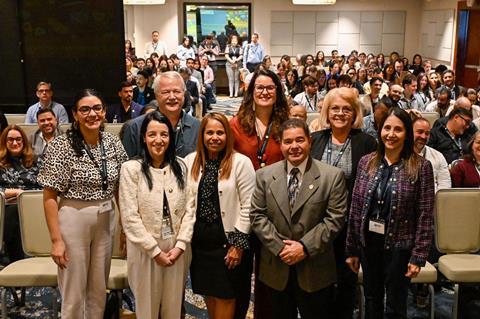
The unfolding events have been documented in a new paper, ’Community Dynamics in a Changing World: Highlights from the 1st Puerto Rico & Caribbean Microbiome Symposium and vision for a new microbiome hub’, which has recently been accepted for publication by Sustainable Microbiology, an Applied Microbiology International publication.
The newly established COBRE Puerto Rico Center for Microbiome Sciences (PR-CMS), based in the Department of Microbiology and Immunology in collaboration with the Anatomy Department (a School of Medicine Center)at the University of Puerto Rico School of Medicine, organized and hosted the 1st Microbiome Symposium of Puerto Rico and the Caribbean, “Community Dynamics in a Changing World,” in San Juan on February 28, 2026 — the first event of its kind in the region, created to launch a sustainable hub for microbiome sciences where global investment and expertise have historically been concentrated elsewhere.
Real-world problem
Microbiome and bioinformatics research have grown explosively worldwide, but this growth has been disproportionately concentrated in resource-rich regions, leaving the Caribbean — and its microbial diversity — largely unstudied.
”Puerto Rico sits at an unusual crossroads: extraordinary, largely uncharacterized tropical microbial biodiversity (mangroves, karst forests, agricultural and urban landscapes) on one hand, and a disproportionate burden of chronic disease (obesity, diabetes, cancer, cardiovascular and neurological disease) on the other — conditions increasingly tied to the microbiome,” said Dr Godoy-Vitorino.
”On top of that, Puerto Rico’s population has a distinct genetic admixture and dietary/cultural background not represented in the microbiome studies that dominate the literature (mostly from the US mainland and Europe), which limits how generalizable those findings really are.
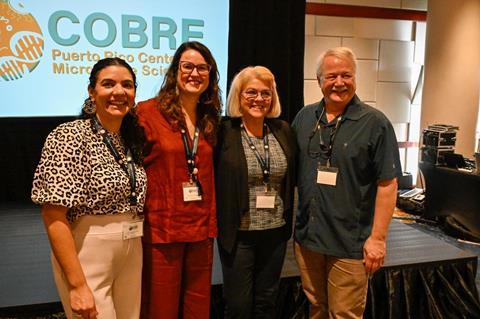
“We wanted to find out whether bringing together local and international researchers, trainees, and institutions around a shared regional platform could start closing this gap — building real research capacity rather than just importing findings from elsewhere.”
What we did and what we found
”We built the COBRE Puerto Rico Center for Microbiome Sciences, funded by NIGMS-NIH (award #1P20GM156713), to provide core lab infrastructure, bioinformatics support, and training for researchers across career stages — including many faculty who had never previously worked on microbiome science.
”As the flagship activity of the Center, we organized the symposium itself, bringing together keynote and invited speakers spanning early-life microbiome development, computational microbiology, diet-microbiome interactions, and microbial ecology/biodiversity, alongside 85+ posters, 12 flash talks, and a roundtable of internationally recognized experts on the future of the field.
”The turnout told us something we didn’t fully expect going in: more than 200 attendees, over 40 PI labs, and 27 participating institutions — 14 from Puerto Rico, 11 from the US mainland (including NIH and USDA) all converged around a single new event.
Emerging findings
”Four scientific themes organically emerged as the pillars of the meeting, and the expert roundtable converged on a shared conclusion: the field is shifting from simply cataloging microbes to understanding microbial interactions and cooperative networks, and the next frontier is mechanism-driven, causal research (precision nutrition, longitudinal sampling) rather than purely associative studies.

The scale and speed of engagement for a first-ever regional event was the biggest surprise — 200+ attendees and 40+ PI labs is a strong showing anywhere, but especially striking in a region where microbiome research had previously been carried out by only a handful of labs.
Equally surprising was how many faculty members whose research had never touched the microbiome field before showed up ready to participate, suggesting there was far more latent scientific interest and capacity in Puerto Rico and the Caribbean than we had assumed.
Why this matters
”This shows that targeted investment in regional infrastructure can rapidly catalyze a sustainable, interdisciplinary scientific community in a historically underrepresented region,” said Dr Godoy-Vitorino.
”It matters because closing this gap isn’t just about equity in who gets to do the research — it’s about the science itself: without studying Puerto Rico’s unique environmental biodiversity and its genetically and culturally distinct population, we’re missing mechanisms and associations that a US- or Europe-centric microbiome literature simply cannot capture.
”It also directly serves the region’s health needs, since the same infrastructure that studies environmental and tropical microbiomes is being used to investigate the microbiome’s role in the chronic diseases that disproportionately affect Puerto Rico.”
Next steps
The team have already committed to making this recurring: starting in 2026, the symposium will be held annually during the first week of December for an initial five-year period, to sustain and grow the network rather than let it be a one-off. The next one will take place on December 1 this year..
Beyond that, the priorities the expert panel itself identified need to be pursued: moving from descriptive/associative microbiome studies toward mechanistic and causal research, integrating longitudinal sampling and standardized dietary/environmental metadata into clinical research, and continuing to expand core lab and bioinformatics/AI capacity so local investigators aren’t dependent on outside institutions.
”We also want to keep broadening inclusive participation — early-career researchers, traditional knowledge holders, and regional balance — in line with global microbial conservation efforts like the IUCN Microbial Conservation Specialist Group,” Dr Godoy-Vitorino said.
Study background
The Center and the newly published paper are led by Dr. Filipa Godoy-Vitorino, Principal Investigator of the COBRE Puerto Rico Center for Microbiome Sciences, Department of Microbiology and Immunology, University of Puerto Rico School of Medicine, who also moderated the event and the closing roundtable. The work was funded by NIGMS-NIH (COBRE award #1P20GM156713).
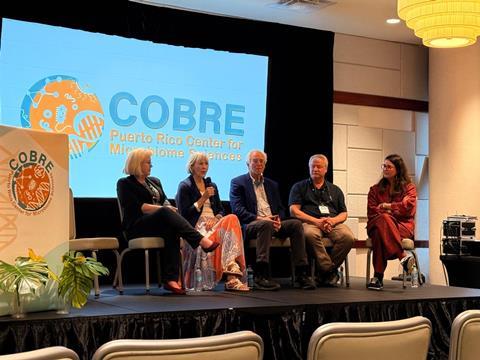
Keynote and invited speakers included Dr. Maria Gloria Dominguez-Bello (Rutgers University), Dr. Keith A. Crandall (George Washington University), Dr. Ana Maldonado-Contreras (UMass Chan Medical School), and Dr. Natalie M. Meléndez-Vázquez (UPR Medical Sciences Campus/CCRHD-RCMI), with the roundtable additionally featuring Dr. Janet Jansson and Dr. Martin J. Blaser.
Student recognition and support came through a partnership with the Puerto Rico Society for Microbiologists (PRSM) and Applied Microbiology International (AMI).
The event was also supported by several sister university centers: the COBRE Center for Cancer Health Disparities (CePCHE), the COBRE Puerto Rico Center for Neuroplasticity, the Puerto Rico IDeA Network of Biomedical Research Excellence (PR-INBRE), the Alliance for Clinical and Translational Research, the Research Centers in Minority Institutions (RCMI), and the Puerto Rico E-RISE “Blueprint of Life.”
’Community Dynamics in a Changing World: Highlights from the 1st Puerto Rico & Caribbean Microbiome Symposium and vision for a new microbiome hub’ is published in Sustainable Microbiology.
Topics
- Ana Maldonado-Contreras
- Applied Microbiology International
- COBRE Puerto Rico Center for Microbiome Sciences
- Community
- Disease Treatment & Prevention
- Diversity & Inclusion
- Ecology
- Environmental Microbiology
- Filipa Godoy-Vitorino
- Healthy Land
- Human Microbiome
- Janet Jansson
- Keith A. Crandall
- Maria Gloria Dominguez-Bello
- Martin J. Blaser
- Natalie M. Meléndez-Vázquez
- One Health
- Puerto Rico Society for Microbiologists
- Research News
- Sustainable Microbiology
- USA & Canada




No comments yet