
A new article publication from Acta Pharmaceutica Sinica B discusses probiotic living microneedles designed by interbacterial competition for accelerated infected wound healing.
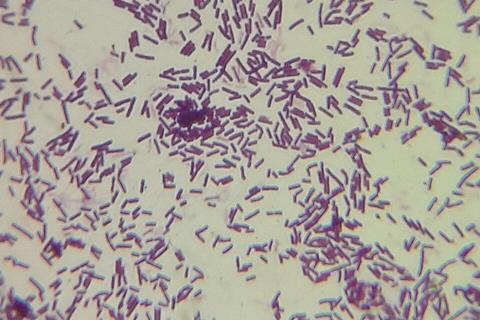
Probiotic therapy offers a promising strategy for chronic infected wound management through pathogen suppression and immune modulation. However, its efficacy remains restricted by weak competitiveness in pathogen-rich niches and poor penetration across biofilm barriers.
Inspired by bacterial competitive interactions, the authors of this article developed a multifunctional microneedle (MN) platform to overcome these limitations.
Engineered probiotics
Lactobacillus reuteri (Lr) was coated with poly-l-lysine-modified metal–phenolic networks (MPNs) encapsulating doxorubicin (DOX), yielding DOX@MPN–PLL@Lr (DMP@Lr). The engineered probiotics were incorporated into dissolving MNs enriched with nutrient broth to ensure excellent microneedle performance and probiotic function.
This design leverages MPN multifunctionality to reduce early-stage pathogenic burden via photothermal-assisted bacterial killing and near-infrared (NIR)-promoted antibiotic release, thereby enhancing probiotic competitiveness. Meanwhile, MNs physically disrupt biofilms for precise delivery into deep infection sites.
READ MORE: Gut microbes play a key role in regulating stress responsiveness throughout the day
In vitro, DMP@Lr achieved >99.9% (5.5 log) bactericidal efficiency, and its MNs exhibited a 1.4-fold higher biofilm clearance compared with blank MNs. In vivo, a single DMP@Lr MN patch promoted 93.9% wound closure, demonstrating potent antibacterial activity and accelerated healing.
This study presents an innovative, translatable probiotic-based MN therapy for the effective treatment of chronically infected wounds.




No comments yet