
Researchers at the Technical University of Munich (TUM) have visualized the complex network of plant roots and mycorrhizal fungi in soil in three dimensions for the first time. The researchers, who published their work in the New Phytologist, see this method as a promising tool for studying climate-resilient plants.
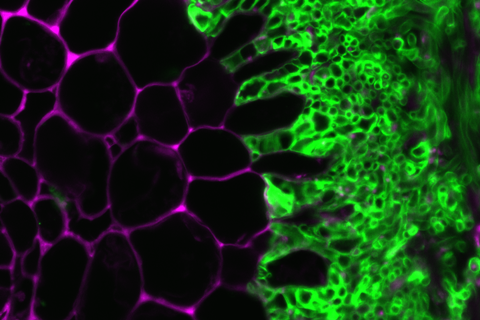
Symbioses between plants and fungi are essential for most plants. Fungal structures known as mycorrhizae extend the area from which plants can draw water and nutrients from the soil. In return, plants supply the fungi with carbohydrates produced through photosynthesis. Although the importance of this symbiosis has been known for decades, researchers have not previously been able to study the underground network in its natural structure.
Underground mapping
The newly developed method is based on synchrotron computed tomography. This technique makes it possible to visualize the finest structures, which are often not visible using conventional CT methods. The plants grow in a “basket” that allows them to be removed from the soil together with the surrounding material without damaging the root system.
A three-dimensional model is then reconstructed from many high-resolution projection images of the sample, revealing plant roots, fungal hyphae, and fungal spores in their natural environment. “With our newly developed method, we have opened a ‘black box’ of plant research,” says Mutez Ahmed, Professor of Root-Soil Interaction at TUM.
MICROBIOLOGY NEWS: Register with The Microbiologist for more free articles
Previous imaging techniques required roots to be cleaned of surrounding soil. In the process, fine structures and the spatial connections between plants and fungi were lost. The new method makes it possible to study the entire network in its natural environment for the first time. According to the researchers, the experimental results can also be applied to plants outside laboratory conditions.
Combating drought stress
“The better we understand mycorrhizae and their connections to plant roots, the better we can make use of this symbiosis,” says Henri Braunmiller, lead author of the publication. “We can now see exactly how plants and fungi interact in the soil and, for example, observe which mycorrhizal networks are particularly effective in supplying plants with water and nutrients. In the long term, this could help us develop ways to make crops more resilient to drought and other consequences of climate change.”





No comments yet