
The final-year project carried out by Alexandra García Flórez in the Department of Immunology, Microbiology and Parasitology of the University of the Basque Country-EHU has led to a scientific article being published in the prestigious journal Molecular Phylogenetics and Evolution. This study proposes a solution for distinguishing and quantifying different species of bacteria of the genus Vibrio, of great ecological and epidemiological significance.
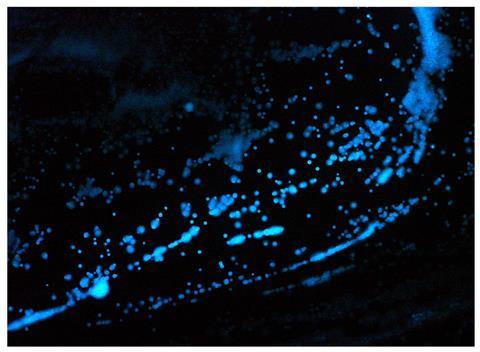
The more than 100 bacterial species of the genus Vibrio are important in marine ecosystems since they contribute to the carbon cycle and other ecological processes, but they can also be significant pathogens for both humans (they can cause cholera) and animals (they can drastically reduce productivity in fish and crustacean (e.g. prawns) farms, or cause coral bleaching). Identifying and quantifying Vibrio species in marine and estuarine water samples is complex, since identification errors may occur when using molecular methods that lack sufficient resolution.
Why Vibrio identification is difficult
“The genetic marker 16S rDNA is traditionally used for distinguishing between groups of bacteria that differ from one another. However, to distinguish between closely-related bacteria, that are highly similar, this marker is not so useful”, explains the researcher Alexandra García Flórez, author of a research study carried out at the EHU. The resolution of the traditional 16S rDNA marker is not high enough to be able to distinguish between highly similar species since its sequence is quite similar across closely-related species. In addition, each bacteria cell can have more than one copy of this traditional marker, making it unsuitable for estimating abundances.”
Researcher Alexandra García’s final-year project was aimed at improving the tools for identifying Vibrio species, using computational approaches based on molecular biology and microbial evolution. This work is the result of the collaboration of the distinguished researchers at the EHU: Vladimir R. Kaberdin, of the Department of Inmunology, Microbiology and Parasitology, and Peter B. Pearman, of the Department of Plant Biology and Ecology. “It is a brilliant final-year project that has been published in a highly prestigious journal. It is not usual for students to have their final-year project published in a journal such as Molecular Phylogenetics and Evolution”, said the EHU researchers.
Single-copy genes
To find an alternative to the 16S rDNA marker, the research team selected “single-copy genes; that is, as the name suggests, each bacteria contains only one copy of this gene. Having one marker per bacteria helps us estimate the abundance of each species in a sample. In addition, these genes differ more between similar species, which means they enable the species to be distinguished more clearly”, explains García.
By conducting a bioinformatics analysis of the sequences of the traditional 16S rDNA marker and the single-copy genes of 87 species of Vibrio, García was able to construct their evolutionary histories. After comparing them, the researchers concluded that “the 16S rDNA marker is not representative of the evolutionary history of the Vibrio species; it does not accurately reflect the evolutionary history shown by the single-copy genes.” The study demonstrated the validity of using single-copy genes as an alternative to the traditional marker genes in cases where a sufficiently high resolution cannot be achieved using the traditional marker. One it has been confirmed that these genes “share a similar evolutionary history, the next step is to experimentally test them to see whether they can be used for analysing the composition of Vibrios from a sample.”
MICROBIOLOGY NEWS: Register with The Microbiologist for more free articles
After a more detailed examination of the results of these analyses, the research team proposed some genes that could be used for an evolutionary study of the composition of microbial communities. García stated that, although the focus of this study was on Vibrios, “this analysis could be used for other types of bacteria.”





No comments yet