
Enterovirus infections in hospitalized children are not limited to hand, foot and mouth disease. An eight-year multicenter study from China shows that while most hospitalized cases occur in very young children and have favorable outcomes, a small number develop serious complications involving the brain, heart and other organs, leading to substantially greater use of hospital resources.
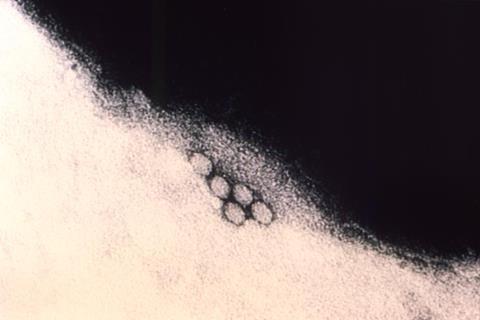
Published in Virologica Sinica, the study analyzed 163,714 children hospitalized between 2016 and 2023 with enterovirus infections across 37 hospitals in China.
The cases accounted for 1.49% of all hospital admissions, and more than four in five patients were aged three years or younger, with children age between 28 days to 1 year representing the largest group.
Hand, foot and mouth disease and herpangina made up the great majority of diagnoses. “However, we also captured less common manifestations such as meningitis, encephalitis and myocarditis, which provided a broader view of enterovirus disease than surveillance focused mainly on hand, foot and mouth disease,” shares corresponding author Xiangpeng Chen of Beijing Children’s Hospital, Capital Medical University. “Severe complications are uncommon, but when they occur, they can require longer hospitalization and considerably more medical care.”
Hospitalization cost
Across all cases, the median hospital stay was five days and the average hospitalization cost was $587.37. “The small number of children with complications such as coxsackievirus myocarditis, coxsackievirus meningitis or echovirus encephalitis had markedly longer stays and higher costs,” says Chen.
MICROBIOLOGY NEWS: Register with The Microbiologist for more free articles
The study also revealed strong age and seasonal patterns. “Hospitalizations were concentrated among infants and toddlers and were most common in summer and autumn,” Chen says. “Case numbers reduced during the COVID-19 period before rising again in 2023, illustrating how enterovirus circulation can shift over time.”
Notably, infants and toddlers carried most of the hospitalization burden. “Our findings support more targeted prevention, surveillance and early clinical recognition in young children, while also reminding us to look beyond the most familiar enterovirus syndromes,” Chen adds.
Topics
- Asia & Oceania
- Beijing Children’s Hospital
- Capital Medical University
- coxsackievirus meningitis
- coxsackievirus myocarditis
- echovirus encephalitis
- Emerging Threats & Epidemiology
- enteroviruses
- Infection Prevention & Control
- Infectious Disease
- Medical Microbiology
- One Health
- Public Health
- Research News
- Viruses
- Xiangpeng Chen







No comments yet