
A new review published in Microbiome and One Health proposes the framework Functional Food Microecology (FFM) that connects functional foods, the gut microbiome and host health. Rather than viewing diet only as calories and nutrients, the authors described food components as signals that gut microbes can transform into bioactive molecules.

“These molecules influence metabolism, immunity, barrier function and communication along gut-organ axes, including the gut-liver, gut-brain, gut-kidney, gut-heart and gut-lung routes,” says corresponding author Yongzhi Lun.
The review summarizes how probiotics, prebiotics, postbiotics, synbiotics and fermented foods can shape the gut ecosystem. “We also examined how polyphenols, dietary fibers and functional lipids are converted by microbes into metabolites such as short-chain fatty acids, urolithins and bile acid derivatives,” shares Lun. “Responses vary between individuals, so precision nutrition will require microbiome-informed strategies rather than one-size-fits-all advice.”
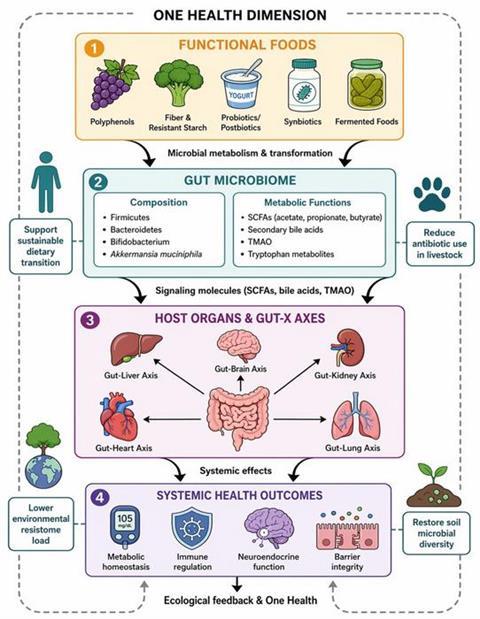
In particular, multi-omics, artificial intelligence and synthetic biology are highlighted as tools that could help match interventions to individuals and design next-generation foods.
Gut microbiome as a hub
The framework extends beyond individual health. “Within the One Health perspective, the gut microbiome is presented as a hub linking human, animal and environmental health,” says co-author Jie Sun. “Microbiome-targeted food strategies could help reduce antibiotic dependence in livestock, limit environmental resistance genes and support sustainable dietary transitions.”
MICROBIOLOGY NEWS: Register with The Microbiologist for more free articles
“Functional food microecology asks not only what we eat, but what our microbes do with it,” adds Lun, corresponding author of the review. “By connecting food science, microbiome research and One Health, this framework may help turn that knowledge into more precise and sustainable dietary strategies.”
Nonetheless, the authors cautioned that human evidence remains uneven, microbiome biomarkers are not yet ready for routine clinical use, and personalized nutrition raises cost, privacy and equity questions. They called for rigorous trials, standardized methods and coordinated work among researchers, industry and regulators.






No comments yet