
Researchers at National Institute of Advanced Industrial Science and Technology (AIST), in collaboration with researchers from the University of the Ryukyus and the University of Electro-Communications, have discovered that soil pH is a key factor in regulating the symbiotic relationship between pests and soil bacteria. The study is published in Microbiome.
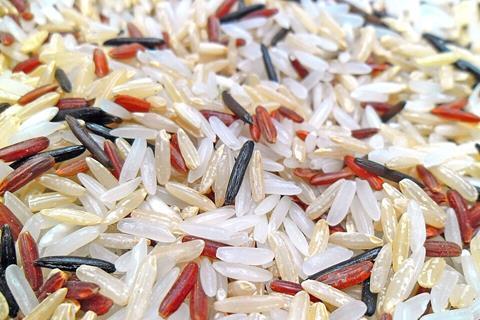
Rice stink bugs are well-known agricultural pests in rice cultivation because they reduce both grain quality and yield, and chemical pesticides are widely used for their control. However, concerns over environmental impacts and the development of pesticide resistance have increased the demand for pest management strategies that reduce reliance on chemical pesticides.
Pesticides and stink bugs
Damage caused by agricultural pests is a major problem worldwide, and chemical pesticides are widely used for pest control. However, excessive reliance on chemical pesticides has led to cause problems such as increased environmental burdens and the development of pesticide resistance in pests.
Therefore, there is an increasing need to develop sustainable pest management strategies that reduce dependence on chemical pesticides. Japan has one of the highest rates of pesticide use per unit area of cultivated land in the world. Rice production in paddy fields, in particular, requires intensive management to deal with a wide range of pests and diseases.
Rice stink bugs are among the most important pest groups because the area requiring control is larger than that of many other rice pests and diseases. These insects cause “pecky rice” damage by sucking sap from developing rice grains, and even minor infestations can reduce rice quality and market value.
Symbiotic relationships
Many insect pests harbor symbiotic bacteria that play important roles in their growth and reproduction, and recent studies have shown that some stink bugs acquire these beneficial symbionts from soil. In this study, researchers focused on rice stink bugs that acquire symbiotic bacteria from the soil and investigated the environmental factors affecting symbiont acquisition.
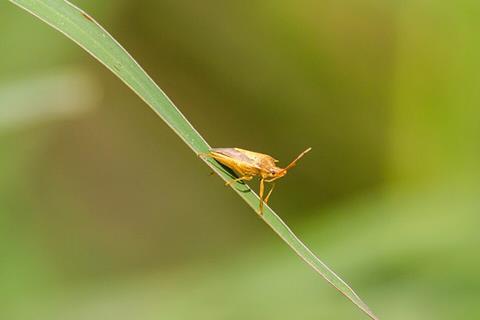
Through laboratory experiments and field surveys, researchers investigated how rice stink bugs acquire Burkholderia, an essential symbiotic bacterium for their growth and reproduction. They also examined the relationship between symbiont acquisition and soil pH. Rearing experiments revealed the insects’ high dependence on Burkholderia, as failure to acquire it from soil severely impaired their growth and reproductive capacity.
Soil pH
Field surveys further revealed that high-density aggregations of rice stink bugs were frequently observed in fields with soil pH below 7.0, whereas such aggregations were absent in fields with neutral or alkaline soils. Soil pH modification experiments using mildly acidic soils showed that the abundance of Burkholderia gradually decreased approximately 120 days after soil pH increased.
Rice stink bugs readily acquired the symbiont from mildly acidic soils; however, acquisition was strongly suppressed in soils with a neutral or alkaline pH. Similar effects were observed when the pH of mildly acidic soils was experimentally increased to neutral or higher levels, confirming that soil pH is a critical environmental factor influencing the establishment of symbiosis between rice stink bugs and soil bacteria.
These findings uncover a previously overlooked connection between soil conditions and pest ecology mediated by symbiotic bacteria. They also provide a new perspective on pest management through soil management. The study further suggests that altering soil pH using materials such as lime could contribute to environmentally sustainable pest control strategies with reduced reliance on chemical pesticides, thus bridging the gap between fundamental research and agricultural applications.
Topics
- Agriculture
- Asia & Oceania
- Bacteria
- Burkholderia
- Environmental Microbiology
- Food Microbiology
- Food Science & Technology
- Food Security
- Food Security & Safety
- Healthy Land
- National Institute of Advanced Industrial Science and Technology
- pecky rice
- pesticide resistance
- pesticides
- Research News
- rice plants
- Soil & Plant Science
- soil microbes
- soil pH
- Stink bugs
- symbiosis
- University of Electro-Communications
- University of the Ryukyus






No comments yet