
Cyanobacteria, also known as blue-green algae, occur worldwide in many varieties, including in single-cell form and in chains called filaments. While these tiny life forms can strongly influence many ecosystems, the details of their behavior have mostly been studied in laboratory settings, under constant illumination.
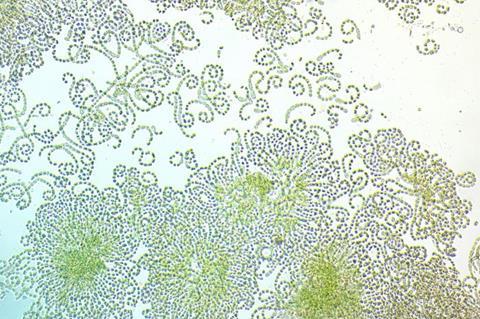
But now, scientists at the Marine Biological Laboratory (MBL) have shown that filamentous cyanobacteria are strongly regulated by the day-night cycle they experience in their natural environment. Their study was published in mBio.
By analyzing gene expression in the cyanobacterium Nostoc punctiforme, the scientists discovered that during daylight, the cells focus on metabolism, precisely coordinating photosynthesis and carbon assimilation for cell division. But under cover of darkness, they turn to the control of genome repair and activate various genetic elements.
READ MORE: ‘Pink berries’ reveal how bacteria survive a viral epidemic
READ MORE: Scientists discover a novel vehicle for antibiotic resistance
“I think this is a benchmark study that reveals that lab cultures under stable conditions may not undergo the same genetic or genomic dynamics that they would reveal in the wild,” said MBL Research Scientist Blair Paul, senior author on the study. “So, this was a necessary step toward mimicking natural, environmental conditions and then seeing which genes are activated by these more natural conditions.”
Rapid mutation
They also found special genes, called diversity-generating retroelements, that enable rapid mutation at specific sites in the genome. These are commonly found in the myriad species of cyanobacteria, especially the multicellular ones, Paul said. This study showed that they are active throughout the day-night cycle.The study also unexpectedly revealed mobile genetic elements hopping in and out of the N. punctiforme genome, carried by viruses known as phages. These transposons, they found, were active at night.
Multicellular cyanobacteria are “widespread terrestrially, and also in marine environments, while several of them are associated with plants,” Paul said. “They occupy most niches on the planet where there’s sunlight.” In the lab, N. punctiforme is a model system for studying how specialized cells in these cyanobacteria perform different functions, helping the organism adapt to environmental stress.
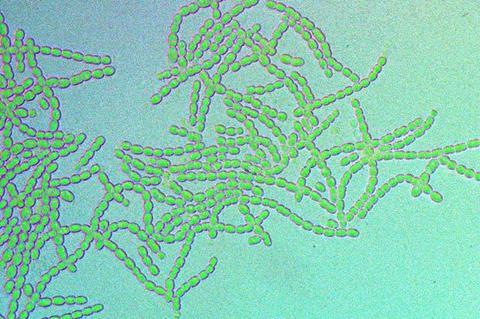
But while there is abundant research on the day-night cycles of single-celled cyanobacteria, “comparatively little was known about the circadian rhythm in multicellular cyanobacteria,” Paul said. That’s because when grown in the lab, the usual approach is to use constant illumination to promote the fastest growth.
Vital foundation
Learning more about the natural behavior of these microorganisms is important because they are primary producers, “the vital foundation for an ecosystem,” Paul said.
At the same time, he points out, “relatives of these cyanobacteria form harmful algal blooms,” which produce toxins, including in some cases powerful neurotoxins. So, a better understanding of their genome dynamics “can help us understand how these organisms thrive in the wild.”
The genomes of these multicellular cyanobacteria are much larger than those of their single-celled cousins – some 8 million “letters” long, compared to about 3 million. So, it’s not surprising that while some of the genes this study found to be associated with day-night cycles were known in other kinds of cyanobacteria, others were entirely new.
“They’re different, but could have a similar function tied to the cellular clock” and will be the subject of further study, Paul said.
Massive impact
Tiny as they are, the impact of cyanobacteria on ecosystems “can be massive, affecting the chemistry and biology of major biomes, like that of the global ocean,” Paul said. And their dynamic genetic elements may also influence the genetics of neighboring microbes.
“What genetic vehicles are these cyanobacteria disseminating in an ecosystem? Are those beneficial to other microorganisms, or are they most often deployed against adversaries? Those are pretty open-ended questions,” Paul said.





No comments yet