
Conventionally engineered materials are typically manufactured through energy- and resource-intensive processes - but biological systems offer less energy-demanding alternatives along with potential for carbon capture, according to Ehsan Nikooee, Sajjad Deylaghian and Hamed Aghili.
When Antonie van Leeuwenhoek saw ‘animalcules’, single-celled organisms that swim and tumble in water, he never thought these organisms could be pivotal in addressing the grand challenges of humanity.
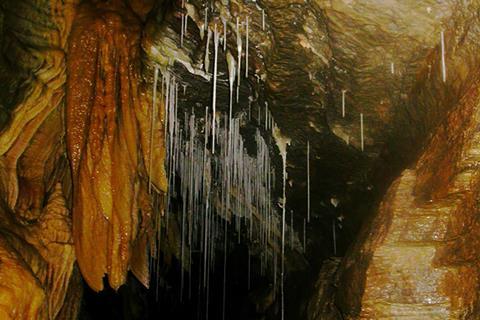
Ever-increasing global warming underscores the urgent need for climate action. Meeting the Paris Agreement’s 1.5°C target requires rapid emissions reductions alongside a substantial scale-up of carbon dioxide removal (Smith et al., 2023).
Conventionally engineered materials are typically manufactured through energy- and resource-intensive processes. Biological systems, however, offer less energy-demanding alternatives and potential for negative-emission materials and processes.
Biomineralisation: a path to multifunctional and potentially net-negative materials
Biomineralisation is nothing new to vertebrates, plants and even microorganisms. It is a widespread biological process through which organisms produce minerals for structural support, sensory functions, light scattering, and defense (Aghili et al. 2026).
Carbonates, a group of minerals commonly formed through biological processes, could provide a key to the next industrial revolution by leveraging biomineralization for several applications of importance for our built environment. In particular, it is not only about biomineralization products being multifunctional but also about the process itself, which can directly involve carbon capture.
This CO₂-based approach (i.e., CO2-based biomineralisation) relies on an enzyme called carbonic anhydrase, which certain bacteria produce, and the enzyme accelerates hydration of CO2. In the presence of cations such as calcium, calcium carbonate can form under suitable conditions. These carbonate minerals can then stabilize weak soil layers and provide a potentially net-negative alternative for common soil stabilization techniques (Deylaghian et al. 2026).
The same process could help remove contaminants such as lead from contaminated water (Jahanmard et al. 2026). A 3D-bioprinted construct containing bacterial cells can capture CO2 and turn it into minerals, strengthening the construct. The product is a living material, which could potentially and eventually help us build our net-negative future.
Challenges and the way forward
While 3D-bioprinting and additive manufacturing offer potential for scaling up the production of biocemented materials and some recent design workflows have been put forward (Antorveza Paez et al. 2026a, Antorveza Paez et al. 2026b), industrial-scale implementation, controllability, durability, life-cycle impacts and net carbon benefits must be examined before these technologies can be described as industrially transformative.
The genuine value of the method will depend on whether the entire process—from the origin of the CO₂ and the energy and nutrients required for production to long-term durability and end-of-life performance—would deliver measurable environmental benefits compared with conventional alternatives. Establishing this evidence should become a priority as the field moves from laboratory demonstrations towards practical applications.
Beyond climate change: nature-inspired solutions for extraterrestrial settlements
Could living materials eventually help build beyond Earth? Mars offers a fascinating test case: its atmosphere consists of approximately 95% CO₂, although its surface pressure is less than 1% of Earth’s. The potential use of bactoink in off-Earth construction, like Martian construction, where in-situ resource utilization (ISRU) matters and abundant atmospheric CO2 is within reach, highlights another interesting research avenue.

Future construction technologies could exploit locally available resources, including atmospheric CO₂ and mineral-rich regolith, to reduce reliance on materials transported from Earth. CO₂-based biomineralisation could therefore be investigated as a potential route to binding regolith particles into construction materials. Achieving this would require suitable sources of water and dissolved ions, alongside reliable control of mineral formation.
Biological survival
A further challenge is biological survival. Combining mineral-producing microorganisms with organisms or biological systems selected for environmental tolerance (extremophiles like desert algae Chlorella) could provide a route towards more resilient construction processes. Alternatively, cell-free enzymes could be investigated where maintaining viable cells proves impractical.
MICROBIOLOGY NEWS: Register with The Microbiologist for more free articles
These possibilities remain speculative: radiation, desiccation, temperature extremes, low pressure and material durability all require rigorous investigation. Nevertheless, they raise a captivating question: could biological systems one day help turn locally available planetary resources into useful construction materials?
Despite these challenges, the new advancements in 3D bioprinting and additive manufacturing of cell-laden constructs keep scientists motivated to examine new opportunities not only to build a lower and potentially negative-emission future life on Earth, but also potentially, exploit 3dbioprinting for outer space modular construction.
Sajjad Deylaghian (Post Doc researcher), Hamed Aghili (Research Associate), and Ehsan Nikooee (Associate Prof.) have contributed to this opinion article together with other team members. Their research at negative emission research group in Shiraz University (negative emission materials research group) shaped this opinion article.
Karen Antorveza, PhD Researcher at ETH Zurich, together with a team of scientists led by Prof. Benjamin Dillenburger in close collaboration with scientists from EPFL (LMS group), namely, Dr. Dimitrios Terzis, have developed and examined different bioprinting processes and design workflows discussed in this opinion article. More information HERE.
References
Aghili, H., Khodayari, E., Deylaghian, S., et al. (2026). Carbon capture through 3D bioprinting and in situ biomineralization: investigation of physical and mechanical properties. Heliyon, 12(3).
Antorveza Paez, K. A., Huang, S., Yeh, K. H., et al. (2026). Design workflow for porous 3D-printed biocement geometries. Biotechnology Design, 4, e40.
Antorveza Paez, K., Kindler, R. O., Terzis, D., et al. (2026). 3D biocement printing: scaling up living mineral structures. npj Materials Sustainability, 4(1), 20.
Deylaghian, S., Nikooee, E., Ansari, M. et al. (2026). Soil stabilization using biological CO2 sequestration and CO2-based biocementation technique. Journal of Rock Mechanics and Geotechnical Engineering.
Jahanmard, M. R., Deylaghian, S., Nikooee, E., et al. (2026) Lead contamination fixation through CO2-based biomineralization. Scientific Reports.
Microbiology: past, present and future. Nat Rev Microbiol 7, 174 (2009). https://doi.org/10.1038/nrmicro2106
Rusznyák, A., Akob, D. M., Nietzsche, S., et al. (2012). Calcite biomineralization by bacterial isolates from the recently discovered pristine karstic Herrenberg cave. Applied and environmental microbiology, 78(4), 1157-1167.
Smith, S. M., Geden, O., Nemet, G., et al. (2023). The State of Carbon Dioxide Removal -1st Edition. The State of Carbon Dioxide Removal. doi:10.17605/OSF.IO/W3B4Z
Wang, B., Ye, T., Li, X., Bian, P., Liu, Y., & Wang, G. (2021). Survival of desert algae Chlorella exposed to Mars-like near space environment. Life sciences in space research, 29, 22-29.
Topics
- Bacteria
- BactoInk
- biocemented materials
- biomineralisation
- carbon capture
- carbonic anhydrase
- chlorella
- Clean Water
- Climate Action
- construction materials
- Economic Equality
- Extremophiles
- Healthy Land
- Microbes and Space
- Middle East & Africa
- Pollution and Remediation
- regolith
- Strategies for Sustainability
- UK & Rest of Europe





No comments yet