
All Pharmaceutical Microbiology articles – Page 32
-
 News
Scientists map role of Porphyromonas gingivalis in chemotherapy resistance
A new paper describes how the bacterium Porphyromonas gingivalis interferes with chemotherapy-induced mitophagy, allowing oral cancer tumors to become resistant to the drug’s effects.
-
 News
Traditional Chinese medicine could help fight African swine fever, review finds
A review reveals the potential of Traditional Chinese Medicine (TCM) in combating African Swine Fever (ASF), a viral disease with near 100% mortality rate in pigs.
-
 News
Temperature could be the new weapon in the battle against antibiotic resistance
Scientists have found that a small increase in temperature from 37 to 40 degrees Celsius drastically changes the mutation frequency in E. coli bacteria, which facilitates the development of resistance.
-
 News
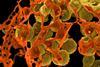
Berberine could treat eczema-exacerbated staph infections
Eczema, a skin inflammatory disease that causes dry, itchy and inflamed skin, affects millions worldwide. Eczema is associated with an altered skin microbiome and higher colonization by Staphylococcus aureus. Source: NIAID/NIH Scanning electron micrograph of methicillin-resistant Staphylococcus aureus(MRSA, brown) surrounded by cellular debris. A new study, ...
-
 News
Novel lipopeptide produced by bacterium proves lethal against Staphylococcus aureus
A novel antibacterial lipopeptide produced by the bacterium Serratia marcescens has been shown to be highly effective in killing Staphylococcus aureus – one of the most important pathogens occurring in humans.
-
 News
Liposomes can target antibiotics right to where they’re needed in wounds
The antibiotic gentamicin can be encapsulated into liposomes, allowing for more accurate use in situations such as wound treatment, according to new research presented at the recent Letters in Applied Microbiology ECS Research Symposium.
-
 News
Largest-ever antibiotic discovery effort uses AI to uncover potential cures in microbial dark matter
Researchers used machine learning to search for antibiotics in a vast dataset containing the recorded genomes of tens of thousands of bacteria and other primitive organisms, yielding nearly one million potential antibiotic compounds.
-
 News
Bone loss drugs can help azoles fight fungal infections
A new study suggests that adding common bone loss drugs to azoles can improve efficacy. In lab tests, combinations of these drugs worked against dermatophyte species and prevented resistance.
-
 News
Oral nucleoside antiviral is progressing toward future pandemic preparedness
Oral obeldesivir has been shown to reduce disease severity in mice infected with one of several different coronaviruses, including SARS-CoV-2 (which causes COVID-19), SARS-CoV and MERS-CoV.
-
 News
Novel triple antibiotic combination offers breakthrough in combatting antibiotic resistance
A new study unveils a promising triple combination of antibiotics that significantly expands our arsenal against drug-resistant bacteria.
-
 News
Caffeine-degrading microbes could tackle coffee pollution - and produce valuable pharmaceutical compounds
Caffeine-degrading microbes could offer vital bioremediation services as well as upcycling coffee waste into valuable pharmaceutical compounds, a new review suggests.
-
 News
The world’s most powerful anti-fungal chemistries cause fungal pathogens to self-destruct
Scientists have discovered that the most widely-used class of antifungals in the world cause pathogens to self-destruct. The research could help improve ways to protect food security and human lives.
-
 News
'Failed drug' could offer new approach to Epstein-Barr virus and resulting diseases
Researchers have found that the Epstein-Barr virus triggers infected cells to ramp up the production of an enzyme known as IDO1, a discovery that offers a promising starting point for putting the brakes on EBV.
-
 News
Biotech companies leverage novel tools to develop drugs for RSV
Reporter structures that can be introduced into cells for use in drug screening assays emit fluorescent or bioluminescent light at different intensities when RSV genes are inhibited by the potential antiviral agents being tested.
-
 News
Mitochondrial phosphate carrier plays an important role in virulence of Candida albicans
Scientists have found that the lack of MIR1 gene, which encodes mitochondrial phosphate carrier, can lead to severe virulence defects in Candida albicans.
-
 News
New small molecule found to suppress the evolution of antibiotic resistance in bacteria
Researchers have developed a new small molecule that can suppress the evolution of antibiotic resistance in bacteria and make resistant bacteria more susceptible to antibiotics.
-
 News
Drug-like inhibitor shows promise in preventing flu
Scientists have developed a potential drug-like molecule that blocks the first stage of type A influenza infection.
-
 News
Matcha mouthwash inhibits bacteria that causes periodontitis
Matcha, a finely ground green tea powder, may help inhibit the growth of Porphyromonas gingivalis, one of the chief bacterial culprits behind periodontitis.
-
 News
Researchers may have come up with second chance for antibiotic agent
A new study focuses on the protein peptide deformylase (PDF), which is involved in protein maturation processes in bacterial cells. While the original drug candidate had to be discarded, modification of the molecule could offer a second chance.
-
 News
Study paves the way for an active agent against hepatitis E
Tests in cell culture with human liver cells showed that the compound K11777 prevents infection with hepatitis E viruses.