
All Pollution and Remediation articles
-
 News
NewsAMI welcomes new member to its Board of Trustees
Applied Microbiology International has welcomed Professor Les Baillie as the latest member of its Board of Trustees. We also bid a fond farewell and thank you to Professor Diane Purchase who is leaving the Board.
-
 News
NewsRiver drinking water sources may face greater antibiotic resistance risks than reservoirs, study finds
A basin-wide study of 13 drinking water sources in China’s Poyang Lake region shows that water source type can strongly shape the occurrence and spread of antibiotics, antibiotic resistance genes, and resistant bacteria.
-
 News
NewsFrom soil to outer space: our interview with JAM Systems Microbiology Lead Editor Janet Jansson
We get to know Janet Jansson, who has been appointed as new Lead Editor in Systems Microbiology at the Journal of Applied Microbiology.
-
 News
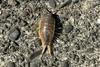
NewsWhat happens when a shoreline scavenger consumes microplastics?
Researchers report on what happens when wharf roaches, a common shoreline scavenger, eat expanded polystyrene (EPS). Analysis of the wharf roach gut microbiome showed little change, but several rare microbes were found only in the EPS-fed specimens.
-
 News
NewsMicroplastics may act as pollutant shuttles, carrying chemicals, pathogens and antibiotic resistance genes
A new review reveals how microplastics transport multiple pollutants across ecosystems and proposes a framework for identifying when these vector effects become serious ecological threats.
-
 News
NewsPreliminary wastewater bioremediation by photosynthetic Chlorobium genus isolated from pond water
Researchers have isolated naturally occurring light-driven bacteria from local pond water and shown that, within just one week, these microorganisms can substantially reduce the levels of organic pollutants in raw sewage.
-
 News
NewsUnderground methane leaks may cultivate microbes that help consume them
Researchers have identified where naturally occurring soil microbes consume methane released from underground natural gas leaks. Methane-consuming microbes were most active in a narrow zone near the surface where methane rising from below meets oxygen entering from the atmosphere.
-
 News
NewsAn enzyme with potential: New type of plastic-degrading enzyme discovered in bacteria
Researchers have identified a new enzyme that can not only degrade certain polyesters and bioplastics, but also might provide bacteria with resistance to antibiotics. The discovery raises hopes that microorganisms can adapt to plastic degradation more rapidly than previously thought.
-
 Opinion
When do human-driven changes to wildlife microbiomes become a One Health concern?
Animals live in close partnership with communities of microbes that support digestion, immune development, and defence against pathogens, but human activities are changing those partnerships, says Katherine M. Lagerstrom.
-
 News
NewsReview explores the presence, fate, and effects of pharmaceutical compounds in soil and air
Pharmaceutical contamination in soil and air has become a critical environmental concern due to its widespread sources, complex behavior, and long-lasting ecological impacts.
-
 News
NewsOxygen nanobubbles turn biochar into an active defense against cadmium in flooded rice soils
A newly engineered biochar maintained oxygen around rice roots, shifted cadmium into more stable soil forms, and substantially reduced cadmium accumulation in rice plants.
-
 News
NewsBloomNet turns lake data into early algal bloom warnings
A research team has developed BloomNet, an interpretable deep-learning framework that forecasts harmful algal blooms at hourly resolution up to 72 hours ahead while also showing how risk changes over time.
-
 News
NewsTire microplastics may accelerate the spread of antibiotic resistance in cities
A new perspective article suggests that tire microplastics could create environmental hotspots that help antibiotic resistance genes persist, move between bacteria, and spread through cities.
-
 News
NewsCaterpillar that attacks soybeans and cotton harbors fungi that can degrade polystyrene
A moth caterpillar identified by the agribusiness sector as one of the most destructive pests of soybean, cotton, and corn crops may harbor fungi and bacteria in its gut that can degrade expanded polystyrene, also known as Styrofoam.
-
 News
NewsEngineered microbial communities offer a faster route to removing herbicide residues from soil
A new review highlights how carefully designed teams of microorganisms could offer a more effective way to break down herbicide contaminants than relying on individual microbial strains.
-
 News
NewsExpanding uses for bioengineered bacterial spores
Fused to the outer layer of bacterial spores, things like enzymes, biosensors, and drugs are easily stored under even extreme conditions.
-
 News
NewsCyanobacterial toxins can be inhaled
Research on Southwest Florida cyanobacterial blooms shows that the toxins they produce are aerosolized, potentially being inhaled by people far from contaminated water bodies.
-
 News
NewsHuman activities compromise coral health and resilience
Researchers discovered that 25 contaminants from agricultural, industrial, and pharmaceutical sources accumulated in the soft tissues of coral around Maui, Hawai‘i.
-
 News
NewsAntibiotic resistant gene found in Australian soil
A new study reveals a hidden source of antibiotic resistance. The novel gene found in contaminated freshwater NSW sediment provides bacteria with resistance to polymyxin - a critical last line antibiotic, used when others stop working.
-
 News
NewsLow carbon dioxide levels improve microbial production of biodegradable plastic
In an innovative gas fermentation process, reducing concentration of carbon dioxide was found to significantly improve microbial production of the biodegradable plastic, poly[(R)-3-hydroxybutyrate]. The study provides a promising strategy for sustainable carbon recycling and efficient CO2 utilization.