
All Pollution and Remediation articles – Page 2
-
 News
NewsScientists receive DOW funding for fungal biotechnology research
Scientists have been awarded funding to develop new tools permitting high-throughput analysis of fungal genes. The grant focuses on species of Candida, which can contaminate and sometimes cause operational issues in DOW systems like aircraft fuel systems, vehicles, and electronics.
-
 News
NewsArctic microplastics: A ticking time bomb for climate feedback loops
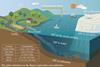
A new study systematically maps the major transport pathways—atmospheric, oceanic, and local—and details how microplastics infiltrate Arctic food webs and interact with physical and biogeochemical processes that govern regional climate.
-
 News
NewsBiochar and smarter water management could help make rice safer in polluted soils
A new study suggests that pairing iron and manganese modified biochar with carefully chosen irrigation strategies can reduce cadmium and mercury buildup in rice, offering a practical path toward safer food production in co-contaminated paddy fields.
-
 News
NewsCommon COVID-19 drugs may pose hidden risks to marine life, study finds
A new study suggests that several drugs widely used during the COVID-19 pandemic can be toxic to marine organisms, even at relatively low concentrations. Five pharmaceuticals were tested on nauplii of the brine shrimp Artemia salina.
-
 News
NewsNative litter jump-starts microbial recovery in mine soils
By applying litter collected from nearby native woodland to rehabilitated mine land, a study has shown increases in microbial diversity, enrichment of carbon- and nitrogen-cycling microorganisms, and stronger biochemical potential for soil organic matter decomposition and nitrogen mobilization.
-
 News
NewsSoil bacteria reveal hidden arsenic stress in brick kilns
Researchers collected soils from a shut-down brick kiln area. As arsenic levels increased, bacterial richness and diversity declined, while arsenic-tolerant groups became more abundant. The study also found that bacteria strengthened stress-response pathways and upregulated arsenic-resistance genes.
-
 News
NewsMovement of “forever chemicals” through the Great Lakes
New analysis of 42 years worth of biological records from the Great Lakes, unveils how per- and polyfluoroalkyl substances (PFAS) or “forever chemicals” have moved across the region, contaminating a variety of wildlife.
-
 News
NewsThree interlinked factors are needed to sustainably grow microbes for MICP
A new review investigates cost-effective and greener ways to grow microorganisms for use in Microbially Induced Calcium Carbonate Precipitation (MICP), a microbial process that precipitates calcium carbonate, and identifies three interlinked factors that determine success or failure.
-
 News
NewsNew biobank decodes survival secrets of extreme acid mine drainage microbes
Over 97 percent of microorganisms in acid mine drainage have never been cultured, leaving their metabolism and adaptation strategies locked as “microbial dark matter.” Now, a new culturomics‑driven resource called the Microbial Biobank of AMD (mbAMD) changes that.
-
 News
NewsBiochar may help stop antibiotics from escaping through hidden soil highways
A new study reveals that biochar can do more than simply trap pollutants. It may actively redirect antibiotic movement in structured soils, helping reduce the risk of contamination in nearby water systems.
-
 News
NewsBiochar’s hidden electron power could unlock cleaner pollution control and energy recovery
A new review highlights how biochar’s natural redox properties may help overcome key barriers to large-scale environmental applications.
-
 News
NewsWhy plastic lingers: Water chemistry slows nature’s cleanup
In a new study designed to mimic real environmental conditions, researchers found that the chemical makeup of natural waters significantly delays the breakdown of polystyrene, a common plastic used in packaging and food containers. Because sunlight cannot effectively initiate the degradation process, microbes cannot finish the job.
-
 News
NewsBiochar and beneficial microbes team up to restore polluted soils and boost crop growth
A new review examines how biochar-immobilized microbes can help clean contaminated soils, improve soil health, and support crop growth. By analyzing evidence from 92 published studies, the authors provide a data-driven overview of how this technology works and what is needed to bring it closer to practical use on farms.
-
 News
NewsIron-modified biochar turns soil oxygen into a cleaner for antibiotic pollution
Antibiotic residues in agricultural soils are an emerging environmental concern, with potential impacts on soil health, crop safety, and the spread of antimicrobial resistance. A new study reports on an iron-modified biochar that helps soil use its own oxygen and iron chemistry to break down sulfamethoxazole.
-
 News
NewsMagnetic biochar gel helps keep arsenic and antimony out of rice
A new study reports a promising strategy for mining-impacted regions: a magnetic silicon-enriched biochar gel that can immobilize both arsenic and antimony in contaminated paddy soil and reduce their accumulation in rice grains.
-
 News
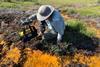
NewsNew study uncovers why the Arctic’s rivers are rusting
Scientists have identified the two biggest reasons that once-pristine rivers across the Arctic are growing cloudy with toxic orange iron particles that smother insects and suffocate fish. As the climate warms, a layer of Arctic soil that had been frozen for millennia has begun to thaw.
-
 News
NewsSpraying leaves with carbon dots boosts rice yield and blocks toxic cadmium
In a full-season field test, a nanoscale spray activated a two-part defense system in rice, slashing grain cadmium content by nearly 50% while improving the harvest.
-
 News
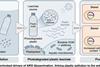
NewsSunlight and PVC pipes create a hidden driver of antibiotic resistance
New research shows that chemicals leaching from everyday PVC—especially after exposure to sunlight—can dramatically speed up the spread of resistance genes between bacteria. The effect was strongest at low to moderate concentrations, where the leachate triggered bacterial stress responses without killing the microbes.
-
 News
NewsThe fog is alive - with tiny helpers
What if fog isn’t just misty air, but a living ecosystem? This question hung over cloud researcher Thi Thuong Thuong Cao. As a PhD student at Arizona State University, her curiosity led her from knocking on the doors of microbiologists and chemists, to sampling fog before sunrise in Pennsylvania, to ...
-
 News
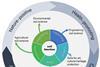
NewsSoil science reimagined: From farmland to the final frontier
A new perspective offers a compelling call to reimagine the future of soil science. The article outlines a conceptual framework for “nontraditional soil science,” encompassing diverse fields from urban engineering to forensic soil analysis and planetary exploration.
- Previous Page
- Page1
- Page2
- Page3
- Page4
- Next Page