
All Pollution and Remediation articles – Page 3
-
 News
NewsSelf-renewing bacteria offer new hope for heavy metal cleanup
Scientists have revealed a powerful bacterial defense strategy against Cd toxicity. The team found that Stenotrophomonas sp. H225 sheds Cd-laden cell wall fragments and rebuilds new protective layers through a process involving the mtgA gene.
-
 News
NewsHow river DNA can track fish, frogs, fungi and human feces — all at once
A single scoop of water from an Irish river revealed evidence not only of Ireland’s only frog species, but also signs of the dreaded B. dendrobatidis fungus, marking the first time this devastating amphibian disease has been spotted in the country and exposing a previously unknown risk to Ireland’s frog population.
-
 News
NewsResearchers uncover hidden health risks from urban airborne microbes
Researchers have discovered that seemingly insignificant microbial components in the air, including bacteria, fungi, viruses and cellular debris, pose a long-overlooked health hazard. Bacterial endotoxins can trigger inflammatory responses in the human respiratory system in nearly 20% of cases.
-
 News
News‘Living plastic’ activates and self-destructs on command
Living plastics that self-destruct on command incorporate activatable, plastic-degrading microbes alongside the polymers. The latest study used two bacterial strains that worked together and completely broke down the material within just six days, without making microplastics.
-
 News
NewsSignificant rise in valley fever cases in El Paso linked to extreme weather and dust
A new study has identified a significant rise in Valley fever cases in El Paso over the past decade and found strong connections between the disease and extreme weather, wind and airborne dust.
-
 News
NewsCrab shell by-products could help regulate the marine lifetime of biodegradable plastics
Researchers show that crab shell by-products can reduce the breakdown rate of biodegradable plastics in seawater by altering the microbial communities that colonize their surfaces, known as the plastisphere.
-
 News
NewsAmbient air pollution is associated with respiratory infection burden in the first year of life
Ambient air pollution is associated with respiratory infection burden in the first year of life, according to preliminary findings from the Immune Development in Early Life (IDEaL) Rome Cohort.
-
 News
NewsHot spring microbiomes could transform industrial CO2 waste into valuable products
Researchers found that microbiomes inhabiting terrestrial hot springs are naturally adapted to conditions that closely resemble industrial waste streams: high temperatures, elevated concentrations of CO2, and chemically challenging environments.
-
 News
NewsIs asphalt bad for our health? And can algae help?
Scientists studying how asphalt emissions impact respiratory health are also working on less toxic, lower-emitting asphalt formulations. One project involves growing a strain of algae that could reduce VOC emissions using wastewater from a treatment plant.
-
 News
NewsViruses enhance sulfamethoxazole removal in wetlands by modulating bacteria-phage interactions
A new study examines the role of viruses in sulfamethoxazole (SMX) removal in constructed wetlands. The research demonstrates that the addition of phage-concentrated solutions (PCS) enhances the degradation of SMX by enriching SMX-degrading bacteria.
-
 News
NewsEngineered dual-bacterial sensors turn chemical signals into electricity
Most bacterial information transmission is done via electricity. While electricity-emitting bacteria exist, manipulating them into useful sensors has been quite challenging. Researchers recently developed a flexible bioelectrical sensor system called electroactive co-culture sensing system.
-
 News
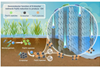
NewsGraphitized biochar rewires soil microbes to accelerate pollutant breakdown in rice paddies
A new study reveals that a specially engineered form of biochar can dramatically enhance the natural ability of soil microbes to break down pollutants in rice paddies, offering a promising strategy for cleaner and more sustainable agriculture.
-
 News
NewsHong Kong’s waters at risk from over-the-counter drug pollution
A recent study of Hong Kong’s river and estuary systems has uncovered an overlooked major source of water pollution: common over-the-counter (OTC) drugs. Accessible, everyday OTC drugs accounted for up to 85% of pharmaceutical pollution in these waters during the wet season.
-
 News
NewsDon’t build the engine, grow it: biohybrid miniature robots using living organisms
By fusing living organisms like bacteria, algae, and insects with synthetic payloads, researchers are creating living biohybrid miniature robots that self-fuel, self-repair, and navigate environments that would paralyze a rigid silicon chip.
-
 News
NewsStudy: Microbes show almost universal potential for biodegrading plastics
Researchers have identified more than 600,000 microbial proteins capable of breaking down natural and synthetic plastics, revealing a far broader biodegradation potential across microbes than previously known.
-
 News
NewsNameko mucilage: An eco-friendly solution for microplastic pollution
Researchers use natural mucilage from nameko mushrooms for the removal of micro- and nano-plastics from water. The mucilage is rich in polysaccharides, particularly pectin—a naturally occurring plant-based compound—which is known for its particle-binding properties.
-
 News
NewsNative bacteria may break down dioxins without genetic modification
Researchers have demonstrated that native soil bacteria, when treated with decoy molecules, can degrade non-native compounds, including persistent pollutants such as dioxins, without genetic modification.
-
 News
NewsNon-producing oil and gas wells emit microbial methane at rates 1,000 times higher than previously estimated
Microbial methane leaking from non-producing oil and gas wells is being emitted at rates about 1,000 times higher than previously estimated, according to a new study.
-
 News
NewsResearchers develop new solar-powered water disinfection system
Researchers have developed a new solar-powered water disinfection system that combines several existing methods. The compact device effectively utilizes a combination of techniques that all use solar energy.
-
 News
NewsNew biochar composite tackles arsenic pollution and methane emissions in rice paddies
Rice paddies feed more than half of the world’s population, yet they are also hotspots for toxic arsenic contamination and greenhouse gas emissions. A promising solution that addresses both problems at once uses an engineered biochar material enhanced with titanium dioxide.
- Previous Page
- Page1
- Page2
- Page3
- Page4
- Next Page