
Since the 19th century, soil science has been deeply rooted in agriculture, driving major advances in crop productivity and land management. However, the accelerating pace of industrialization, urbanization, environmental degradation, and space exploration has exposed the limitations of this narrow focus.
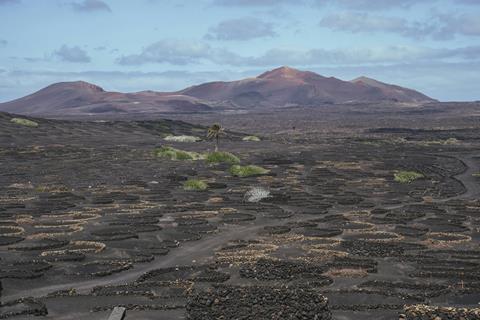
Soils are no longer just the foundation of farming—they are key actors in global carbon cycles, infrastructure safety, urban ecosystems, and even cultural preservation. Yet, many current tools and frameworks remain tailored to agricultural use, leaving critical knowledge gaps in emerging fields. Due to these limitations, there is an urgent need to explore and formalize nontraditional soil science through new theories, standards, and applications.
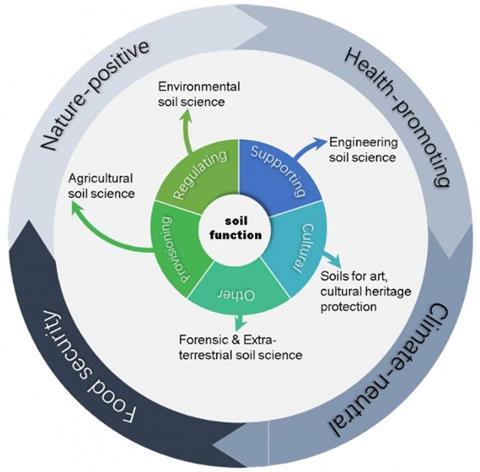
A newly published (DOI: 10.1016/j.pedsph.2025.03.006) perspective in Pedosphere (March 2025) by Prof. Gan-Lin Zhang of the Chinese Academy of Sciences offers a compelling call to reimagine the future of soil science. The article outlines a conceptual framework for “nontraditional soil science,” encompassing diverse fields from urban engineering to forensic soil analysis and planetary exploration. By classifying soil science according to its functional roles, the study charts a roadmap for expanding the discipline into areas long overlooked—highlighting the untapped potential of soil as a scientific and societal resource.
Soil functions
The paper presents a novel categorization of soil science based on the ecological and societal functions soils perform—moving beyond agricultural provisioning to include filtering, supporting, recording, and aesthetic roles. Each function corresponds to a distinct branch of nontraditional soil science.
For instance, environmental soil science addresses pollution and soil health in urban-industrial settings; global change soil science focuses on greenhouse gas emissions and climate interactions; engineering soil science examines soil stability in infrastructure and disaster zones.
Urban and military soil science redefines soil to include human-altered surfaces, relevant to flood mitigation and contamination control. Forensic soil science leverages soil characteristics to solve crimes, while extraterrestrial soil science compares Earth soils with lunar or Martian samples to support space agriculture.
Ancient artefacts
Soil microbiology is also being applied to protect ancient artifacts from microbial degradation, signaling the rise of soil science in cultural heritage conservation. These emerging fields require tailored methodologies—such as new hydraulic standards, forensic matching models, or microbial risk indicators—not addressed by traditional soil frameworks. The study calls for an integrative, flexible system capable of guiding soil research and policy across these expanding domains.
“Our society is evolving rapidly, and so must the science that underpins it,” said Prof. Gan-Lin Zhang. “Traditional soil science has served us well in agriculture, but we now face challenges that extend far beyond the farm. From managing urban floods to understanding planetary soils, we need a more adaptive, inclusive science of the soil. By embracing this broader vision, we can ensure soil science continues to provide solutions for both the Earth and future interplanetary societies.”
The expansion of soil science into nontraditional areas opens new opportunities for interdisciplinary collaboration and innovation. From improving urban infrastructure resilience and aiding law enforcement, to conserving underground heritage sites and enabling space colonization, the potential applications are vast. Realizing this vision will require a shift in research priorities, educational programs, and policy frameworks to support this new soil science paradigm. By building a system that integrates traditional knowledge with novel functions, soil science can serve as a cornerstone in achieving sustainability, resilience, and human well-being—both on Earth and beyond.





No comments yet