
A new research paper was published in Volume 18 of Aging-US on May 4, 2026, titled “Host immunosenescence compromises Mycobacterium tuberculosis clearance.”
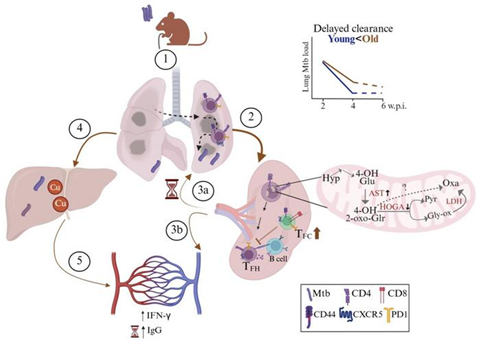
The study was led by first author Falak Pahwa and corresponding author Ranjan Kumar Nanda from the International Centre for Genetic Engineering and Biotechnology (ICGEB), New Delhi, India. In this study, the authors investigated how aging alters immune responses during tuberculosis infection and treatment.
Tuberculosis remains one of the world’s deadliest infectious diseases, and older adults are particularly vulnerable due to immunosenescence, the gradual decline of immune function that occurs with aging. Despite the growing burden of tuberculosis in aging populations worldwide, most experimental models continue to rely on young adult animals that do not accurately reflect immune aging.
Using multiple age groups of C57BL/6 mice, the researchers examined how aging affects the body’s ability to control Mycobacterium tuberculosis during treatment with rifampicin and isoniazid (RIF-INH), two cornerstone anti-tuberculosis drugs. While young and older mice initially showed similar bacterial burden following infection, older mice demonstrated significantly delayed bacterial clearance in the lungs during the early phase of treatment.
Age-associated immune abnormalities
Importantly, the study identified several age-associated immune abnormalities linked to impaired bacterial clearance. Older mice exhibited chronic inflammatory signaling, altered T cell responses, accumulation of T-follicular cytotoxic (TFC)-like cells, and evidence of mitochondrial dysfunction within immune cells. Proteomic analysis of splenic CD4+CD44+ T cells further revealed dysregulation of mitochondrial proteins involved in cellular metabolism and immune function.
“Collectively, these findings suggest that age-associated immune alterations may disrupt immunometabolic pathways, thereby contributing to the delayed Mtb clearance.”
The researchers also observed that older mice maintained elevated inflammatory cytokine levels and developed persistent lung inflammation even after treatment had begun. At the same time, key protective immune responses appeared functionally impaired, suggesting that aging may disrupt the balance between inflammation and effective pathogen control. Together, these findings suggest that age-related immunometabolic dysfunction may play a major role in the reduced treatment response observed in older hosts.
Delayed bacterial clearance
Notably, the study found that delayed bacterial clearance in older mice did not appear to result primarily from liver toxicity or impaired drug metabolism. Instead, the evidence suggested that age-related immune dysfunction itself was the dominant factor limiting effective bacterial elimination during therapy.
The paper further highlights the emerging importance of mitochondrial health in immune cell function during aging. The authors propose that targeting age-associated immunometabolic defects and mitochondrial dysfunction may represent a promising strategy for improving tuberculosis treatment outcomes in elderly populations.
Overall, this study provides new insight into why older adults experience poorer tuberculosis outcomes despite receiving standard therapy. As global populations continue to age, understanding how immunosenescence alters infectious disease responses may become increasingly important for the development of more effective treatment strategies and age-adapted therapeutic interventions.





No comments yet