
Dengue virus (DENV) is a flavivirus transmitted by Aedes mosquitoes, endemic in >100 countries. Climate change is expanding its range to temperate regions. Liver injury is common, ranging from mild aminotransferase elevation to acute hepatitis and acute liver failure (ALF).
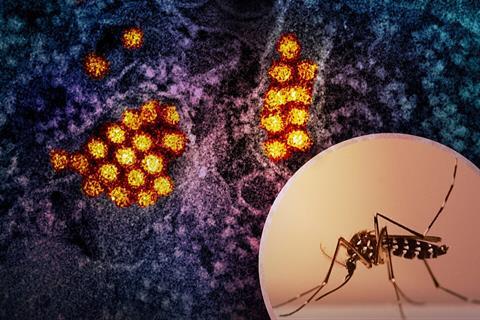
A new commentary highlights the time course of serological and liver enzyme elevations in mild versus severe dengue, emphasizes early recognition of progression to ALF, and reviews current vaccination and prevention strategies.
AST >120 U/L early after symptom onset predicts severe disease with high accuracy. MELD score ≥16 predicts ALF, and ≥18 predicts mortality. Management is supportive; no antiviral is approved. N‑acetylcysteine (NAC) may benefit dengue‑induced ALF. Liver transplantation is possible but carries high risk. Two vaccines (Dengvaxia, Qdenga) are available but have limitations. Vector control remains central to prevention.
Clinical Classification and Liver Involvement
Dengue is classified as: dengue without warning signs (DWOWS, 65% of patients) – fever, nausea, rash, myalgia; dengue with warning signs (DWWS); and severe dengue. Liver injury varies from mild enzyme elevation to acute hepatitis and ALF. Autopsy in fatal cases shows midzonal/centrilobular necrosis, microvesicular steatosis, Kupffer cell hyperplasia, Councilman bodies, and absence of fibrosis. DENV antigens are found in hepatocytes and Kupffer cells. Most histopathology data come from severe cases, so findings are biased toward severity.
Diagnosis and Time Course
Diagnosis is suspected in patients with fever for 2–7 days plus at least two of: petechiae, nausea/vomiting, headache, rash, myalgia/arthralgia. Leukopenia and positive tourniquet test support the diagnosis. Confirmatory tests: RT‑PCR, NS1 ELISA, IgM ELISA (sensitivity 95%, 90%, 71% respectively).
After an incubation period of 3–14 days, fever and symptoms begin. Approximately 75% of patients develop elevated aminotransferases. AST and ALT peak on days 4–6 after symptom onset. Alkaline phosphatase and total bilirubin peak around day 7. In severe disease, shortly after defervescence, plasma leakage can lead to hypovolemic shock, multiorgan failure, and ALF.
Predicting Severe Hepatitis and ALF
AST >120 U/L measured 3–5 days after symptom onset has an AUC of 0.93 for predicting severe dengue (P<0.001). GGT and IL‑10 are higher, and albumin lower, in severe versus non‑severe cases.
The incidence of ALF in dengue ranges from 0.31% to 1.1%, with mortality as high as 66.7%. MELD score ≥16 predicts ALF with 87.5% sensitivity, 89.3% specificity (AUC 0.929). MELD ≥18 predicts mortality with AUC 0.822. Patients with chronic HBV/HCV co‑infection may have more severe liver dysfunction. Pregnancy and comorbidities (diabetes, heart/lung/renal disease) increase risk of severe dengue.
Management
No specific antiviral therapy is approved. Supportive care: hydration, avoid NSAIDs (bleeding risk). DWOWS: outpatient management with rest, antipyretics, oral fluids. DWWS and severe dengue require hospitalization (≥48 h) and ICU care, respectively. Prompt volume expansion with isotonic fluids is critical.
There is no demonstrated benefit of intravenous immunoglobulin or corticosteroids for dengue.
N‑acetylcysteine (NAC) has been used in dengue‑induced ALF with reported recovery; it is reasonable to recommend NAC based on data from non‑acetaminophen ALF.
Liver transplantation may be life‑saving for ALF unresponsive to medical management, but dengue‑associated multiorgan failure, DIC, and bleeding add significant risk. However, favorable outcomes have been reported.
Prevention
Vector control: cover water containers, discard unused outdoor containers, use topical repellents (DEET, icariidin), wear permethrin‑treated clothes, use bed nets.
Vaccines:
-
Dengvaxia (CYD‑TDV) – live‑attenuated tetravalent, FDA‑approved for individuals 6–16 years with laboratory‑confirmed prior dengue infection living in endemic areas. Efficacy in seropositive: 76%; in seronegative: 39% (not recommended).
-
Qdenga (TAK‑003) – WHO recommends for children 6–16 in high‑transmission settings. Efficacy in seropositive: 64%; in seronegative: 54%.
-
Butantan‑DV – in phase 3 trials; efficacy in seropositive 89%, seronegative 74%.
Conclusions
Liver injury occurs in 75–85% of dengue infections, mostly mild. Severe hepatitis and ALF are uncommon but have high mortality. Early recognition of rising aminotransferases and MELD scoring is crucial to guide referral to liver specialists and transplant teams. No antiviral is available; NAC may be beneficial.
Prevention relies on vector control and vaccination in selected populations. Prospective controlled studies are needed to validate prognostic markers and management strategies. Healthcare providers in previously non‑endemic but warming regions must become proficient in dengue diagnosis and treatment.



No comments yet