
All Proteomics & Enzymology articles – Page 7
-
 News
NewsStudy shows not all dietary proteins are digested the same way
As protein-rich diets become increasingly popular, a new study suggests that categorizing dietary proteins as either animal- or plant-based fails to effectively capture the source-specific differences in their composition, digestive efficiency and accessibility to the gut microbiota.
-
 News
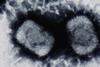
NewsA survival kit for smallpox viruses
Scientists have discovered a previously unknown type of assembly chaperone during their analysis of poxviruses, and they have decoded its function in full detail. This is the first known chaperone that is not formed by a protein but by a nucleic acid — specifically RNA.
-
 News
NewsResearchers map key human proteins that power coronavirus replication, pointing to new treatment strategies
Scientists have pinpointed dozens of human proteins that SARS-CoV-2 needs to complete its full life cycle, from entering a cell to replicating and releasing new viral particles.
-
 News
NewsThe cling of doom: How staph bacteria latch onto human skin
Scientists have discovered the strongest natural protein bond ever recorded, explaining how Staphylococcus aureus clings so tightly to human skin and pointing to new ways to fight antibiotic resistance.
-
 News
NewsHow plants rot: New method decodes hidden decomposers of wood and leaves
Researchers have developed a new method to identify the molecular tools that different species use to decompose dead plant material. Their analysis of over 18,000 species found that some invertebrates also evidently have a whole range of such tools at their disposal.
-
 News
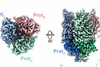
NewsAncient viruses in human genomes offer new avenue for stopping cancers, autoimmune diseases, and more
Researchers have revealed the first three-dimensional structure of a protein from an ancient human endogenous retrovirus (HERV) found within the human genome.
-
 News
NewsBioscientist wins NSF CAREER Award to investigate bacterial toxins, expand inclusion in STEM
Marcos de Moraes has received support to study the molecular mechanisms and evolutionary roles of bacterial toxins known as deaminases, as well as an educational outreach effort aimed at making biosciences open to all, including differently abled persons.
-
 News
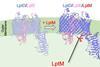
NewsSmall protein, big impact: Insights into how bacteria stabilize a key outer membrane complex
Researchers reveal that a remarkably small protein is essential for the maturation of a component of the lipopolysaccharide transport system.
-
 News
NewsStudy discovers that soft drinks affect the communication of gut bacteria and the immune system
Gut bacteria can adapt to environmental changes through DNA inversions. Researchers investigating how these DNA inversions occur found that consuming soft drinks, which contain white sugar, can alter the DNA of gut bacteria and, in turn, impact the host’s immune system.
-
 News
NewsScientists discover tRNA methyltransferase with an unusual domain architecture and functional features
Scientists identified and characterized a novel tRNA modification enzyme in the hyperthermophilic archaeon Thermococcus kodakarensis.
-
 News
NewsHidden bacterial redundancy could be antibiotic game-changer
Staphylococcus aureus possesses a surprising level of metabolic redundancy, allowing it to survive even when key enzymes are knocked out, a new study finds. However, when two specific enzymes are removed, staph doesn’t infect its host as readily.
-
 News
NewsNew insights into malaria: Proteins in the blood can reveal the severity of the disease
Researchers have identified over 250 proteins that are strongly affected by malaria, which could help predict the severity of the disease and thus enable faster treatment for the most critical patients.
-
 News
NewsScientists ID new drug target for treating cancer and viral infections
An international team of researchers has identified a molecular mechanism that regulates the activity of N-myristoyltransferases, enzymes that ensure the proteins’ function by chemically modifying them during their production.
-
 News
NewsAI used to create protein that kills E. coli
Scientists have used artificial intelligence (AI) to generate a ready-to-use biological protein that can kill antibiotic resistant bacteria like E. coli.
-
 News
NewsChemists boost the efficiency of a key enzyme in bacterial photosynthesis
Chemists have shown that they can greatly enhance a version of the photosynthesis enzyme rubisco found in bacteria from a low-oxygen environment. Using directed evolution, they identified mutations that could boost rubisco’s catalytic efficiency by up to 25 per cent.
-
 News
NewsScientists uncover ‘superfamily’ of bacterial predator proteins
Scientists have identified a new type of protein in bacteria that could change our understanding of how these organisms interact with their environments. It focuses on a protein called PopA, found in the bacterial predator Bdellovibrio bacteriovorus.
-
 News
NewsBlue proteins from cold-adapted microbes could offer blueprint for molecular on-off switches
Rare blue proteins from cold-adapted microbes can serve as prototypes to design molecular on-off switches for cells, a new study finds.
-
 News
NewsStudy reveals engineered bacterial vesicles to combat antimicrobial resistance
Researchers studying extracellular vesicles (EVs)-membrane-bound nanoparticles released by cells that transport biologically active molecules like proteins or nucleic acids have engineered EVs derived from lactic acid bacteria to carry pathogen-specific endolysins on their surface.
-
 News
NewsPair of malaria parasite proteins could lead to targeted therapies
Scientists have made an advance in the basic understanding of Plasmodium falciparum, the parasite responsible for the deadliest form of human malaria, that could make novel, highly targeted anti-malarial therapies possible.
-
 News
NewsScientists uncover shortcut to miniaturized hydrogen production
Researchers have figured out a way to simplify the highly complex hydrogenase biocatalyst to facilitate its integration into industrial processes, offering a route to clean energy.