
All Proteomics & Enzymology articles – Page 5
-
 News
NewsA yeast enzyme helps human cells overcome mitochondrial defects
An international team has experimentally uncoupled nucleotide synthesis from mitochondrial activity using ScURA, a yeast-derived genetic tool now available to the research community that will enable new explorations of cellular metabolism.
-
 News
NewsLiving material makes harmful UV light visible – Functional coating made from proteins and bacteria
Researchers have developed a T-shirt coating - using proteins and bacteria - that reliably detects contact with UV-A radiation, is bio‑based, and could open the door to a wide range of new materials that draw on the biological functions of cells.
-
 News
NewsHow the joint defence mechanism of two bacteria works
Back in 2021, researchers showed that bacteria of the genera Pseudomonas and Paenibacillus join forces to protect themselves from their predator, an amoeba. Now, they have been able to show exactly how this defense mechanism works.
-
 News
NewsWhat drives a mysterious sodium pump?
The enzyme Na⁺-NQR is a sodium pump that drives the respiration of many marine and pathogenic bacteria, powering the transportation of sodium ions across the membrane. A new study found that the sodium pump changes its structure in response to electron transfer inside the protein.
-
 News
NewsResearchers enable microorganisms to build molecules with light
Researchers are continually looking for new ways to hack the cellular machinery of microbes to make useful products. A new study shows they can expand the biosynthetic capabilities of these microbes by using light to help access new types of chemical transformations.
-
 News
NewsResurrected ancient enzyme offers new window into early Earth and the search for life beyond it
By resurrecting a 3.2-billion-year-old enzyme and studying it inside living microbes, researchers have created a new way to improve our understanding of the origins of life on Earth. The study uses synthetic biology to reverse-engineer modern enzymes and rebuild their possible ancestors.
-
 News
NewsScientists engineer quantum-enabled proteins, opening a new frontier in biotechnology
A new study reports the creation of a new class of biomolecules, magneto-sensitive fluorescent proteins, that can interact with magnetic fields and radio waves. This is enabled by quantum mechanical interactions within the protein, and occur when it is exposed to light of an appropriate wavelength.
-
 News
NewsReconstructing nature’s oxindole factory: yeast-based biosynthesis of medicinal indole alkaloids
By identifying four key enzymes from a North American plant and reconstituting them in yeast, scientists have achieved complete de novo biosynthesis of complex oxindole molecules that are difficult to obtain from plants or chemical synthesis.
-
 News
NewsScientists develop new biosynthetic route to optically pure S-2-Hydroxyisovalerate
By uncovering an unexpected enzyme activity and combining it with precise metabolic engineering, scientists has transformed Escherichia coli into a microbial factory capable of producing gram-per-liter levels of optically pure S-HIV from renewable carbon sources.
-
 News
NewsWhat causes some people’s gut microbes to produce high alcohol levels?
A study of people with a rare condition known as auto-brewery syndrome has found a link between gut microbes and symptoms of intoxication, pointing to new treatment strategies.
-
 News
NewsNew findings on Candida auris open up potential targets for future therapies
A study shows for the first time that Candida auris uses a CO₂-based metabolic strategy to survive in the nutrient-poor conditions of the skin and to better tolerate antifungal therapies – especially amphotericin B.
-
 News
NewsAn enzyme neutralizes pathogens by cleaving a bacterial toxin
Researchers have discovered an enzyme that neutralizes the virulence factor malleicyprol in the bacterium Burkholderia pseudomallei, considered one of the most dangerous bacterial pathogens in the tropics.
-
 News
NewsBreakthrough AI speeds up discovery of life-supporting microbes
Scientists have developed a powerful new artificial intelligence tool called LA⁴SR that can rapidly identify previously overlooked proteins in microalgae - tiny organisms that produce much of the Earth’s oxygen and support entire aquatic ecosystems.
-
 News
NewsFor certain life-essential proteins in E. coli, repair is more likely
A new study shows that E. coli proteins containing a specific structure are more likely to misfold and, if they are required the bacteria’s survival, more likely to be repaired.
-
 News
NewsResearchers identify bacterial enzyme that can cause fatal heart conditions with pneumonia infections
Researchers have identified a bacterial enzyme that may be the reason some people get heart complications with pneumonia, while others do not. Since enzymes create chemical reactions to help bacteria survive, grow, and sometimes attack tissues, zmpB could become a target for future therapies.
-
 News
NewsThe power of gut enzymes: why healthy eating affects everyone differently
Researchers have uncovered a mechanism that determines how our gut microbiome processes healthful plant compounds. The chemical cookbook of gut bacteria varies from person to person—and is often disrupted in chronic diseases.
-
 News
NewsLight-sensitive microbial protein may herald new cancer therapies
Researchers used a mouse cancer model to show that tumors expressing Archaerhodopsin 3 shrink after exposure to green light.
-
 News
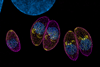
NewsToxoplasmosis: How a deadly parasite infects its host cells
Researchers have discovered how the parasite Toxoplasma gondii builds a specialised structure that allows it to move and invade host cells. They identified two proteins that control how the conoid complex is assembled - this acts like an engine for movement and cell-invasion.
-
 News
NewsScientist who harnesses bacteria to deliver green solutions is winner in 2025 Tata Transformation Prize
A scientist who harnesses bacteria to deliver green solutions has been named as one of the winners of the 2025 Tata Transformation Prize. Balasubramanian Gopal, PhD, Indian Institute of Science, has been named Sustainability Winner in the awards.
-
 News
NewsHow life first got moving: nature’s motor from billions of years ago
Research has cast light on the evolutionary origins of one of nature’s first motors, which developed 3.5 billion to 4 billion years ago to propel bacteria. Scientists have created the most comprehensive picture yet of the evolution of bacterial stators.