
Spooky Science
-
 News
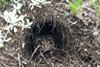
Yosemite toad killer may be hiding in animals’ own homes
The Batrachochytrium dendrobatidis (Bd) fungus has long been thought to live in and infect threatened Yosemite toads through their skin when they were in the water. Biologists have discovered that previously healthy toads emerged from winter hibernation burrows heavily infected, suggesting that the fungus proliferates underground in winter.
-
 News
Kiss goodbye to deadly disease – new research finds ‘Pac-Man’ antibodies for killer parasite
Researchers have successfully produced antibodies that kill the parasite carried by the ‘kissing bug’ that causes the potentially deadly Chagas disease. The research is a vital step towards the development of the first effective vaccine.
-
 News
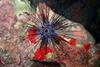
Pandemic ‘beneath the surface’ has been quietly wiping out sea urchins around the world
Over the last four years, an unrecognized pandemic that has been wiping out sea urchins around the world has hit the Canary Islands. The consequences on marine ecosystems aren’t yet fully known, but likely profound.
-
 News
Microscopic sea urchin killer spreads to new species and regions
A parasite that devastated long-spined sea urchins in the Caribbean and Florida in 2022 has caused another die-off more than 7,000 miles away in the Sea of Oman.
-
 News
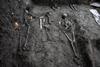
Researchers link specific microbiomes to archaeological bone degradation
Well-preserved archaeological bone samples have different microbial communities than heavily degraded bone samples, providing a new understanding of how microbes contribute to bone degradation, according to a study.
-
 News
Scientists find a new way coronaviruses can get into human cells
An international team of researchers has identified an East African bat coronavirus capable of entering human cells. Whilst the virus can bind to a cell receptor found in the human lung, preliminary testing in Kenya suggests it has not spilled over into the local human population.
-
 News
Research outlines strategy to protect Amazonian cocoa against witches’ broom
A new study evaluated 25 cocoa cultivars and identified two with superior performance. Both demonstrated a greater ability to maintain high productivity in mineral-poor soils and when attacked by the witches’ broom fungus. Production increased by up to 32% compared to more susceptible varieties.
-
 News
Cassava witches’ broom disease takes flight in South America
Cassava witches’ broom disease is quickly spreading across Northeastern South America, threatening a critical food staple for millions of people in Brazil and the continent.
-
 News
Mystery toxic algae regime change in Salem’s drinking water source
A long-term analysis shows that a major Oregon reservoir abruptly swapped one type of toxic algae for another midway through the 12-year study period, absent any obvious cause.
-
 News
Acid rain may be training soil bacteria to become more deadly
Acid rain from fossil fuel pollution may be quietly training soil bacteria to become longer-lived, more transmissible, and more deadly, according to a new study that tracks how a notorious foodborne pathogen rapidly evolved under simulated acid deposition.
-
 News
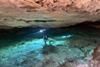
How tiny cave shrimps grazing on microbes power the underworld of the Yucatan
Because they convert microbial growth in sinkholes beneath the Yucatan Peninsula into animal biomass, Typhlatya shrimps act as “keystone species”, introducing essential nutrients into the cave’s food web. They serve as a crucial initial link that larger subterranean predators feed on.
-
 Features
Bottling the extremes: culturing the hidden microbiomes of caves and deserts
Imagine an environment so extreme that most life cannot survive: a pitch-dark cave deep beneath the mountains of Northern Spain, or a hyper-arid desert in Chile where rainfall is virtually non-existent. These are not lifeless wastelands. Beneath cave walls and within the dusty top layer of desert soils, thriving communities of cyanobacteria, green algae, and fungi quietly engineer their ecosystems: fixing carbon, weathering rock, and cycling nutrients in conditions that would defeat most organisms on Earth.
-
 News
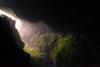
Field-portable assays help scientists study and explore caves
A new study shows that field-portable assays are effective at identifying microbes directly in the field in real time, making it easier to study and explore caves. The researchers established a roadmap for thoroughly studying cave life, emphasizing the need to sample widely and from different materials.
-
 News
Study finds fungus metabolites may help ghost shrimp survive
Researchers have found that chemical byproducts produced by the amphibian-killing fungus Batrachochytrium dendrobatidis—commonly known as Bd—may actually help ghost shrimp survive.
-
 News
New breakthrough uncovers how to kill ‘zombie’ TB cells resistant to antibiotics
Researchers exposed a library of over 500,000 genetically modified tuberculosis bacteria to two commonly used antibiotics. By analysing the survivors, they pinpointed genes whose disruption significantly reduced the number of surviving persisters.
-
 News
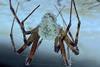
New fungal species named in honour of Sir David Attenborough making zombies of cave spiders
A study to investigate the identity of a fungus found on a spider during filming of the BBC Winterwatch series in Northern Ireland has confirmed it as a novel species that manipulates its host by compelling it to migrate and die in exposed situations.
-
 News
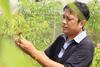
Culprit behind cassava witches’ broom disease unveiled as fungus
In a recent breakthrough, DNA sequencing technology has uncovered the culprit behind cassava witches’ broom disease: the fungus genus Ceratobasidium.
-
 News
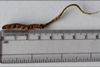
New species of insect-parasitising fungus discovered in lower Himalayas
Researchers have discovered a new species of fungi, Ophiocordyceps, in the lower Indian Himalayas. These fungi - fictionalised as the deadly fungi in The Last of Us - are well known as parasites of insects and are often prized for their medicinal qualities.
-
 News
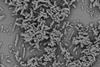
Villainous pairing makes superbugs more deadly and drug-resistant
Some of the world’s most deadly and drug-resistant pathogens work collaboratively to become more powerful and infectious, a new study has found.
-
 News
Bartonella DNA found in blood of patients with psychosis
A new study has found that patients diagnosed with schizophrenia or another psychotic disorder are three times more likely to have Bartonella DNA in their blood than adults without these disorders.