
All Viruses articles – Page 17
-
 News
NewsFlu vaccine no longer required for U.S. military
The U.S. military is ending its long-standing requirement that service members receive the annual flu shot, a decision announced by Defense Secretary Pete Hegseth.
-
 News
NewsRising measles cases highlight gaps in vaccination coverage and public health system vulnerabilities
The Global Virus Network (GVN) is closely monitoring a significant resurgence of measles in the United States and globally, reflecting a growing vulnerability in public health systems.
-
 News
NewsEarly immune responses linked to protective HIV antibodies
In a new study of broadly neutralizing antibodies and their potential for an HIV vaccine, researchers analyzed fragments of cell-free RNA and DNA circulating in the blood. This makes it possible to track immune responses, viral genetic variation, and other microbes from the same blood sample.
-
 News
NewsNew research reveals cell proteins that drive severe viral infections
Researchers have identified two human cell proteins, NUP98 and NUP153, that play a crucial role in how viruses such as tick-borne encephalitis virus (TBEV), West Nile virus, and dengue virus replicate in the body.
-
 News
NewsMillions suffering needlessly with curable hepatitis C, new analysis reveals
Millions of Americans are still battling potentially deadly hepatitis C even though they could be cured with antiviral drugs they are not receiving, a new analysis reveals.
-
 News
NewsHas life-saving HIV therapy contributed to increased rates of a sexually transmitted disease?
A study has uncovered an unintended consequence of a major medical breakthrough: while the availability of HIV treatments in the late 1990s dramatically improved survival, they also contributed to a resurgence in syphilis, a sexually transmitted infection.
-
 News
NewsScientists map how HIV hijacks human cells—and how cells can fight back
Scientists have opened a new door to understanding HIV by creating the first comprehensive genetic roadmap of how the virus interacts with real human cells. They identified a multitude of hidden players in HIV infection, human proteins that either help the virus thrive or work to stop it.
-
 News
NewsPlastic texturing kills viruses when they land
Researchers have developed a thin plastic film that tears apart viruses on contact, offering a promising new way to keep high touch surfaces such as smartphones and hospital equipment from spreading disease.
-
 News
NewsViruses enhance sulfamethoxazole removal in wetlands by modulating bacteria-phage interactions
A new study examines the role of viruses in sulfamethoxazole (SMX) removal in constructed wetlands. The research demonstrates that the addition of phage-concentrated solutions (PCS) enhances the degradation of SMX by enriching SMX-degrading bacteria.
-
 News
NewsStudying two very different viruses helps to develop new strategies
When the SARS-CoV-2 pandemic began, virologist Theodora Hatziioannou, in conjunction with Paul Bieniasz brought her HIV-honed skills and tools to this new global threat, which made it easier and faster for researchers to gain insights into the virus and test antibodies for potential therapeutic candidates in real time.
-
 News
NewsThe cold virus ‘hides’ and multiplies in the tonsils and adenoids, even in people without symptoms
A study reveals that tissues such as the tonsils and adenoids can serve as hiding places for the rhinovirus, which causes the common cold. The pathogen can persist in these tissues for long periods, be transmitted unexpectedly, and trigger new outbreaks of the disease.
-
 News
NewsMaternal RSV vaccination cuts infant hospitalization risk by over 80%, major study finds
The largest real-world study of its kind shows that maternal vaccination against respiratory syncytial virus (RSV) reduces the risk of hospitalisation in young infants by over 80% when given at least two weeks before birth.
-
 News
NewsHIV treatment reduces accelerated biological ageing by nearly four years, landmark study shows
A major study presented at ESCMID Global 2026 has found that antiretroviral therapy (ART) reduces accelerated biological ageing in people with HIV (PWH) by nearly four years, a finding that could transform how clinicians monitor HIV treatment and long-term health outcomes.
-
 News
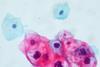
NewsThree European countries reach 90% HPV vaccination target as Europe steps up action on cancer prevention
All EU/EEA countries now recommend HPV vaccination for adolescent girls and boys as part of their immunisation programmes, marking a major step forward in Europe’s’ cancer prevention efforts. Iceland, Portugal and Norway have reached the target of 90% HPV vaccination coverage among girls by the age of 15.
-
 News
NewsViruses found in Antarctic air, including some new to science
It may seem stark and lifeless, but the air around the remote sub-Antarctic island of South Georgia contains viruses, including some that are new to science. Using metagenomics, researchers discovered that South Georgia harbours a diverse and dynamic airborne viral community.
-
 News
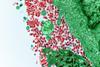
NewsNovel research reveals the active role that skin cells play in rabies infection
A new study provides direct evidence that keratinocytes can support viral replication and transmit the rabies virus to neurons. The investigators offer a mechanistic explanation for how superficial skin exposures from scratches or minor bites by dogs and bats can lead to neuroinvasion.
-
 News
NewsStudy reveals new way to strengthen immunity against the flu
A new vaccine model targets epitopes, specific but distinct regions of the protein on the surface of the influenza virus. The model includes different versions of epitopes in hopes of redirecting how the immune system responds.
-
 News
NewsFirst continent-wide map of dominant avian influenza strain explains its spread
Scientists provided the most complete view of bird flu’s spread through wild bird populations across North America, explaining how the dominant strain advanced, maintaining the risk of human infections.
-
 News
NewsStudy reveals genome-wide host–virus genetic interactions in cancer risk
Researchers report a major advance in understanding how interactions between human and viral genomes shape disease risk. They found that variations in the Epstein–Barr virus, together with a specific immune-related gene (HLA-A*11:01), strongly influence the risk of nasopharyngeal cancer.
-
 News
NewsAfrican swine fever is quietly spreading across Nepal’s pig sector
A new study provides the first comprehensive analysis of African swine fever outbreaks in Nepal, revealing a disease that has quietly dismantled livelihoods, disrupted food security, and exposed deep gaps in the country’s animal health system — with no vaccine in sight.