
All Viruses articles – Page 12
-
 News
NewsExperts convened by WHO advise on candidate treatments and vaccines for Ebola disease caused by Bundibugyo virus
In response to the current outbreak of Ebola disease caused by Bundibugyo virus, WHO convened several of its expert and advisory groups to assess potential vaccines and therapeutics for both prevention and treatment of Bundibugyo virus disease (BVD).
-
 News
NewsExperimental HIV vaccine achieves a long-sought goal
In a first for the field, all non-human primates given a new series of vaccines generated antibodies capable of fighting multiple strains of HIV. It brings researchers closer to a vaccine effective against the vast diversity of HIV strains circulating worldwide.
-
 News
NewsArchaic DNA may lower defences against common DNA viruses in people today
Researchers explored the contribution of archaic DNA - primarily Neandertal ancestry - to the DNA viral load of participants in the UK Biobank. By analysing viral sequences detected in large-scale genomic data, they asked whether archaic variants correlate with the presence or quantity of common DNA viruses.
-
 News
NewsResearchers may now understand why chikungunya virus infections turn chronic
About half of people infected with chikungunya virus will progress to a chronic form of the disease. A new study finds that chikungunya virus persists in joint-associated macrophages, a specialized type of white blood cell that helps the body defend against pathogens.
-
 News
NewsMaternal infection: A critical driver of offspring cardiac dysfunction
A new study reveals that maternal infection causes severe metabolic disturbances within the offspring’s heart, most notably enriching differentially expressed genes in lipid, energy, and amino acid metabolism. The infection also heavily suppressed cardiac cell proliferation.
-
 News
NewsCommon illnesses, not hantavirus, pose greatest cruise and travel risk
Travelers booked on cruises this summer, or considering booking, shouldn’t change their plans out of fear of hantavirus, one researcher says. They should be aware of more common viral illnesses that occur in cruise settings such as norovirus, seasonal respiratory viruses, COVID-19 and influenza.
-
 News
NewsHeart health may have impacted the risk of severe COVID-19 infection during the pandemic
Adults with highest heart health scores at the beginning of the pandemic were nearly half as likely to be hospitalized or die from COVID-19 when compared to those with the lowest scores, according to new research.
-
 Features
Equity and the response to Covid 19 - Preparing for the next pandemic in Aotearoa New Zealand
Aotearoa New Zealand enacted an effective response to the Covid-19 pandemic. The government approach to the first few cases in March 2020 was to implement a swift ‘go hard and go early’ response. Borders were closed to non-residents, lockdowns were enforced, and infection was effectively eliminated within 76 days of ...
-
 News
NewsScientists identify nearly two dozen antiviral compounds that could treat Ebola virus
Recent advances in artificial intelligence have enabled scientists to identify nearly two dozen antiviral compounds that could potentially treat a rare species of Ebola virus (Bundibugyo virus) currently affecting the Democratic Republic of Congo.
-
 News
NewsExperimental gene therapy shields brain from toxic protein damage
An experimental gene therapy could help protect the brain from the damage and cognitive decline linked to TDP-43-related proteinopathy, a type of neurodegeneration.
-
 News
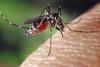
NewsNorth America and Europe could become hotspots for chikungunya virus due to climate change
Enabled by global heating, mosquito-borne chikungunya virus is likely to spread into temperate regions. Under climate change models, the virus will further expand northward into temperate regions, especially northeastern North America, central Europe, and East Asia, researchers say.
-
 News
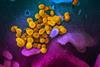
NewsNP14 aptamer: A novel biosensing recognition element for mutation-resilient SARS-CoV-2 detection
New research investigated a novel DNA aptamer, NP14, and developed an innovative dual-mode biosensing platform to achieve highly sensitive, mutation-resilient viral detection.
-
 News
NewsSurvey highlights persistent uncertainty on STI vaccines
A nationally representative survey of empaneled adults finds that while most Americans understand how STIs spread, there are significant gaps in public knowledge about which infections can be prevented through vaccination.
-
 News
NewsTrial tests virus-immunotherapy combination for neuroendocrine tumors
A phase I clinical trial is testing whether a tumor-targeting virus can help immunotherapy work more effectively against aggressive neuroendocrine tumors that often resist treatment. The ongoing study has completed its first three dose levels with no severe treatment-related side effects reported to date.
-
 News
NewsPegylated interferon-based treatment improves response rates in immune-tolerant patients with chronic hepatitis B
A new study aimed to investigate the efficacy and predictive factors of a pegylated interferon (Peg-IFN)-based treatment strategy in IT patients with chronic HBV infection.
-
 News
NewsHPV self-collection boosts cervical cancer screening rates
The first major U.S. rollout of HPV self-collection shows benefits for patients and providers, including fewer pelvic exams and better follow-up for HPV-positive results.
-
 News
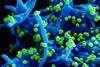
NewsScientists harness T cells to help the body fight entire viral families
Scientists have discovered that combining key vaccine ingredients could give the body the tools it needs to fight the entire family of arenaviruses with a single vaccine, protecting against life-threatening infections from Lassa virus, Junin virus, and other arenaviruses with pandemic potential.
-
 News
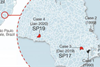
NewsSabiá virus has been circulating in Brazil for 142 years and mutating, study finds
Researchers developed a new method and identified the infection in two patients who died from acute hemorrhagic and neurological syndrome in São Paulo in 2019 and 2020.
-
 News
NewsPatent targets viruses with a breakthrough from linseed oil
A common vegetable oil may hold the key to fighting some of the world’s most dangerous viruses. Scientists have patented a linseed oil polyol-derived compound shown to inhibit viral infections including HIV and SARS-CoV-2 as well as bacterial infections causing strep and staph.
-
 News
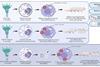
NewsA hypovirulent mycovirus alters stress response and virulence in Talaromyces marneffei
A new study identifies the mycovirus TmNV1 as the first narnavirus discovered in T. maneffei, functioning as a potent virulence attenuator. Coinfection with TmPV1 further amplifies these hypovirulent phenotypes.